


13 October 2026 16:00 (UTC)
We revel in our racing heritage, but there’s quite a lot of it, and it’s getting very old, so we need a better way to look after it. Enter, Iron Mountain…

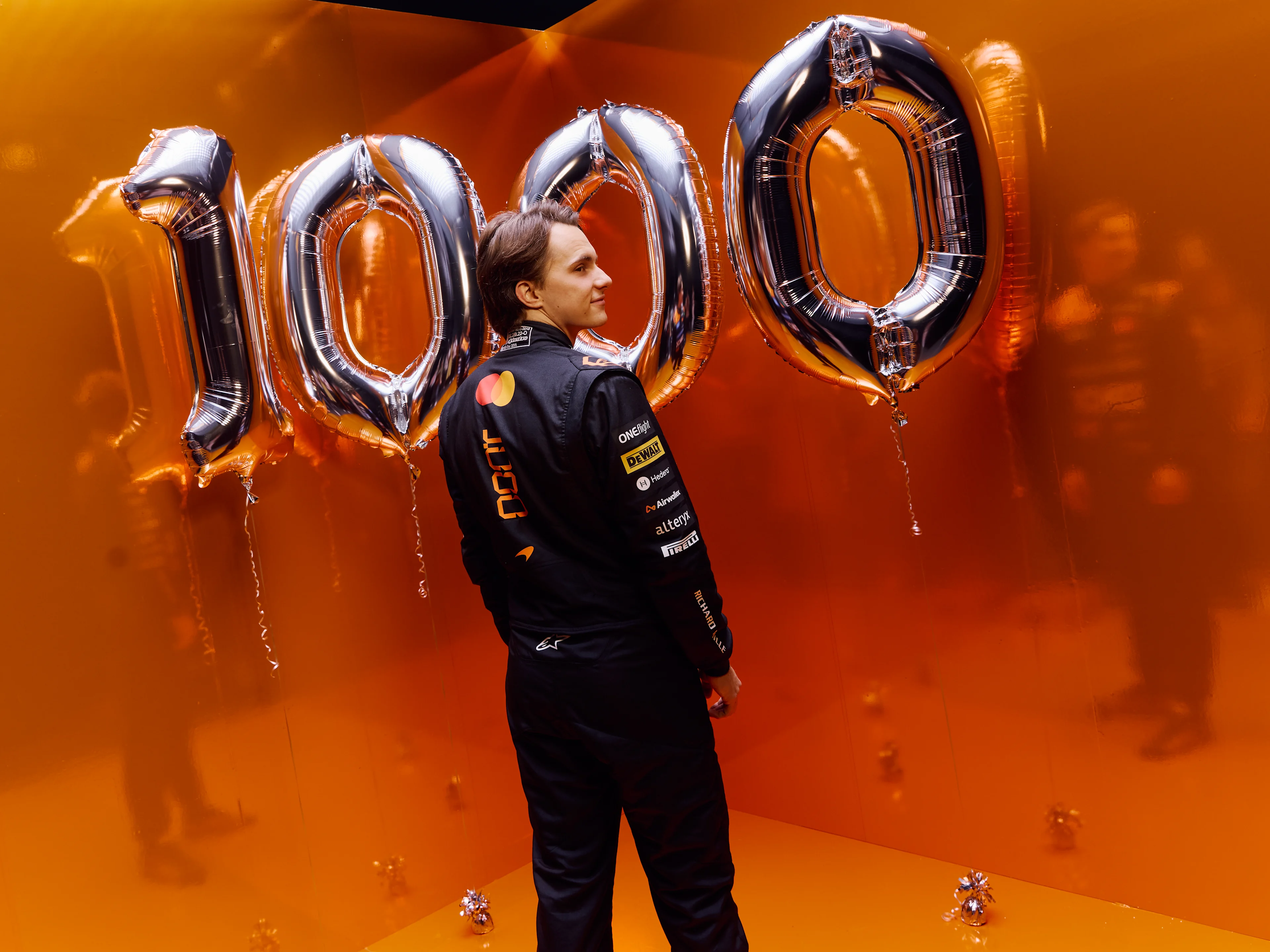
Oscar Piastri is reviewing Monaco Grand Prix race debriefs with the team’s long-serving design guru, Neil Oatley, now a full-time Technical Consultant, and looking at drawings of a front wing endplate. He notes some of the setup data, briefly dropping some of the pages, before grasping them back up off the floor, and continuing to read on avidly. It’s interesting stuff: the notes are Ayrton Senna’s from 1993. Neil was there - Oscar most assuredly was not. He smiles at the handwritten notes, in which Ayrton was giving one of his competitors an expletive-driven roasting for a lack of situational awareness. “Good to see the debriefs haven’t changed in the last 30 years!”
We’re not quite at the stage where Ayrton’s impressions of his record-breaking sixth Monaco Grand Prix victory have to be read in a climate-controlled room by skilled conservation specialists wearing gloves… but that day is coming. None of this material is getting any younger, and with age, comes faded ink, fragile paper, frayed edges. Happily, the notes Oscar drops on the floor come from our digitised archive, with the fragile originals safely stored out of harm’s way, as part of a vast project designed to protect our heritage for posterity… but also to make it a lot easier to delve into than wading through a storage unit full of boxes.

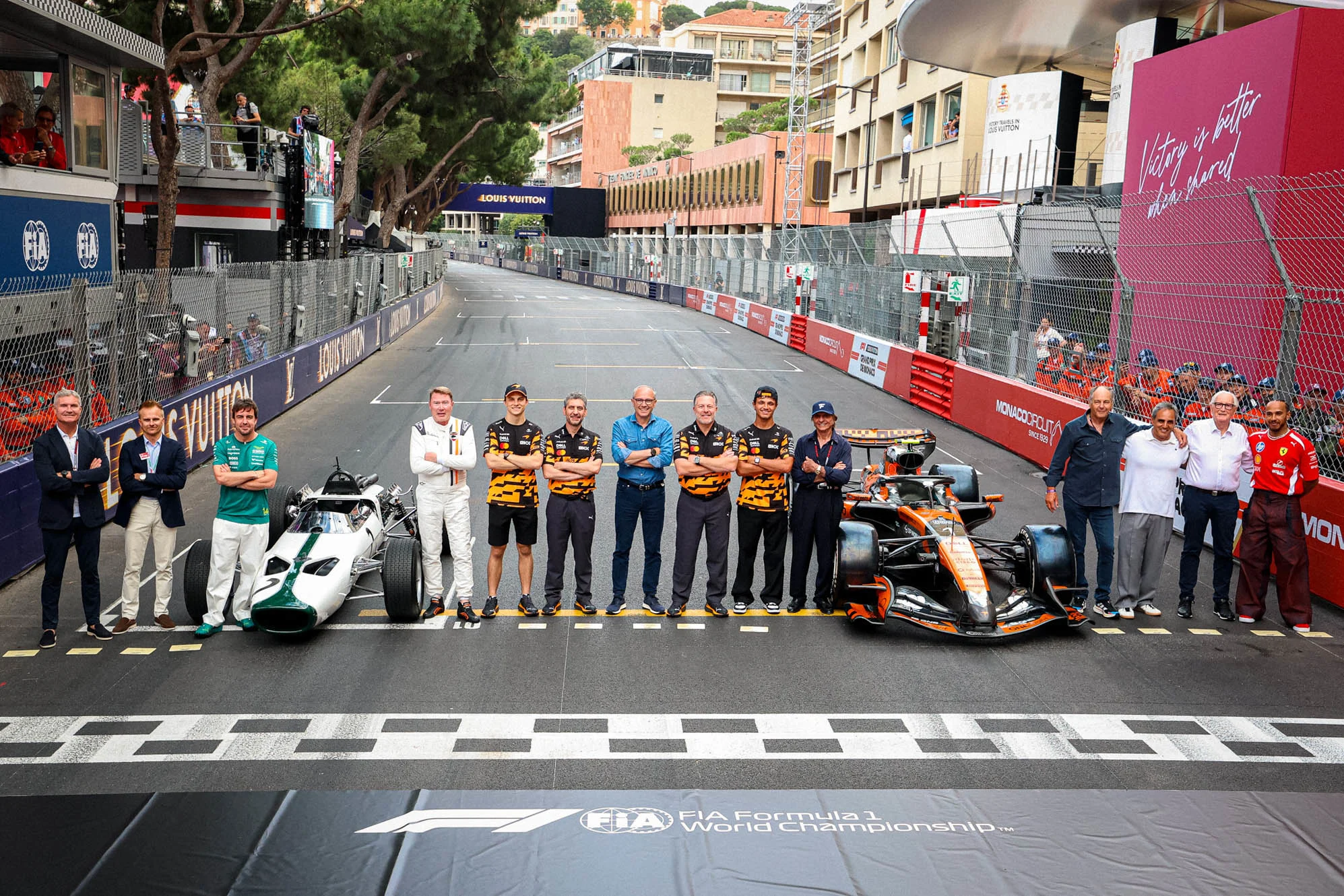
Formula 1 is a sport that revels in history. The achievements of today are firmly set in the context of yesterday, encoded in language that venerates the exploits of now and then: a 13th victory at Spa, a first Drivers’ Championship since 2008, our first back-to-back Constructors’ Championships since 1991, and so forth. The older and more venerable the team, the greater the weight of history – sometimes a burden, often a joy – it carries around. And for McLaren, celebrating our 60th year in F1, there’s plenty of history to go around.
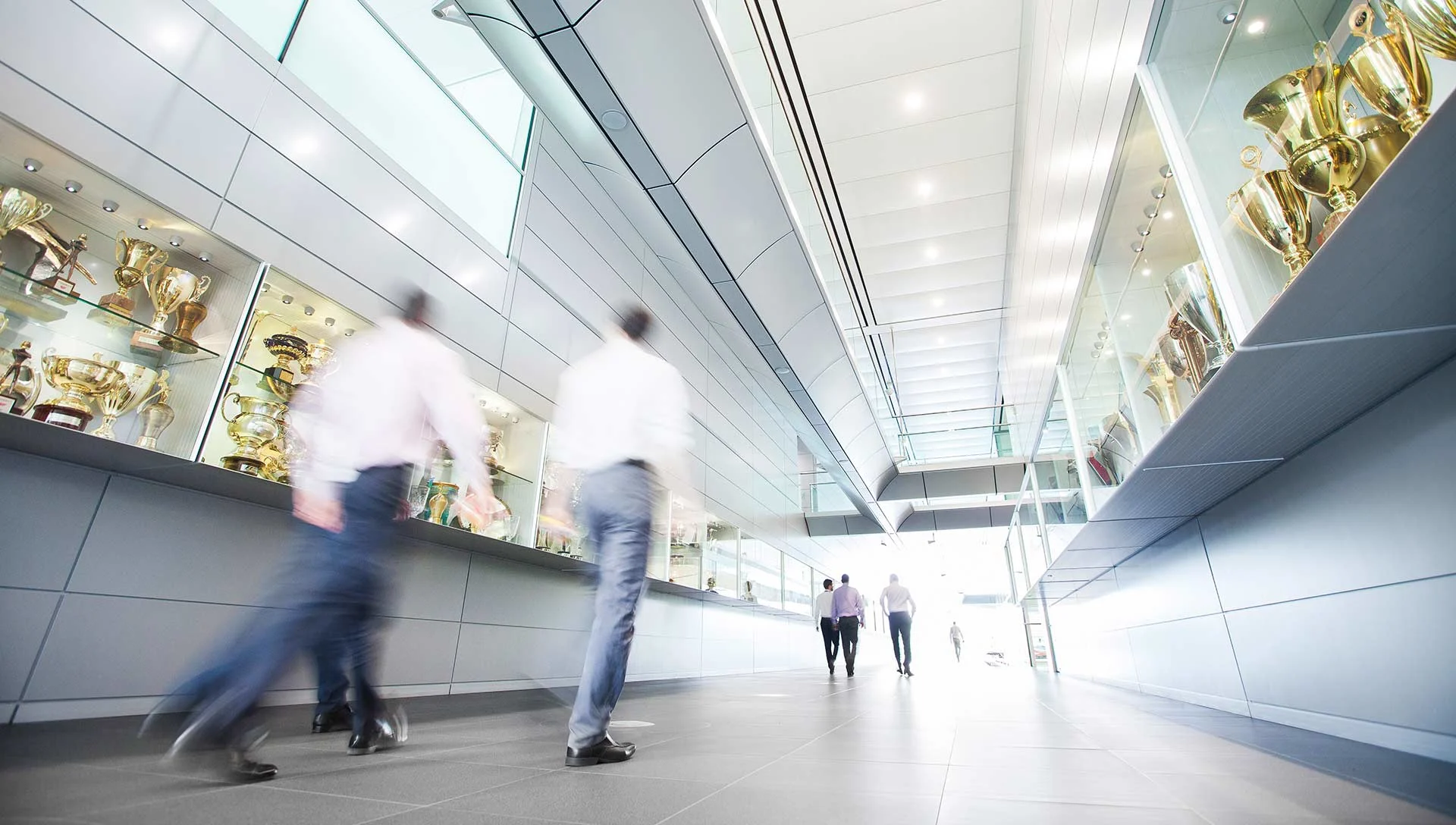
On the surface level – quite literally in the case of the McLaren Technology Centre – the past is never far away. The trophy cabinet on the Boulevard, and the cars on display are a constant reminder that the team has a proud and storied heritage, but behind that is a catalogue of memorabilia. For 60 years, McLaren has been making and racing F1 cars, and with that comes a truly vast document archive.

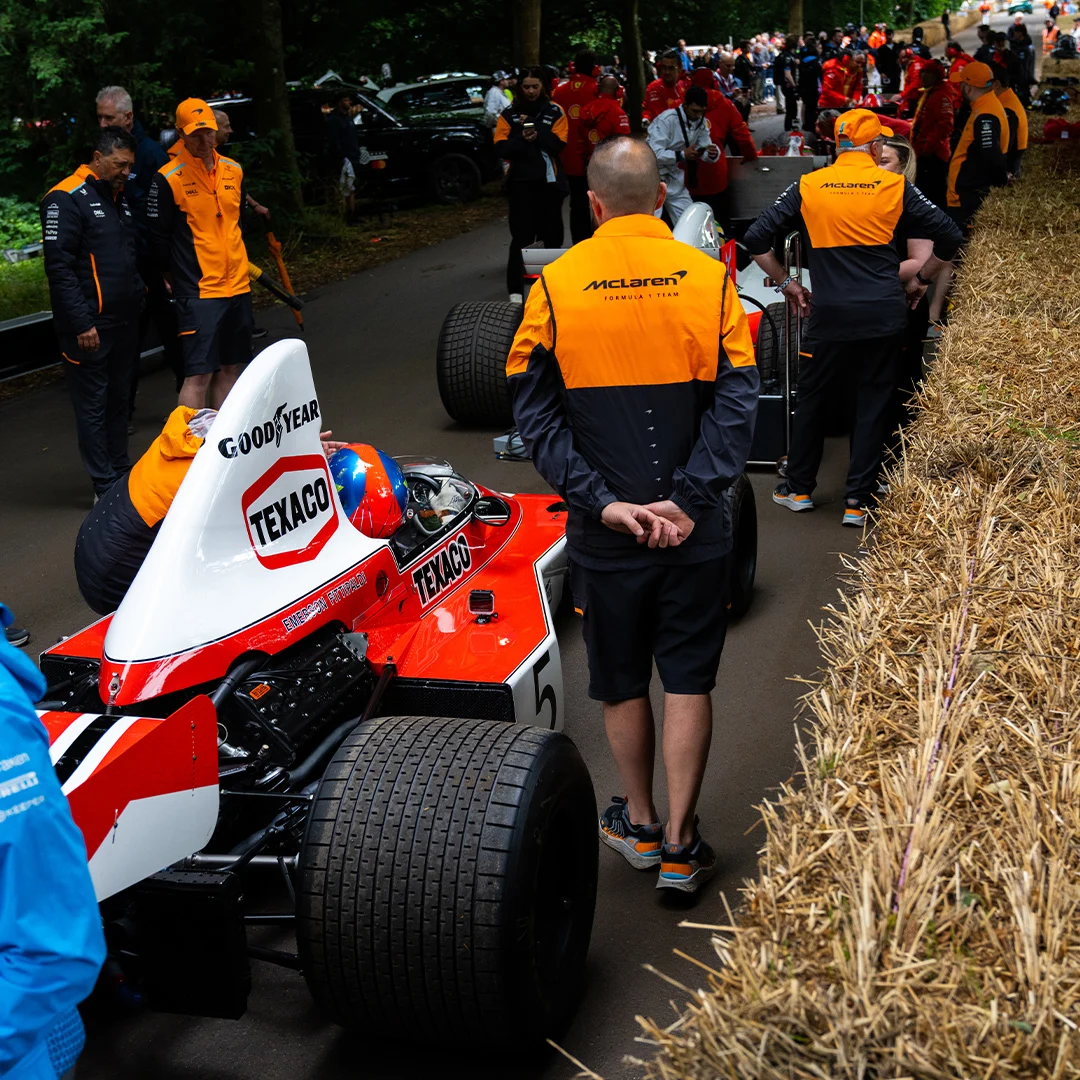
The team employs conservation specialists to manage that collection, but our storage needs have grown to the point where we need professional outside assistance to catalogue, digitise, and securely store our accumulated cache, keeping it in the best possible condition and with the easiest access for future use, whether that’s academic research or a fabulous McLaren heritage project, like the recent public debut of the Lamborghini-powered MP4/8B at the Goodwood Festival of Speed (accompanied, it should be noted, by the grainy, wobbly VHS recording of the original tests). We’re therefore working with conservation specialists Iron Mountain, and today, Oscar has joined Neil to look over some of his old favourites.
Our huge digitisation project has some severe challenges… but also presents great opportunities. Digitisation, with appropriate naming conventions and search terms, will make material that is currently difficult to find easier to access, allowing the team to better leverage our capabilities. That might make restoration projects easier – or simply allow the team to access more comprehensive material whenever we celebrate significant anniversaries. On the other side of the ledger is an unwieldy, not necessarily well-catalogued archive that dates back to the 1960s, containing every media format imaginable, from notebooks and tracing paper to VHS tapes and photographic film.

The catalyst for this project was the closure of Unit 2. Like the warehouse at the end of Raiders of the Lost Ark, our semi-secretive vault contained a trove of treasure. Not just 60+ years of McLaren cars and the kit to operate them, but also the vast archive of A0-sized technical drawings, often created with a mechanical pencil, and annotated in hand by luminaries such as Robin Herd, Gordon Coppuck, John Barnard, Adrian Newey, Neil himself, and Bruce McLaren. There are reams of lab data, test reports, setup sheets, Polaroid pictures, carousel slides, SD cards, DVDs… but also a more eclectic selection of documentation, from marketing materials and printed photographs to fan club magazines and Autosport subscriptions.
The cars and some of the existing material are being moved to an enlarged Heritage department at the McLaren Technology Centre, while the rest will be housed in a vault at a separate site. We don’t want to simply put boxes on shelves and let things gently disintegrate. Instead, with the aid of Iron Mountain, we want to catalogue, digitise, restore, and preserve. Noble motives are at work here… but it’ll also give us easier access to get our toys out and play with them.
It’s a fascinating project for us and for Iron Mountain. They’re experts in safely archiving records and documents, but the partnership really comes into its own when working with rich media, such as film reels, hard drives, HDSR tapes, VHS tapes, printed photographs, and film slides. Iron Mountain helps us give it a second life by restoring, enhancing, and upscaling media that may not be in the best condition. Digitising and uploading our archives into their Insight® DXP platform allows us to easily search and download our heritage media anytime, ready for use on our website and app, across our social media channels, and in marketing campaigns.

There is a vast amount of material to catalogue, digitise, store and preserve, so much so that it’s difficult to know where to begin. Top of our priority list are items of the greatest historical significance, including documentation such as correspondence between notable staff and drivers, engineering records, project planning files, and other materials that reflect McLaren Racing’s legacy.
Neil is heavily involved in determining what should, and shouldn’t, go into our Iron Mountain vault – which can prove a little tricky because, like most people at the McLaren factory, he thinks it’s all significant. He’s also advising on the database conventions that are making our new archive searchable
Iron Mountain bring another priority list to the table, searching our archive and ranking our assets according to physical priorities. Engineering drawings, for example, were often created using friable media: pencil and engineering paper, prone to smudging and deterioration with friction or handling. Blueprints and diazo prints are chemically sensitive and vulnerable to fading and discolouration when exposed to light, and are also prone to tears, creases, and edge damage. Thus, digitising them often has a degree of urgency.

Once the assets are digitised, the question remains how to treat the originals. Some tasks are standardised: metal fasteners such as staples, paperclips, bulldog clips, and rubber bands are removed as a matter of course to prevent future deterioration and staining. Documents are placed into acid- and lignin-free archival folders and stored in archival-quality document boxes.
One of the first priorities Iron Mountain identified was a collection of magazines stored in non-archival plastic sleeves. The sleeves were beginning to degrade, which could release harmful chemicals and become brittle or sticky over time, posing a risk to both the magazines and surrounding materials. The magazines were quickly de-stapled and placed individually in archival-quality Mylar bags, with acid-free backing boards for structural support, preventing warping and creasing when stored upright.
The big, A0-size technical drawings, on the other hand, are best stored flat, with each item placed in its own buffered, acid-free folder, or interleaved with buffered tissue paper to minimise surface contact and protect against abrasion and off-gassing. It requires proper labelling, controlled environmental storage, and limited light exposure, to preserve drawings for the long term.

Our vast archive of photographs comes in two flavours: Reflective photography (prints) should be in individual sleeves to prevent bending, curling, or abrasion, then stored using the same methodology as documents. These can be delicate – particularly Polaroid photographs, which run a high risk of fading and image degradation, and need to have minimal exposure to light.
Transmissive photography (slides and negatives) requires polyester, polypropylene or polyethene sleeves, sized to fit the format. The enemy here is ‘vinegar syndrome’ where the film base breaks down, releasing acetic acid, detectable by a telltale smell of… you guessed it… vinegar. These become instant priorities for digitisation before the content becomes unreadable, and are isolated from other material to prevent cross-contamination. Film has similar storage requirements, and scanning our film archive at the highest possible resolution is a priority.
Videotape presents an interesting challenge. VHS recordings are prone to mould, both inside the cassette housings and on the tape reels themselves. It can cause the tape layers to adhere to one another, leading to a high risk of breakage or permanent damage when run through digitisation (or playback) equipment. Iron Mountain has developed a remediation and stabilisation plan that includes isolating contaminated items and implementing a cleaning process using HEPA-filtered vacuuming. Our tapes are reassuringly light on mould and in pretty good condition for items 30-40 years old, but they will still require careful tape ‘baking’ before transfer.

With items like a DVD or a VHS tape, the question is what to do with the physical media once the digital transfer is complete. The hoarder’s instinct is to keep everything in the archive – but that takes space, retains some of the clutter we’re trying to eradicate, and makes research more difficult. Practicality means some items will be ‘deaccessioned’ and ultimately destroyed, should they possess no intrinsic value. Heritage items are safe, but once the content has been digitised and made accessible, does an actual DVD, bought in the Woking branch of Woolworths, serve any purpose in the archive?
Dr Lisa Jarman, Senior Manager, Commercial Technology, smiles at the question: “Going forward, it’s going to be very much a case of making sure we ask that question: Is the physical item important or not?
“There’s very little value in keeping a DVD or VHS tape, particularly if it’s been destroyed through the digitisation process, but equally, run sheets, with handwritten pencil notations, there’s value in having that physical object. We’re never going to throw away an Ayrton Senna run sheet, because the physical object is really interesting, but with some items, once we have the digitised copy, we may not need to keep the original."
Which brings us back to Oscar, Neil, and the 1993 Monaco Grand Prix debrief.
“I guess the biggest difference is that it’s all handwritten instead of typed up – but a lot of it is similar in terms of the questions you’re asking and the things you’re going through,” says Oscar. “It's always interesting to see how far things evolve, but also how much things stay the same. I think the level of effort and dedication to things looks very similar – and that’s cool to see.”
With regard to the architectural drawings of the MP4/8, Oscar’s seeing something that isn’t familiar. “Nowadays, everything is on computers - you don’t really have actual blueprints, certainly not life-size like this. It just feels a bit more… human! It’s been kept in very good condition.”