


30 June 2026 18:30 (UTC)
In partnership with Gemini, we’re celebrating the first McLaren F1 car, the M2B, with a full livery takeover at the British Grand Prix

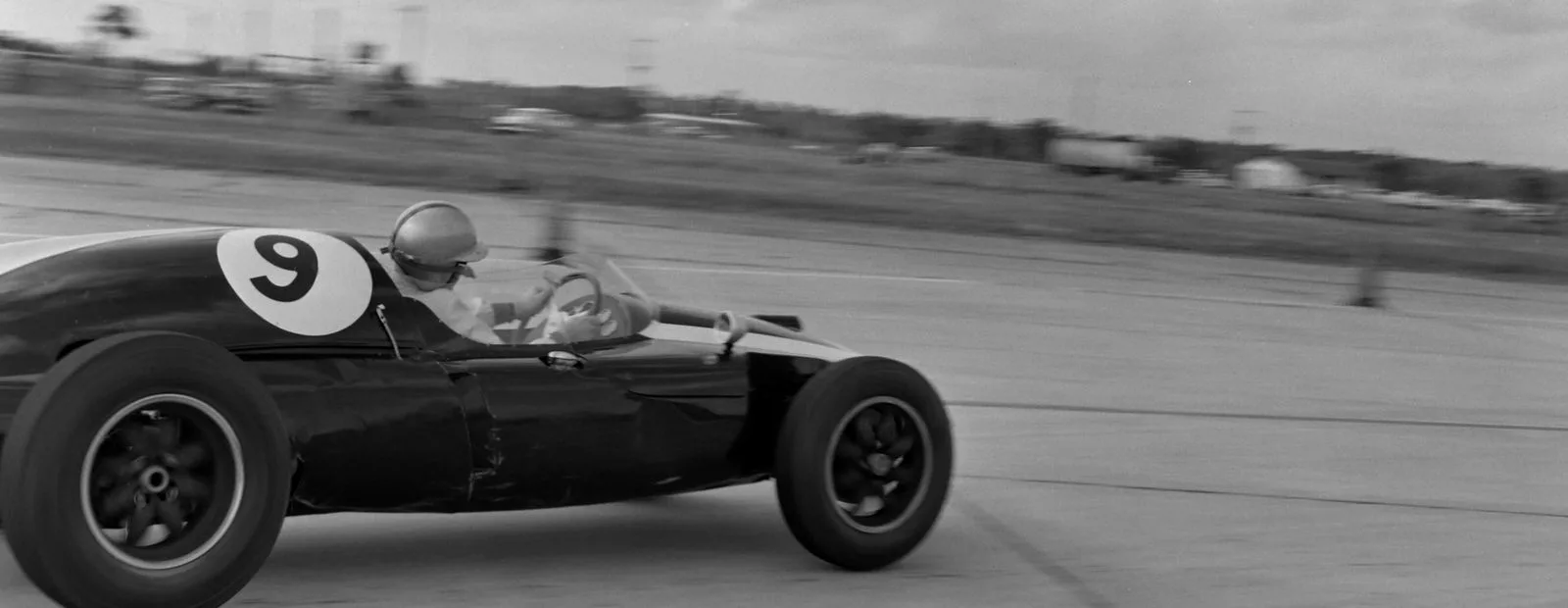
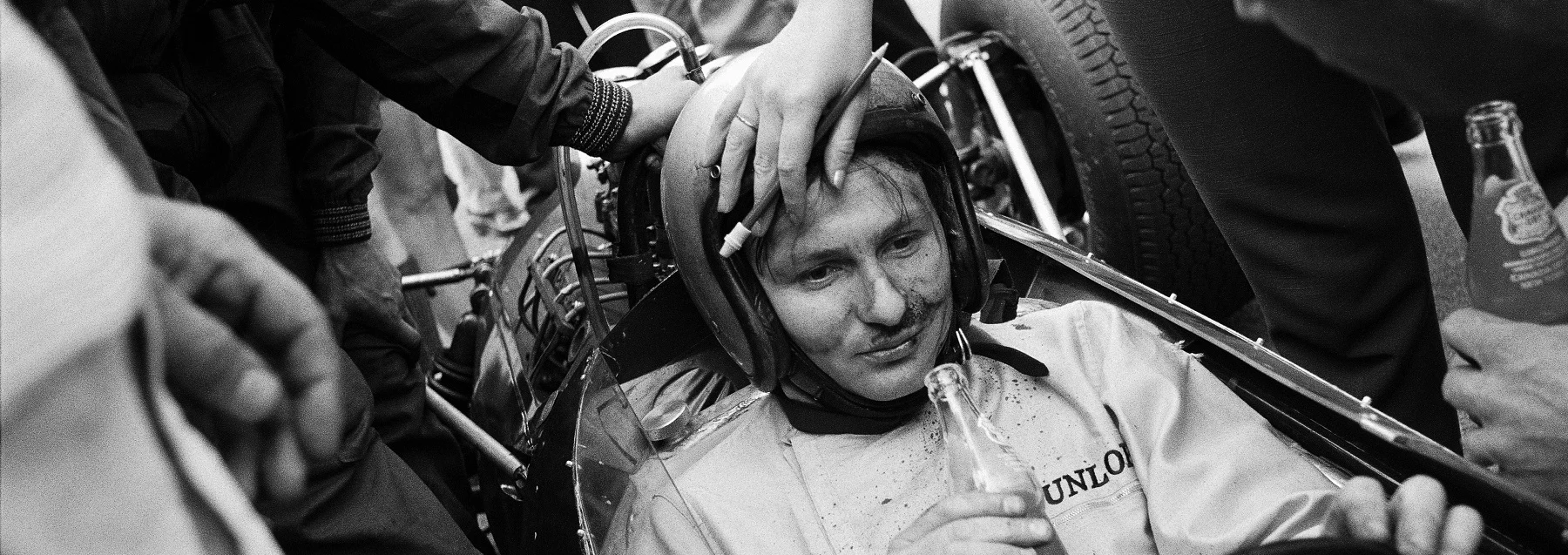
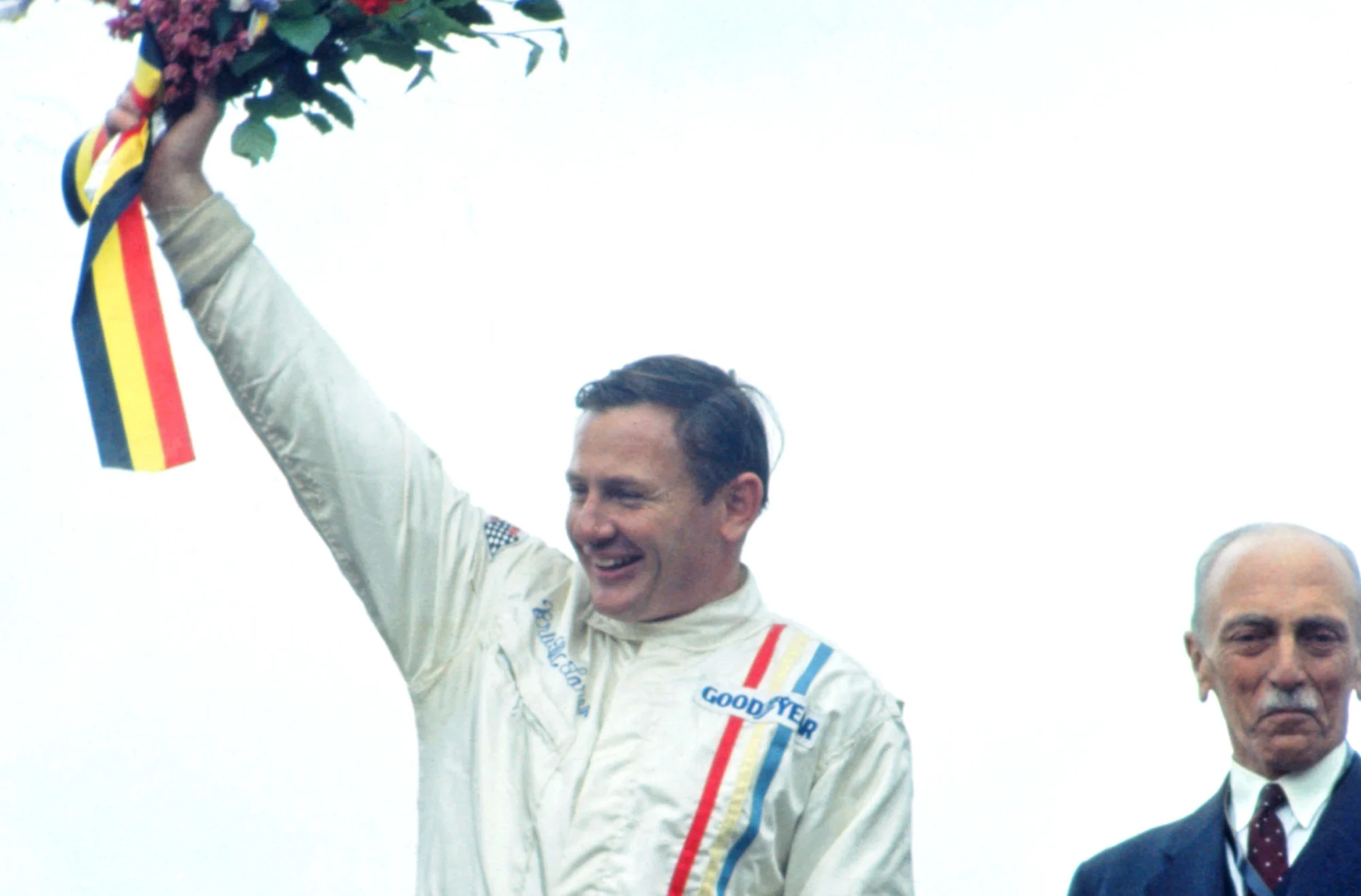
At this weekend’s British Grand Prix, we are paying tribute to the Grandaddy of McLaren Formula 1 cars, the M2B. It started just four races, and completed just two of them, but scored points in both, a feat almost unheard of for a newcomer. It was the start of our story, the spark that lit the flame, and the birth of a dynasty. Bruce was just 28 years old at the time and had taken a huge leap of faith by starting his own team, but he had big dreams for it. 1000 races later, and we’re still here.
How important was the M2B?
First and foremost, it’s the reason McLaren are here today. One hundred and thirty-five manufacturers have taken part in the Formula 1 World Championship. Roughly half haven’t been around long enough to design a second car. Perhaps the reason the fledgling McLaren are still here 1000 Grands Prix later is that the M2B scored a point in its second race and two more in its third, making our team an instant, credible entity.
The M2B doesn’t have the illustrious record of its successors, but it contains that intangible spark of invention that resides at the start of all good things. It is the bedrock on which the empire is built. With this car, we established practices the team would hone in the following years to become race winners and, eventually, World Champions. The focus on innovation and leading-edge engineering employed for the M2B are still hallmarks of McLaren, sixty years on.

Why was this the M2B? Well, the M1 had successfully raced in the Can-Am series. The F1 car was Bruce’s follow-up project. And why not the M2? That stems from the freshly minted nature of the team’s foray into F1.
In 1965, the team built a proof of concept. That car completed several thousand miles of testing, both at Goodwood and in California. Given Bruce was still under contract at Cooper, and hadn’t revealed his intention to leave and race for his own team, it was described as a testing mule for Firestone tyres. Bruce recruited aerospace designer Robin Herd, then working on the Concorde supersonic project, to create his new F1 machine. Their original M2 – the M2A – featured many engineering notions that would go on to bigger and better things – but also allowed the team to work through Bruce and Robin’s ideas, and discard a few that didn’t work out well in practice.
One of these was a downforce-generating rear wing, which was removed from the M2 before the production chassis was built, because it wasn’t delivering enough performance. Rear wings, of course, would have their moment in the years that followed.
Another was the idea of building the car from Mallite – a high-strength composite material of balsa sandwiched between duralumin alloy sheets, with which Herd was familiar from the aerospace industry. However, it proved to be a difficult material to work with, both in terms of forming complex shapes, and repairing after accident damage.
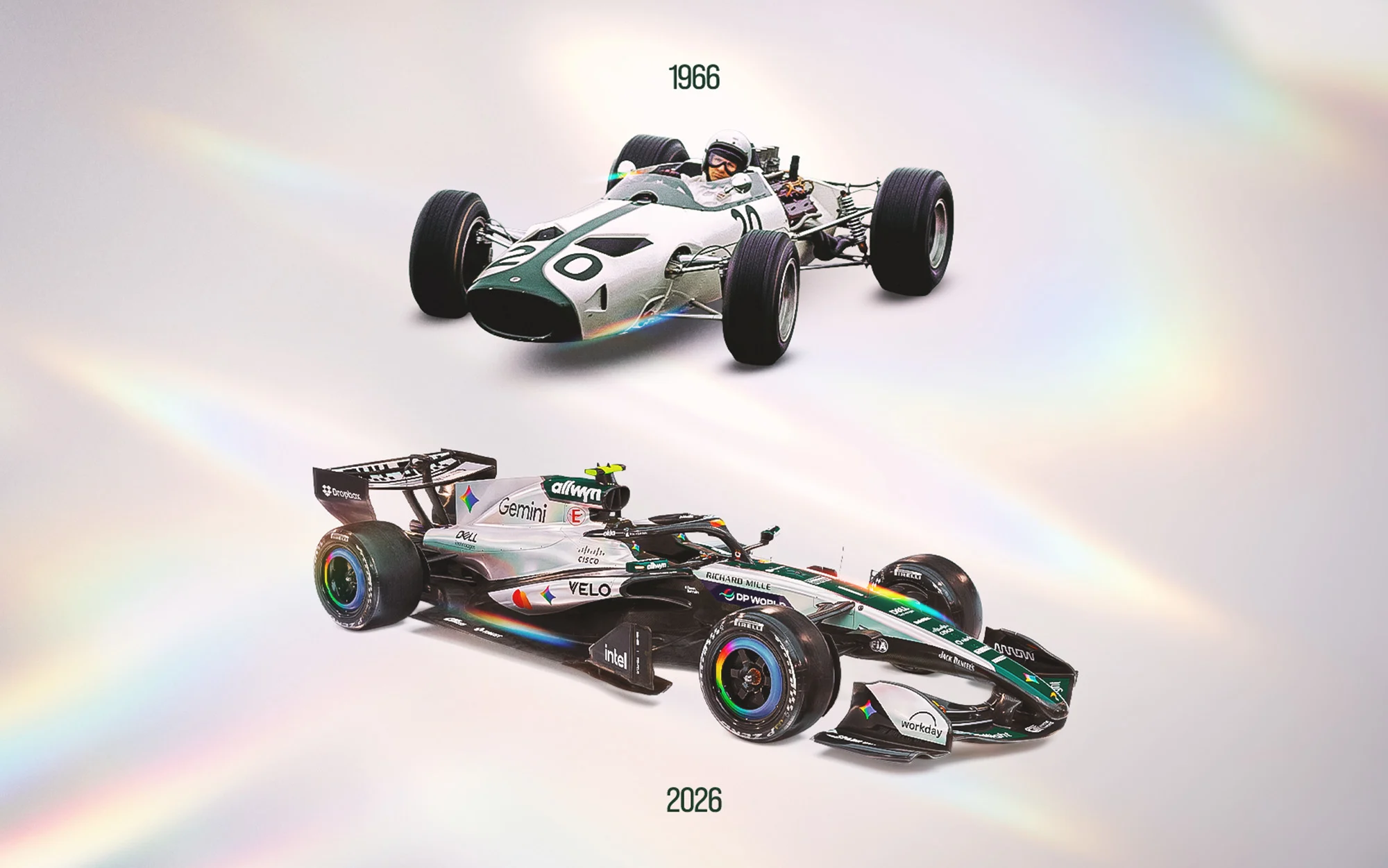
Based on their M2A experiences, the team then constructed two M2B chassis. These did not feature the rear wing, and had a construction featuring notably less Mallite and more aluminium alloy. The car made its hotly anticipated debut in the season-opening 1966 Monaco Grand Prix on 22 May. Bruce qualified 10th and made a good start in the race, quickly climbing to P6. But the M2B’s debut was short: an oil leak required Bruce to retire nine laps into the 100-lap race.
Records show that Bruce raced that season as a sole entrant, but the original intention had been for fellow Kiwi Chris Amon - who raced for McLaren that year in Can-Am and the British Sportscar Championship, and partnered Bruce in Ford’s Le Mans victory – to join him. Availability of engines – or lack thereof – was the sticking point, and also why Bruce’s M2B didn’t complete all nine rounds.
1966 was a watershed year for F1. In a bid to keep up with the sportscar prototypes racing at Le Mans, F1 increased its engine size from 1.5 litres to 3.0 litres. Works teams rushed to build new, bespoke engines, while privateers such as McLaren scrambled to secure whatever engine supply they could find.
Bruce wanted to use a Ford engine, believing it might eventually lead to support from the British behemoth. So, he purchased the same Ford V8 engines used by Lotus to win the 1965 Indy 500, and set about downsizing them from 4.2 to 3.0 litres. However, the resulting unit didn’t produce as much horsepower as Bruce hoped and was also bigger and heavier than rival engines, so he decided drastic measures were required.

The Ford V8s went back into the workshop, and were replaced by an engine from the Italian racing team and engine builder Serenissima, which had less power but was significantly lighter and more compact. It was not, however, any more reliable.
Engine failures ruled Bruce out of the following two races, with the M2B next running in the British Grand Prix at Brands Hatch, where it finished sixth, scoring our first point. After missing three more races, the M2B returned for the US Grand Prix, with a reworked Ford engine and finished fifth, scoring two more points.
Engine reliability might have been preventing the M2B from racing more frequently, but it was clearly fast, and its potential was evident. In the two races the car completed in its debut season, it scored points in both. Validating Bruce's and his design team’s work, this provided a solid foundation for the cars that followed.
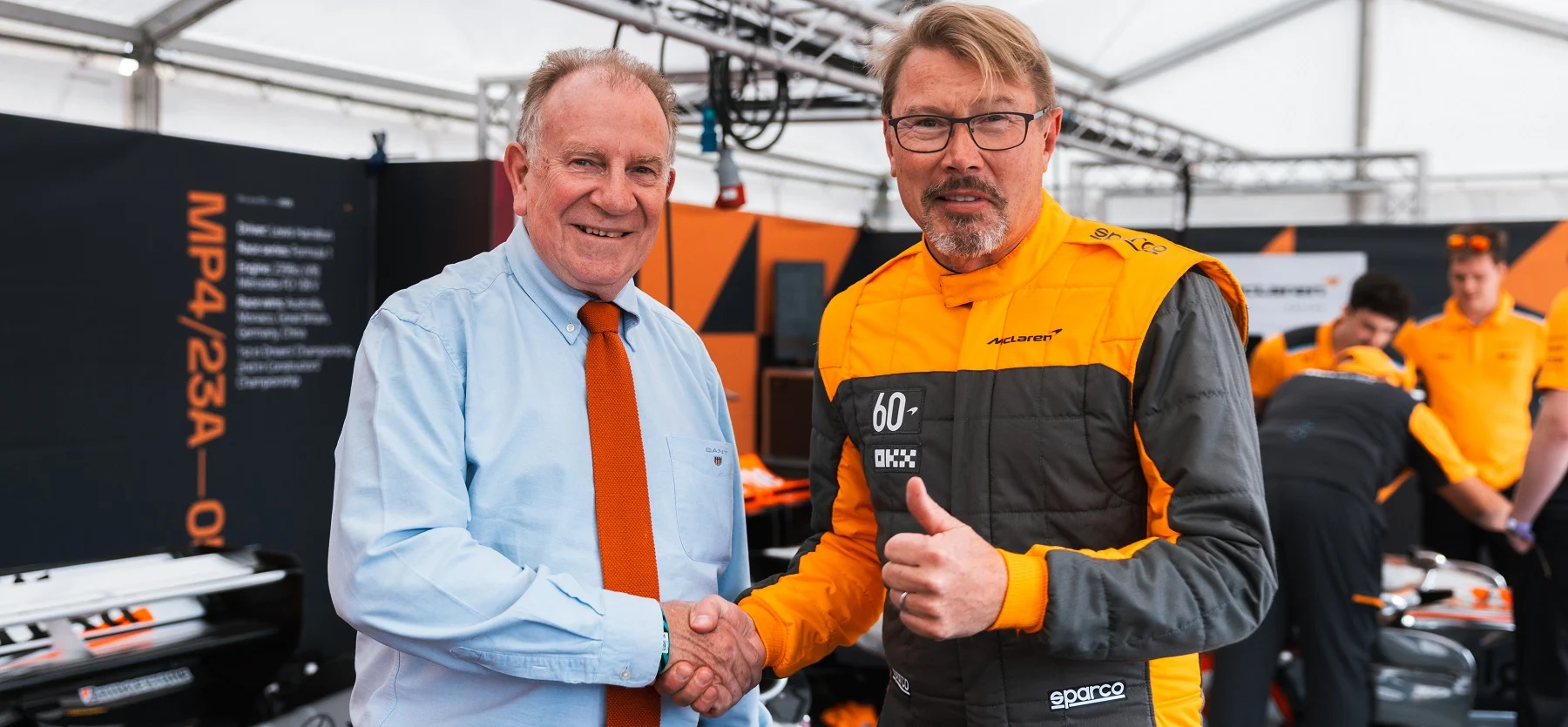
To celebrate our 1000th Grand Prix in Monaco, the M2B, restored to its original spec, was fired up and driven by Mika around the historic Monte Carlo circuit. Watching the Flying Finn take the car past the chapel of Sainte-Dévote, up Beau Rivage and through Massenet into Casino Square was an astoundingly evocative sight, the M2B resplendent in its white-and-dark-green livery.
The colour scheme in itself was revolutionary. McLaren should have raced in the colours of Bruce's homeland, New Zealand, which, in racing terms, were green, black and silver. However, Bruce had agreed a deal with John Frankenheimer to double as Pete Aron, the lead character in his ‘Grand Prix’ movie. This meant eschewing the traditional idea of competing in national colours, with the McLaren instead debuting in a white colour scheme with a central green stripe, the colours of the film’s fictional team, Yamura.
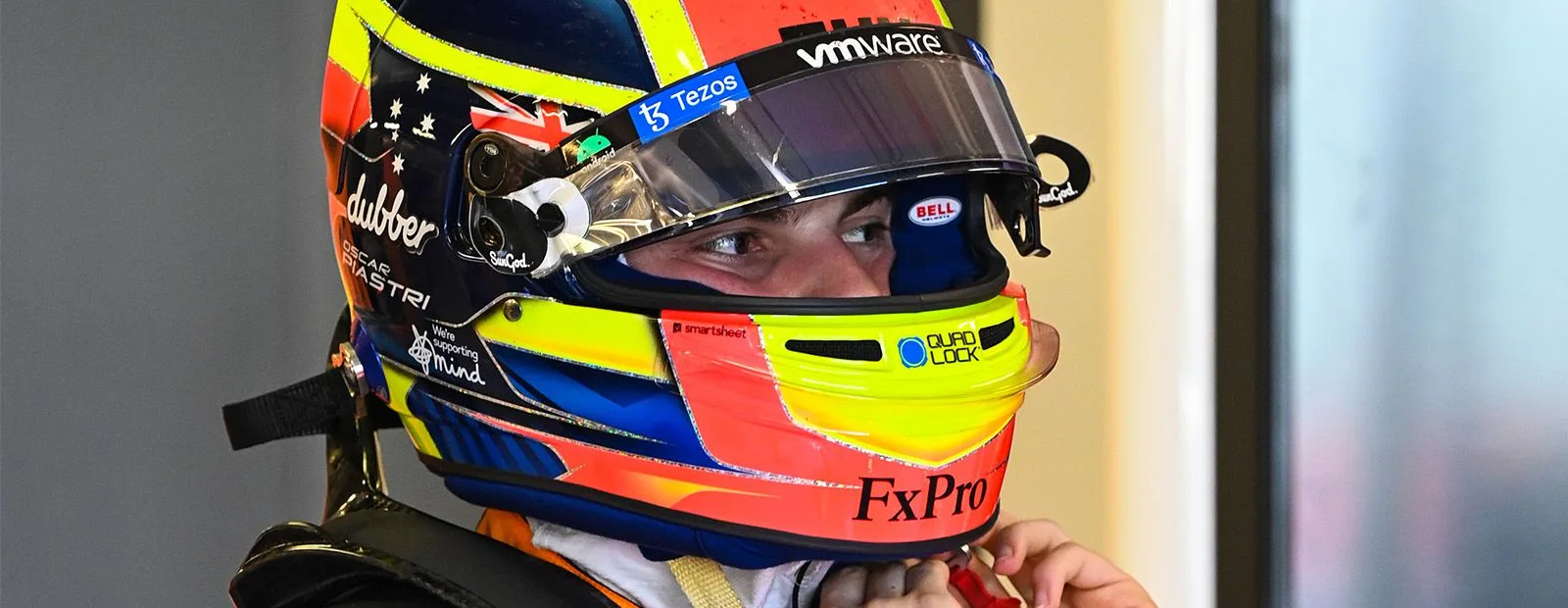
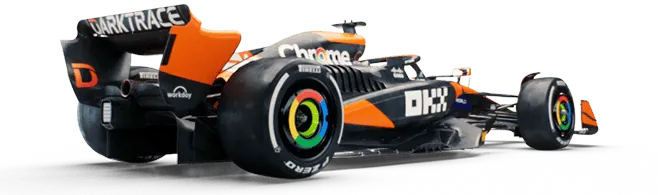
It's this scheme that we’re celebrating this weekend with a special one-off livery, presented in partnership with Gemini.
The MCL40 honours its illustrious predecessor with iridescent white bodywork, cut by a dark green stripe. A fitting tribute at the race (if not the circuit) where we scored our first World Championship point, in July of 1966. 8,267.5 points later, we remember the M2B as the spark that lit the flame.