


2 July 2026 15:30 (UTC)
John Watson winds back the clock at Silverstone to drive the MP4/1 – but what does the car mean to McLaren?

Read time: 9 minutes
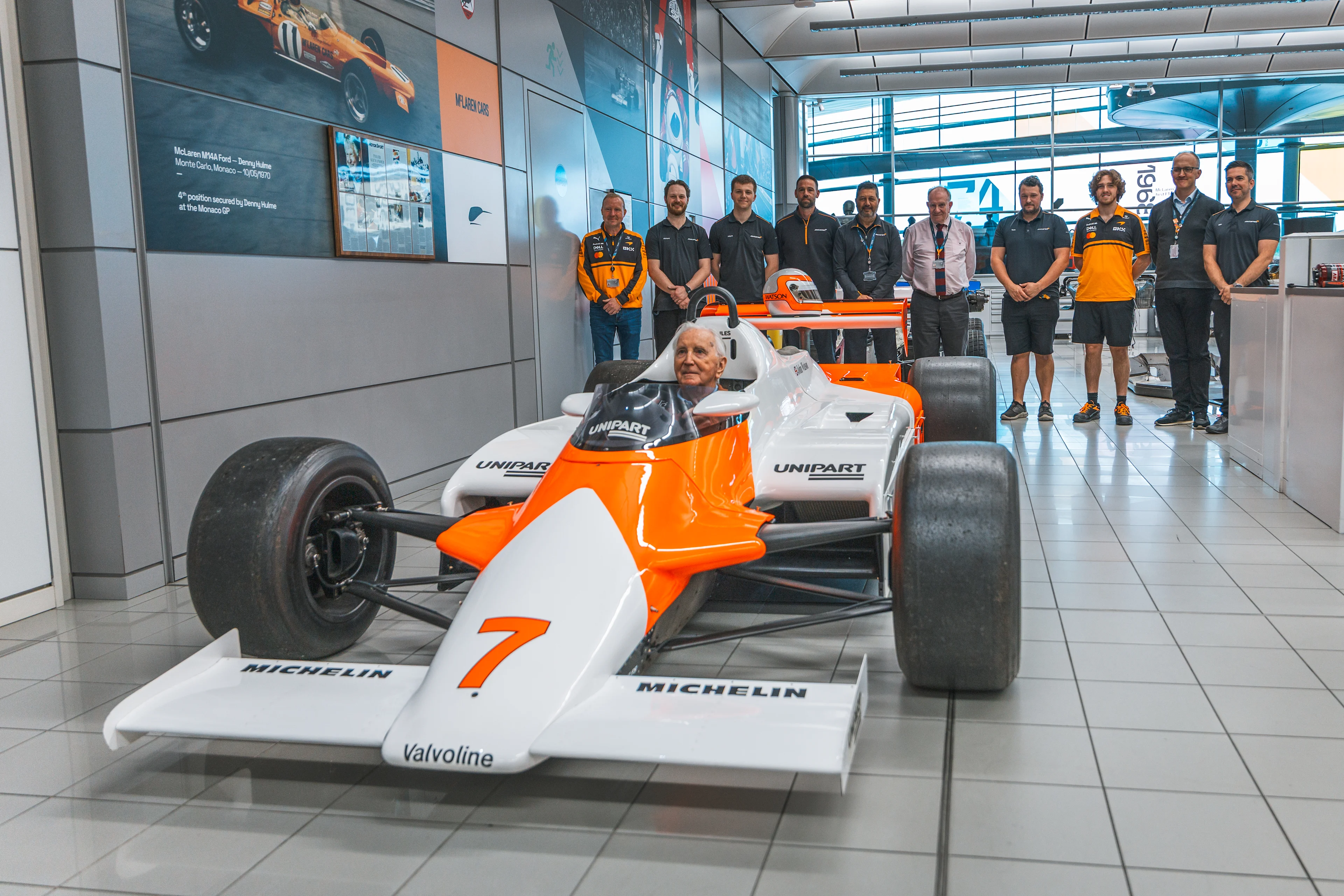
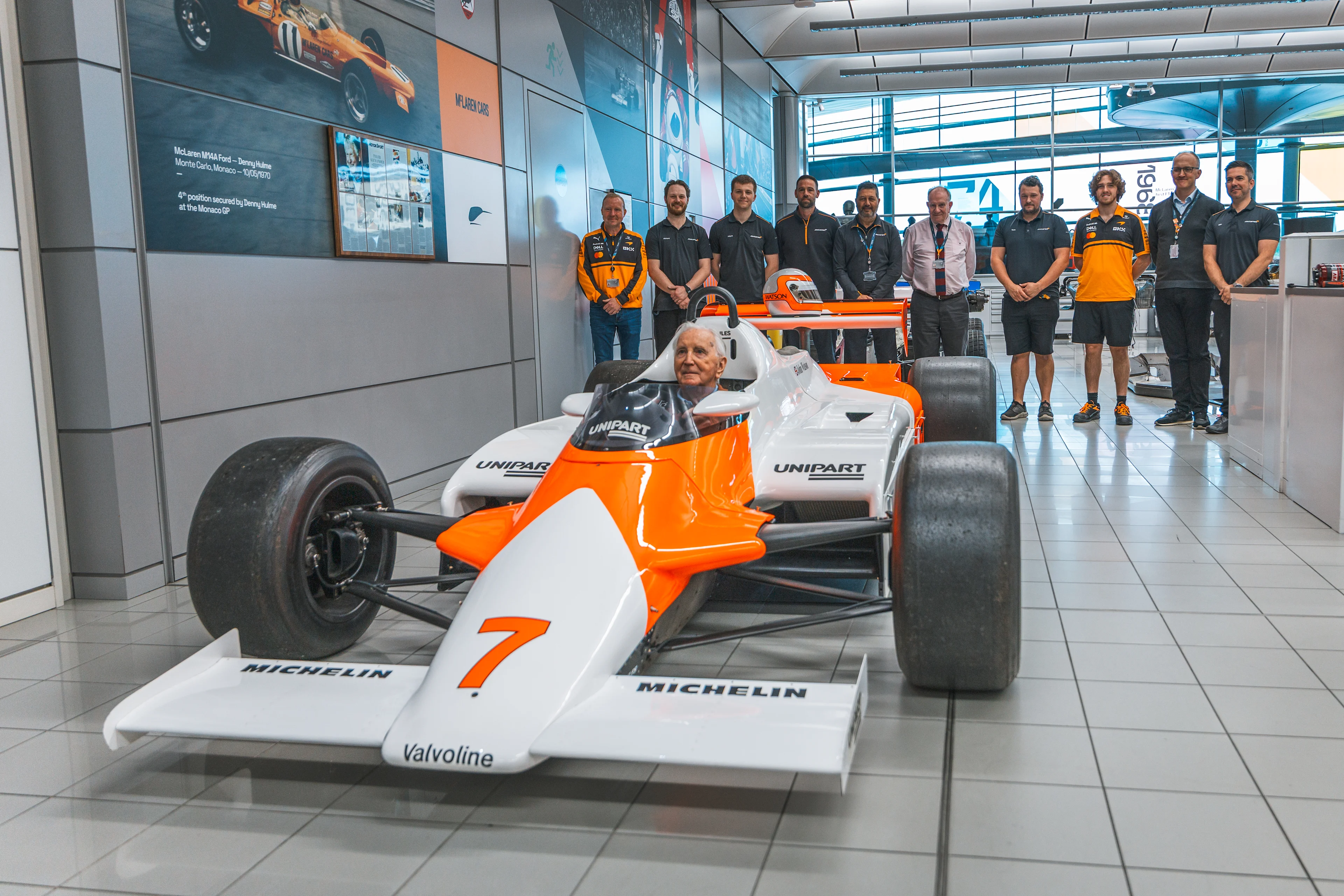
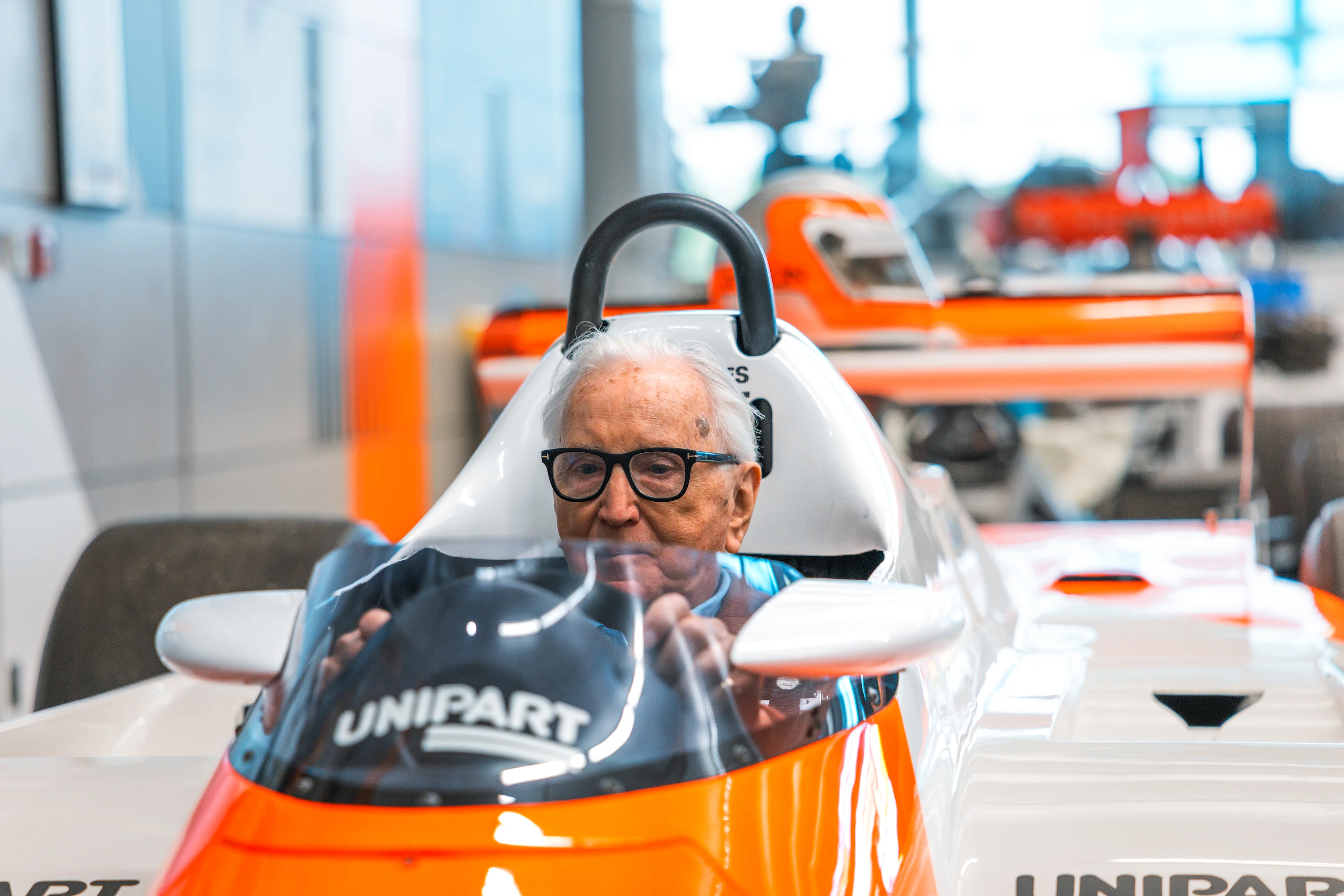
“The steering rack still catches you in the shins!” chuckles John Watson with a wince, climbing into the cockpit of the MP4/1. The Northern Irish driver, a four-time Grand Prix winner with McLaren, is preparing to turn back the clock for a British Grand Prix showrun at Silverstone, 45 years after his famous home victory. But first… a chance to reacquaint himself with the car at the McLaren Technology Centre before a shakedown at nearby Blackbushe Airfield.
“It feels very familiar – I’m just not very good at getting in and out because I’m not that flexible any longer, but once you’re in and let your body relax, it’s fine,” says John for the assembled crowd in our heritage workshop. “You do have to tuck your elbows in though. With the aluminium tub of the M29 [McLaren’s 1979/80 car], it felt slightly wider, but also if you made a quick move and hit it with your elbow, there was a certain amount of flexibility in it: that was the worst thing about the carbon tub: hit it with your elbow and it hurt like hell!”
The MP4/1 was the symbol of a new start for McLaren. The team had become one of F1’s big beasts in the 1970s, winning the double with Emerson Fittipaldi in 1974, before adding another Drivers’ Championship with James Hunt in 1976. However, from here, a decline set in. Winless seasons in 1978, 1979 and 1980 brought eighth, seventh and ninth in the Constructors’ Championship. The late 1970s were an age of huge innovation across F1… but it wasn’t McLaren doing the innovating.
And so, change. McLaren merged with Project Four, the Formula 3 and Formula 2 team founded by Ron Dennis. McLaren International was born. Dennis lured design guru John Barnard away from IndyCar and back to McLaren, where he had previously worked on the Championship-winning M23. Barnard arrived with a plan to construct the first McLaren of the new era, not from aluminium, but instead with a carbon fibre composite chassis…
“We thought it was a very bold step,” says Neil Oatley, now a Technical Consultant for the team, having previously served as Chief Designer and Director of Design and Development across many, many seasons… but, in 1981, still a young engineer carving-out a career at Williams.
“Obviously, the McLaren engineers had gone into it very deeply and were convinced that it was going to be a major step forward in race car construction. It was very stiff – which is what we're always striving for on an F1 car – but without adding a lot of extra weight. That really was a goal that everyone in racing was aiming to achieve – and hats off to the people involved. It was proved to be very successful over many years.
“The early races that year, it was competitive but not super competitive. The turbo cars were quite often quicker in Qualifying, but unreliable in the race. That was particularly evident at Silverstone. The trajectory of McLaren was good: prior to Silverstone, they finished third and then second, and then won from a fairly modest start. That really opened everyone’s eyes to what they may be onto with the technology.”
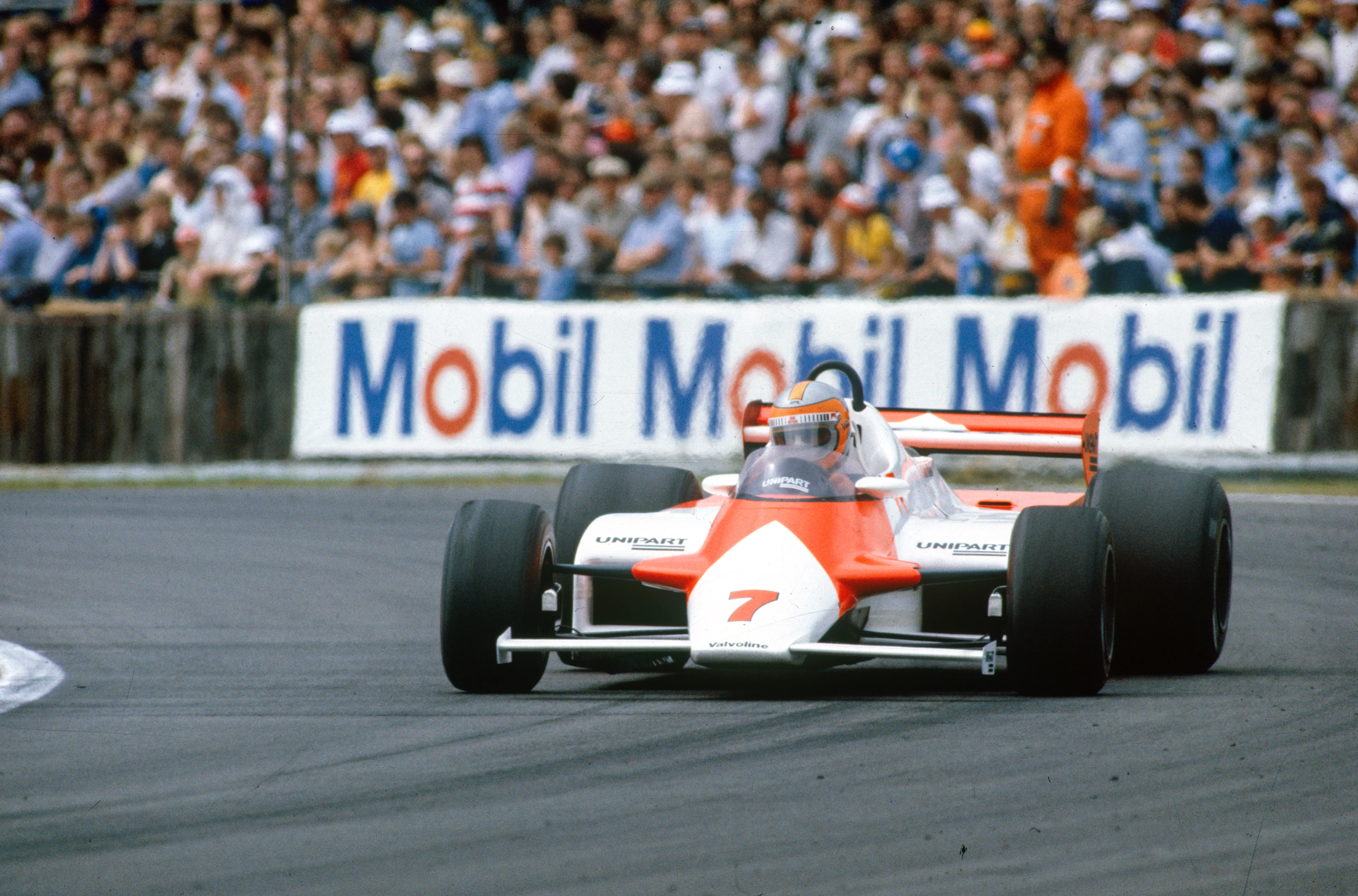
The McLarens qualified fifth and sixth at Silverstone. John, coming off third place in Spain and then a second in France, started P5, with team-mate Andrea de Cesaris P6. They were, however, a long way off the pace set by the turbo-charged Renaults of René Arnoux and Alain Prost who locked out the front row, a second ahead of anyone else, and 1.7s ahead of the Cosworth DFV-powered McLarens.
The MP4/1s got a poor start and dropped back behind Gilles Villeneuve and Alan Jones – it was a good field in ’81 – and things went from bad to worse on the third lap, when Villeneuve spun at Woodcote. He stopped in the middle of the track, leaving Jones with nowhere to go, other than straight into the side of the Ferrari. De Cesaris spun avoiding the mess and went into the barriers. Wattie, as he was known to the team, threw out all the anchors and just managed to avoid contact – but saw cars stream by as he lost all momentum. When things settled down, he was P8 at the end of Lap 4.
Then the fightback. Silverstone in 1981 was a much higher-speed layout than the current circuit. The basic perimeter track and its high-speed turns suited the stiff MP4/1. Watson was able to pass Mario Andretti and Championship leader Carlos Reutemann, then a slowing Didier Pironi. He gained further places when Bruno Giacomelli retired, Piquet crashed, and Prost stopped in the pits. Watson was running second by Lap 17… but Arnoux was disappearing into the distance.
The lead went out beyond 30 seconds with a quarter of the race remaining… but all was not well for La Regie. Arnoux’s engine note changed, and the crowd started to pay attention. By Lap 53, Arnoux was slowing, not terminally, but enough for Wattie to be closing in at around three seconds a lap. Urged-on by the crowd, Wattie had Arnoux in sight by Lap 59, he was into the wheel-tracks by 60, and through to the lead by 61, and onto victory seven laps later.
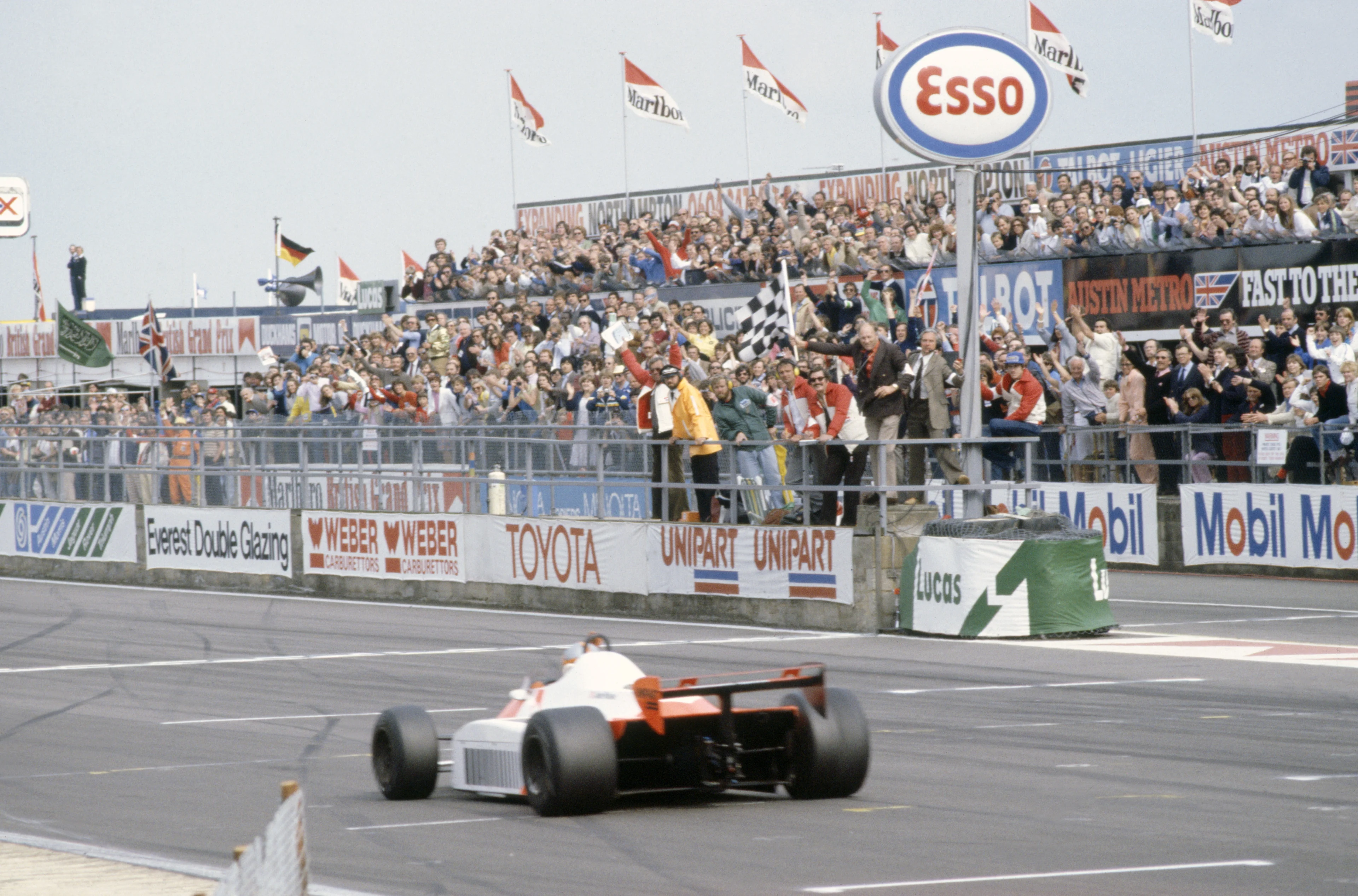
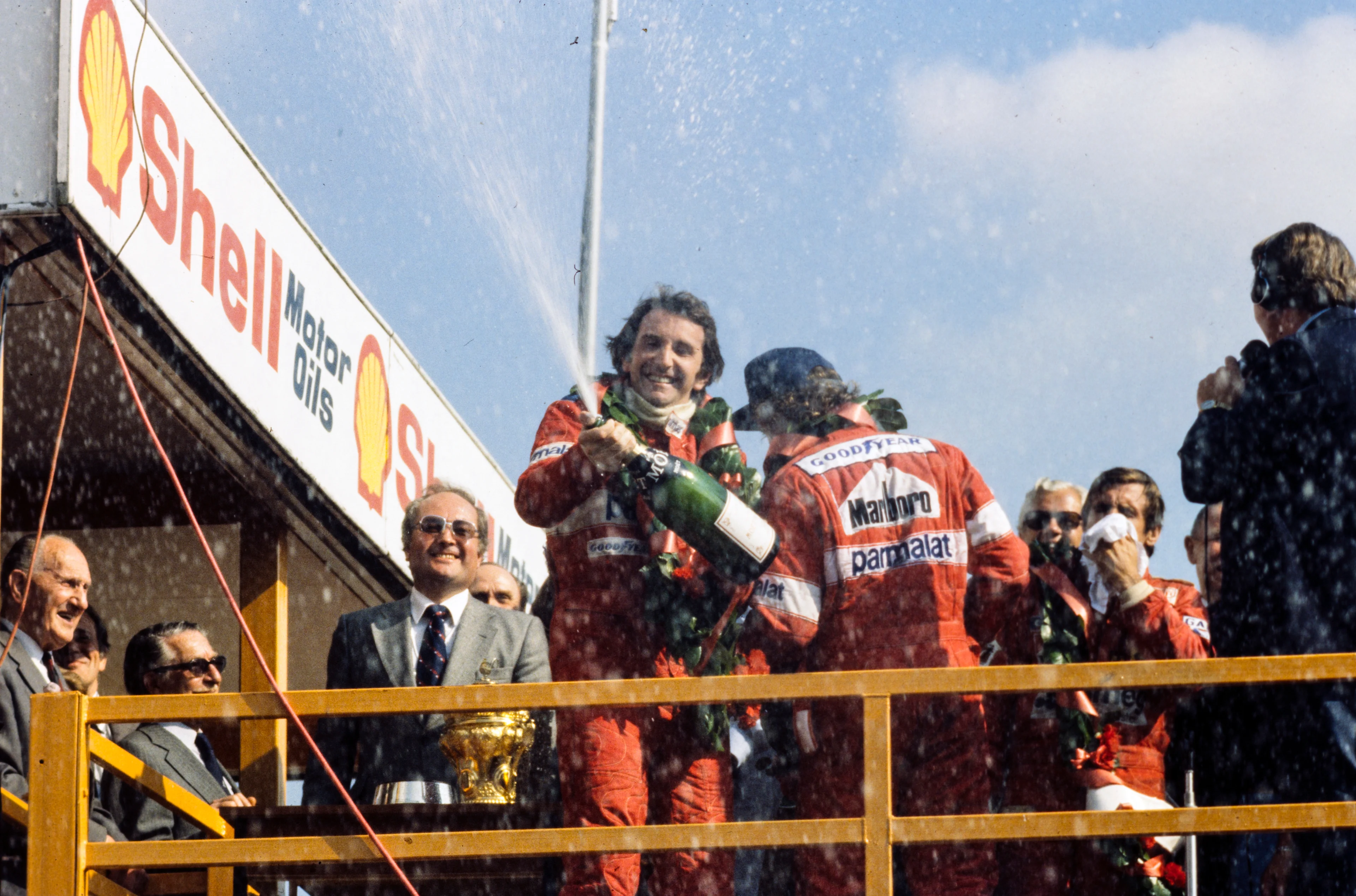
This was McLaren’s first victory of any kind since 1977, and Wattie’s first with McLaren - his only previous victory coming in 1976 with Penske. It was a first win for the McLaren reboot, a first win with Ron Dennis in charge, but perhaps most significantly, a first win for a carbon-fibre chassis and vindication for Barnard’s concept. While that hadn’t been a given in the rest of the paddock, the McLaren team always had faith.
Indy Lall has a storied career at McLaren. Having arrived with Project Four, he was John Watson’s No. 1 mechanic in 1981. “We were 100% behind John Barnard,” he recalls. “I think it became evident very quickly how John was committed to the carbon composite chassis, and I think you need that in a leader. It's either going to be right, or it's going to be wrong, but you need the whole team behind it, and I think from the get-go he was solid.
“Yes, the car was very different, but new things are always different, aren't they? I think it became apparent quite rapidly that there were gains. It was much lighter than glass fibre bodywork, and you were able to shape it, unlike aluminium, which was angular. I think other teams realised it was a significant step, and a step in the right direction – and they all followed in the next few years. Before that point, Lotus were probably the team to beat – or follow – but the MP4/1 was a bigger step ahead, which was very significant.”
In the following years, when McLaren were in their red-and-white pomp, Indy worked on Alain Prost’s Championship-winning McLarens, before taking on the challenge of creating and running a dedicated test team in preparation for our new partnership with Honda. Silverstone in ’81, and the MP4/1 still sticks in the mind, however, as both a signifier that the past was being left behind and that a foundation was being built for the future.
“The primary memory is just the joy of winning our home Grand Prix. It was my first win – but also McLaren International’s first win. To do it together, with the two teams amalgamated, was really special. Silverstone was a 100% team effort, and when you’re in that zone, things move forward. That unity is probably why we’re still here today.”
We speak a great deal in modern F1 about the value of a solid foundation, and carrying momentum forward from one car to the next, but the relationship between the 1981 MP4/1 and its successors is much closer than would be the case now.
“I joined McLaren at the end of 1986, and the car that was being raced then, and in 1987, was basically the MP4/1,” adds Neil. “It had evolved with some aerodynamic upgrades, either by invention or forced by regulations, and had acquired the TAG-turbo engine – but it had a life of almost seven complete seasons before we moved to a slightly different design for 1988.
“Over 40 years later, it’s still completely operational. This particular car was raced over three seasons with different aerodynamic upgrades, while some of its sister cars were used as development mules for the turbo engine introduced in 1984. It’s a very versatile, easily modified, easily upgradeable car.”
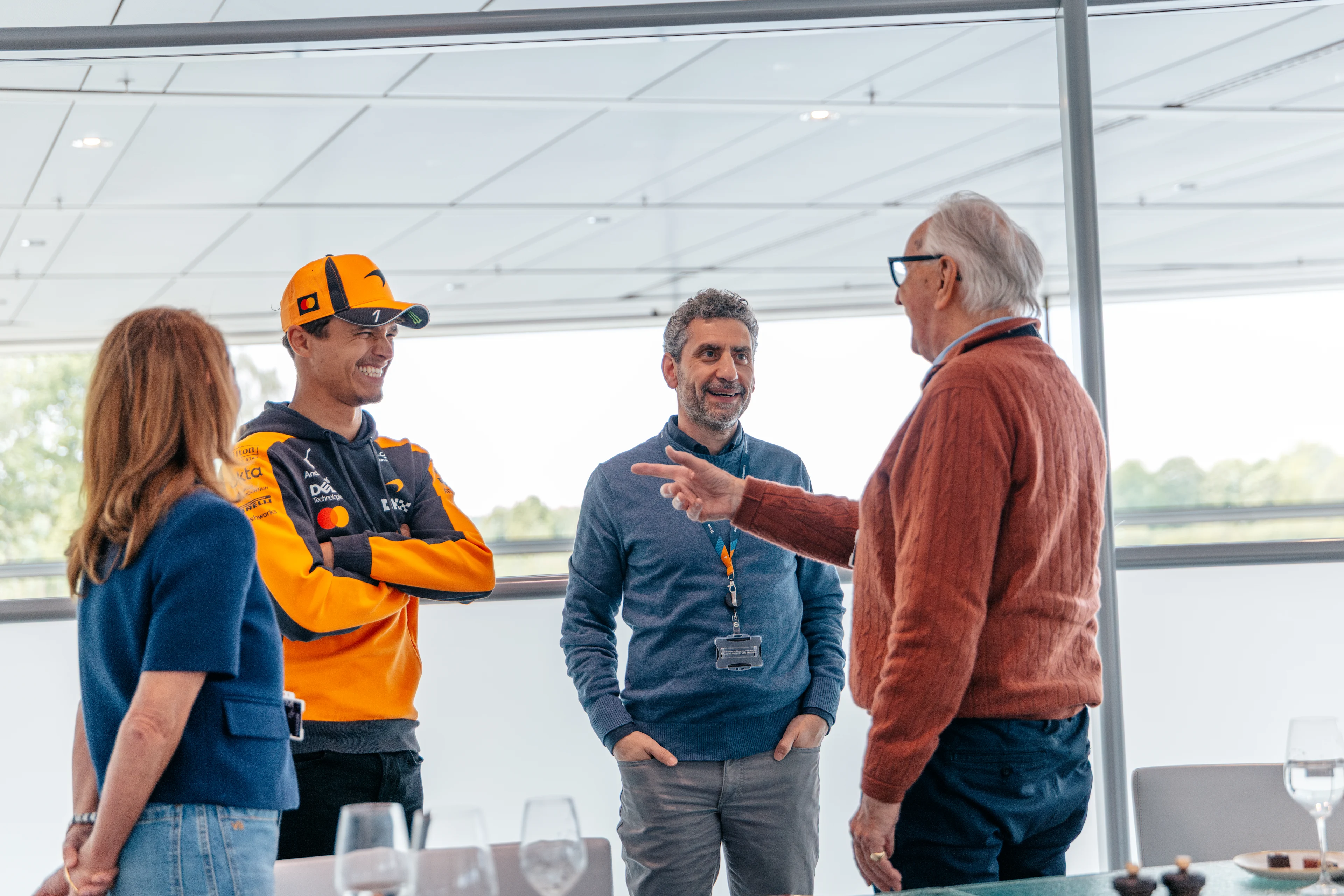
Fast forward to Blackbushe. The team is getting John comfortable in the car. He’s a very spry eighty years old - but eighty nonetheless, making him McLaren’s oldest living Grand Prix winner, ahead of Emerson Fittipaldi by just over seven months. Everyone relaxes when he gets immediately into racing driver mode, discussing pedal positions and his seat. “People talk about muscle memory, so being in the car, the memory and the familiarity will return,” says John.
The shakedown goes very well.
Indy is looking after the car at Blackbushe and will be running it at Silverstone, his final task for the team before a well-earned retirement. “A couple of weeks ago, I think we were all hoping John would be able to get in and want to drive it – and sure enough he did. For me, it was really nice to see him driving MP4/1 again, and be comfortable driving it.
“Come Grand Prix weekend, it’ll be even more special. It’ll probably hit him more then. It’ll be special for the crowd too, seeing his very distinctive helmet and perhaps reliving some great memories of their own. We’re avid racing fans – and there will be plenty more in the crowd at the British Grand Prix. I’m sure it’ll be special for them too, and for the Silverstone Circuit and the British Racing Drivers’ Club [Silverstone’s owners and operators].
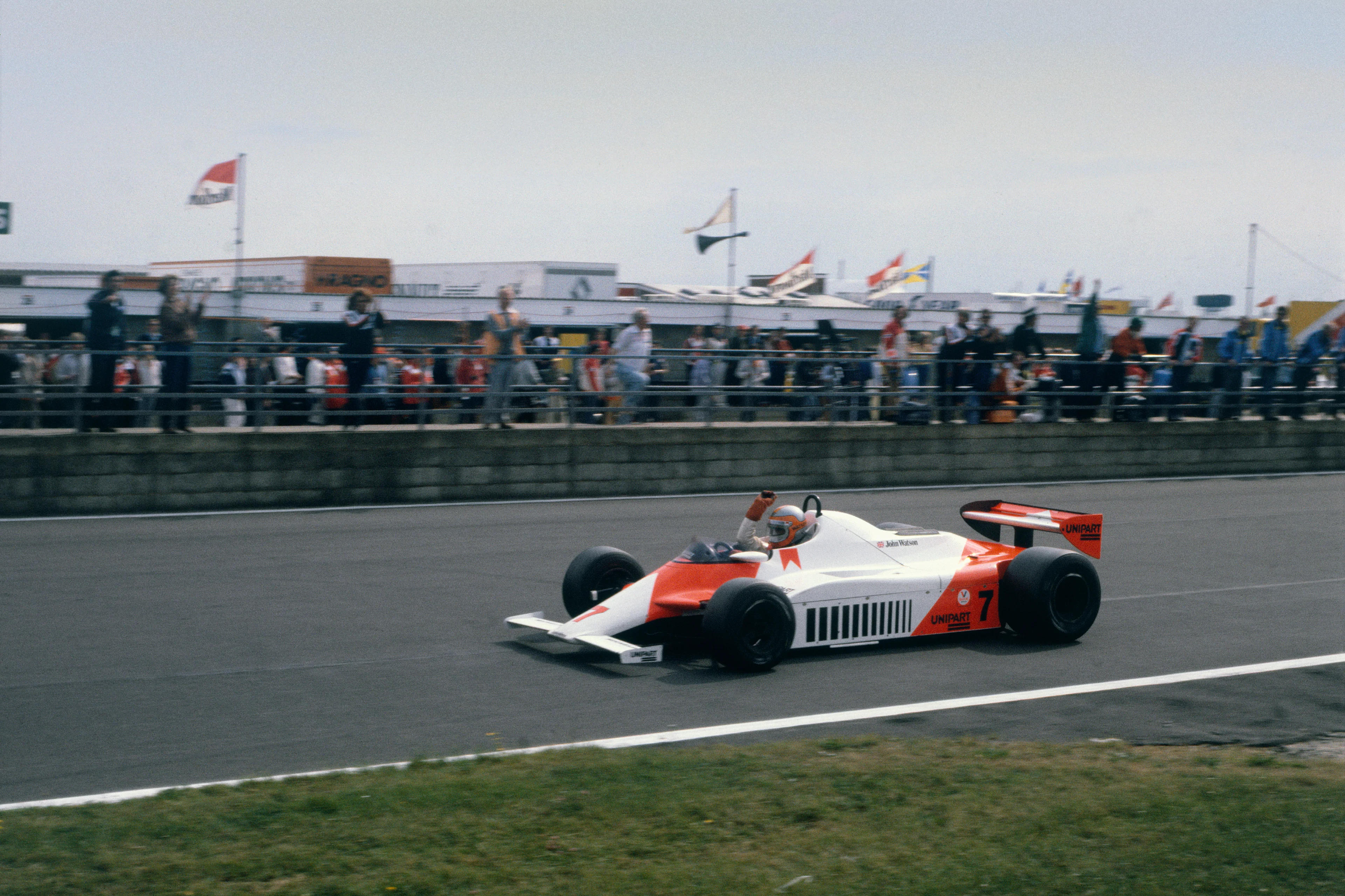
John’s memories of the 1981 race are strong – as is his belief in the importance of the result. “When I found myself leading, and had a comfortable lead to the Chequered Flag, I think the sensation was one of relief. There was joy, of course, because winning your home Grand Prix is one of the most special things a driver can achieve, but there was also so much… if you want to say pressure… in the transition from McLaren as it was under the leadership of [1970s Team Principal] Teddy Mayer, to the partnership between Teddy, Ron Dennis and John Barnard, and then finally Ron and John.
“Can you imagine the pressure Ron Dennis in particular would have felt? Ron’s reaction to seeing the car take the Chequered Flag was absolutely unique. It was a very emotional victory all around the team and for me, for my family who were there at Silverstone, but also for the fans and spectators – because it was unexpected. The crowd warmed to the prospect, and the reaction that I got, and the team got, were very special, and will stay with me the rest of my life.”
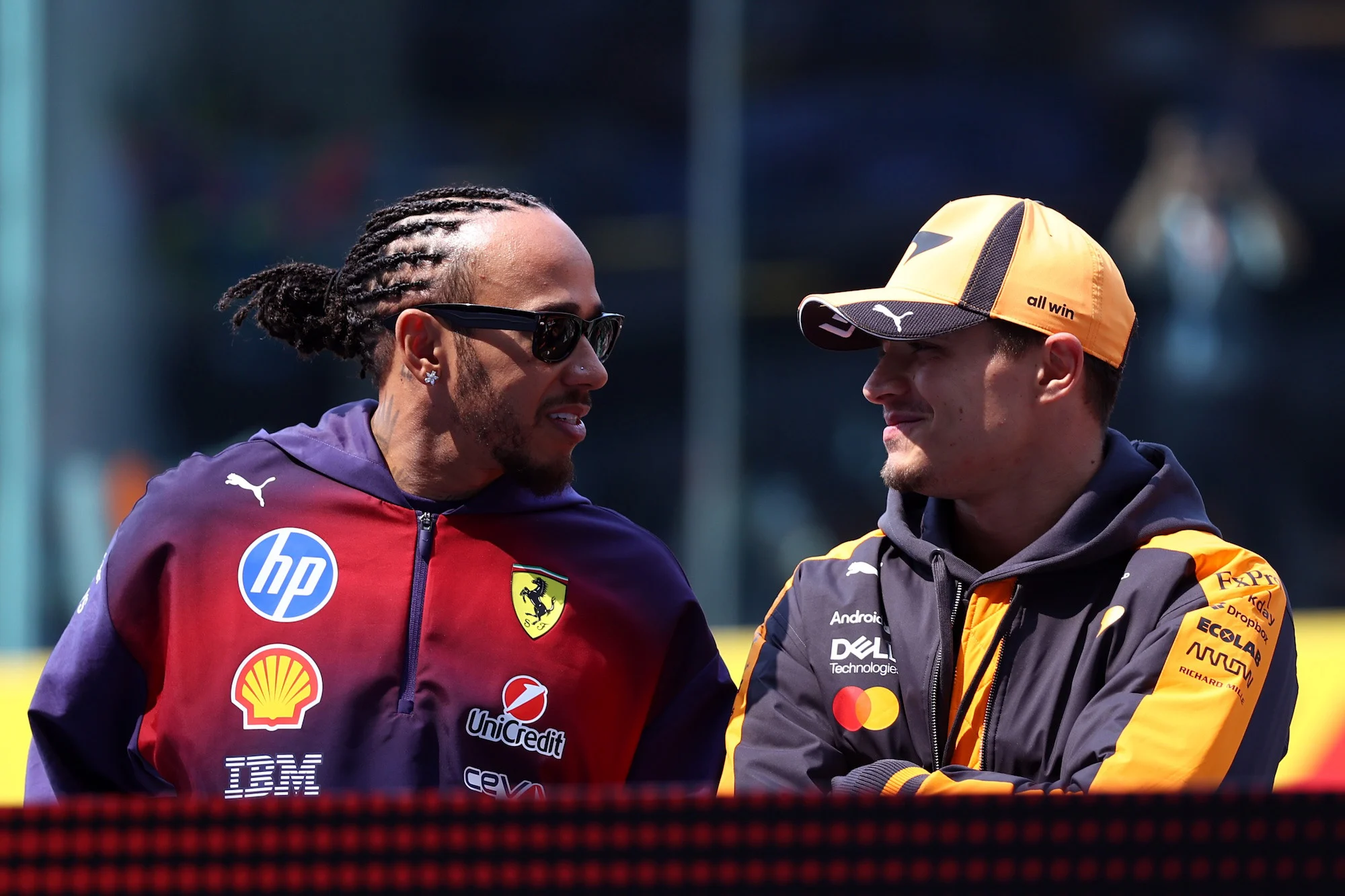
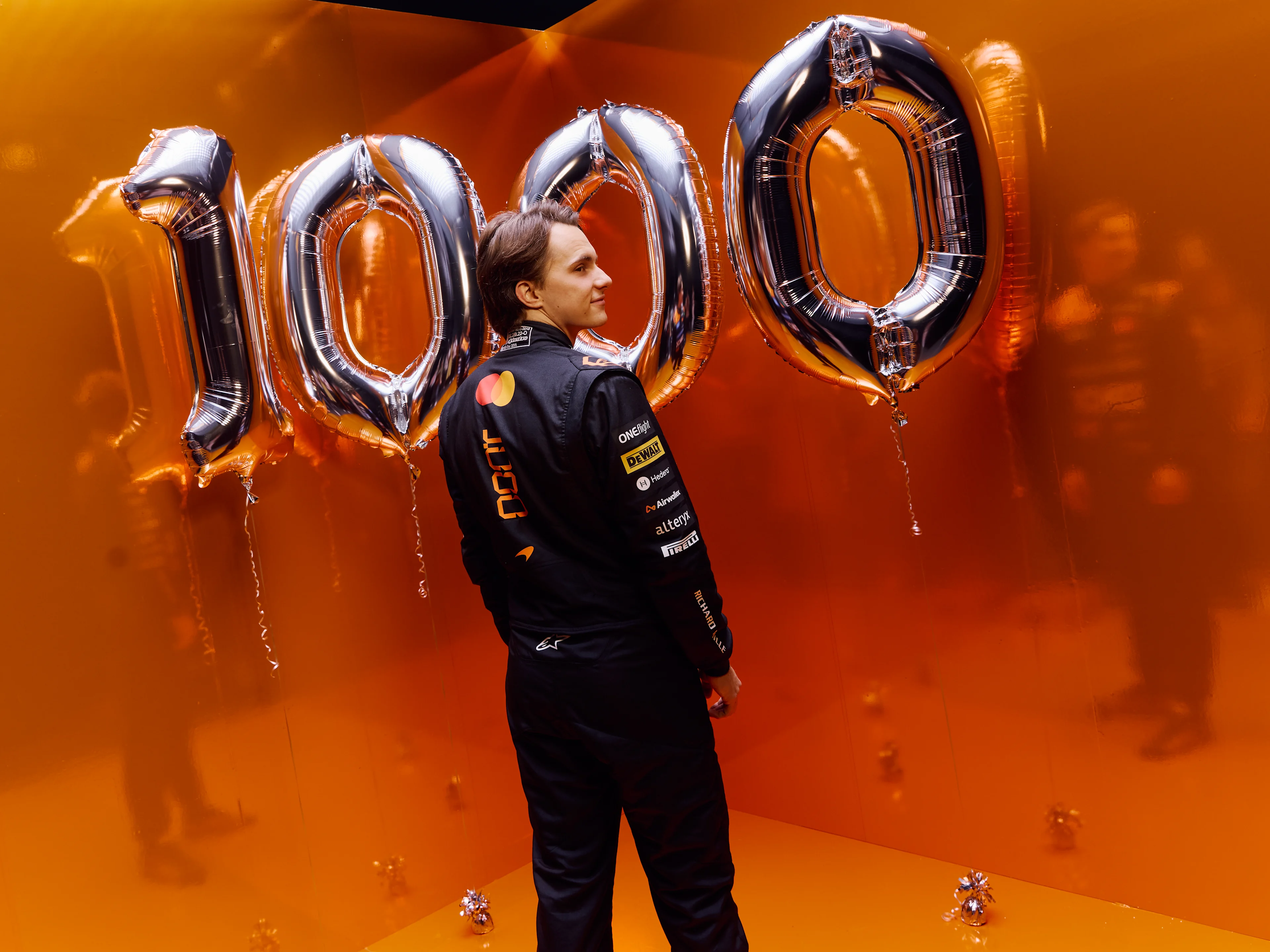
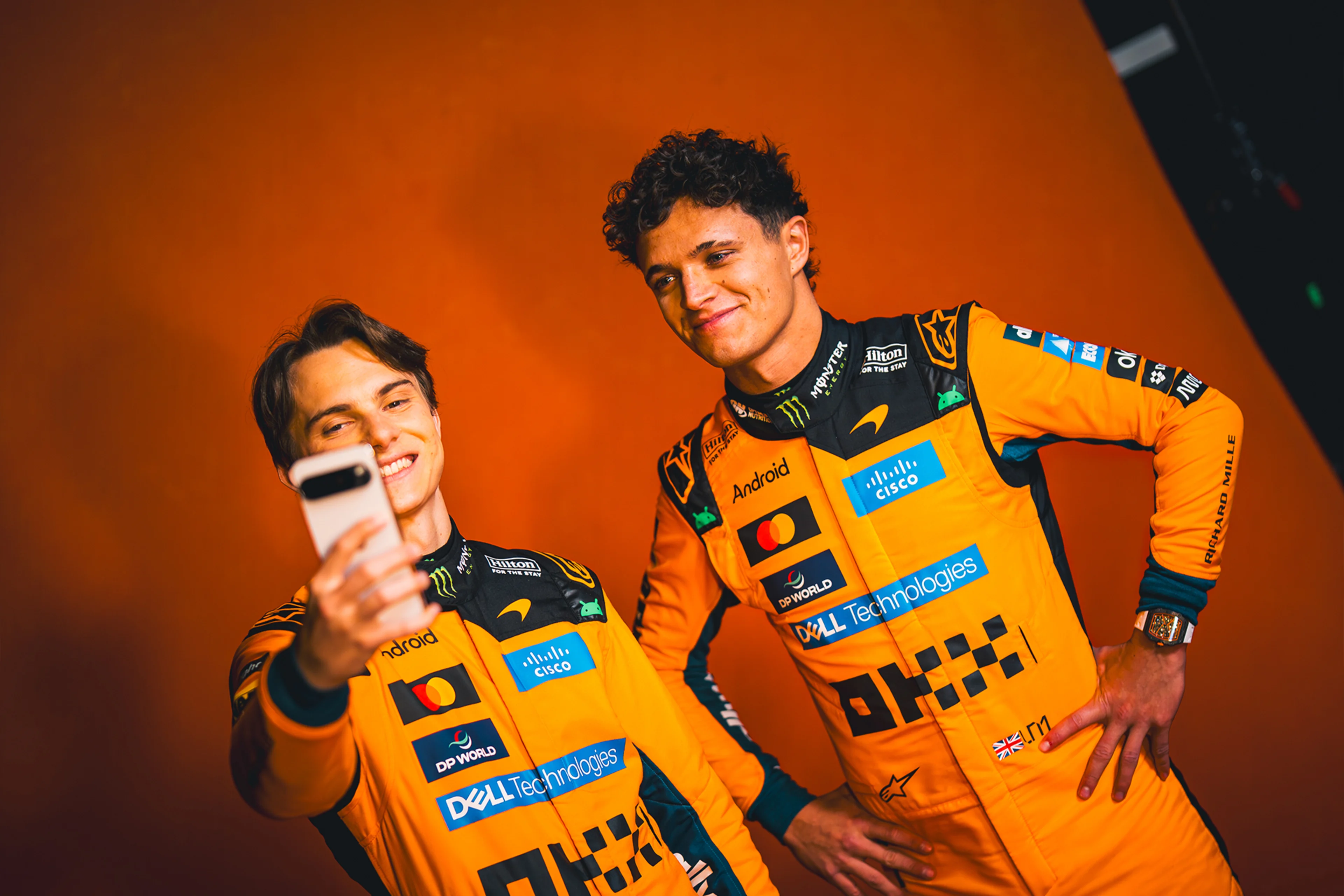
“I'm very flattered to have the opportunity to be reacquainted with what I consider a very important car,” John concludes. “I won four Grands Prix in my five years at McLaren, and they all came in the MP4/1, in its various guises, so it’s a great privilege to be invited to drive it again – though I’m not coming for Lando or Oscar’s jobs just yet!”