

15 October 2026 11:00 (UTC)
We came away from Singapore with a solid result, having deployed a textbook strategy… albeit from several different textbooks

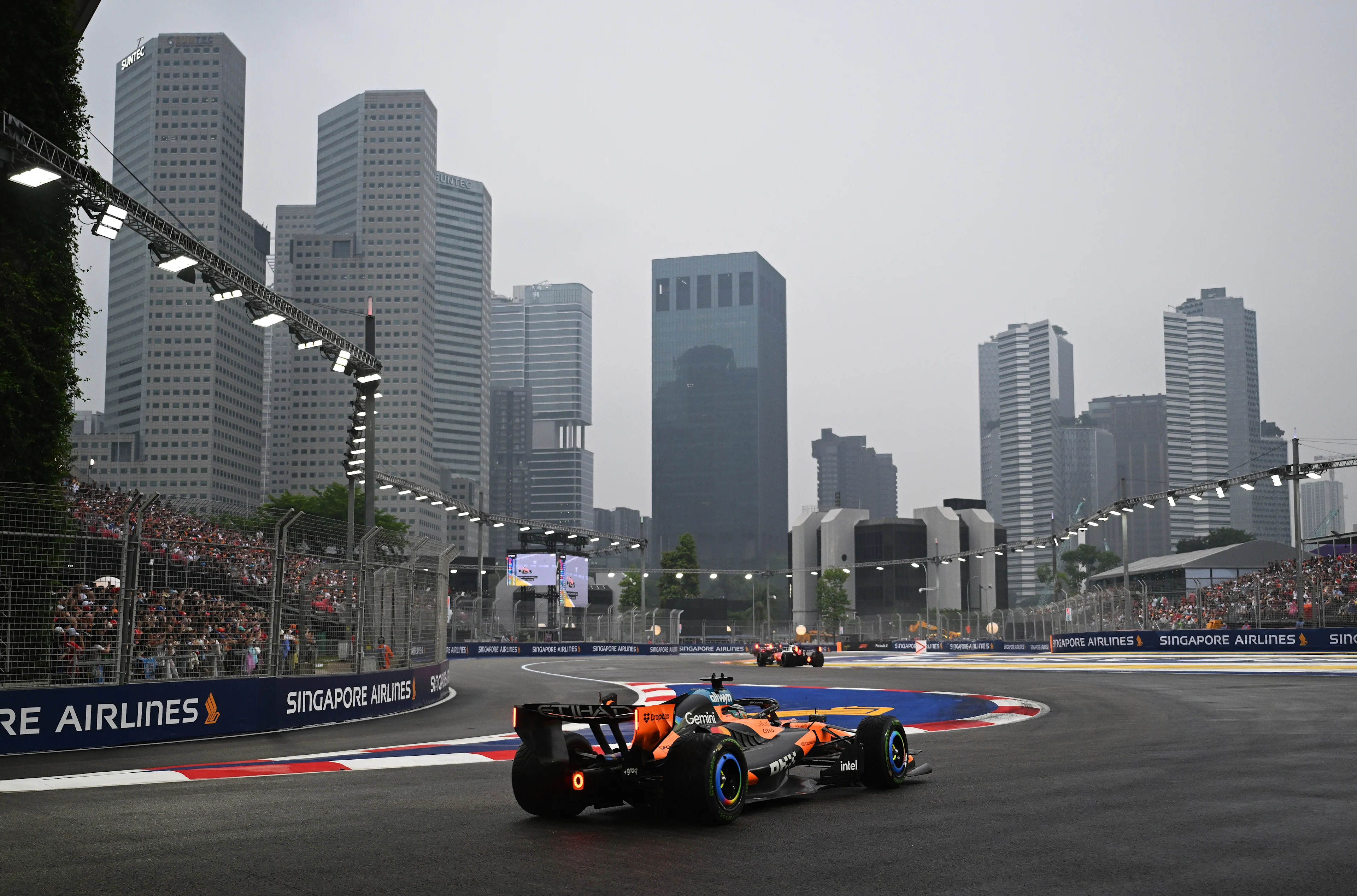
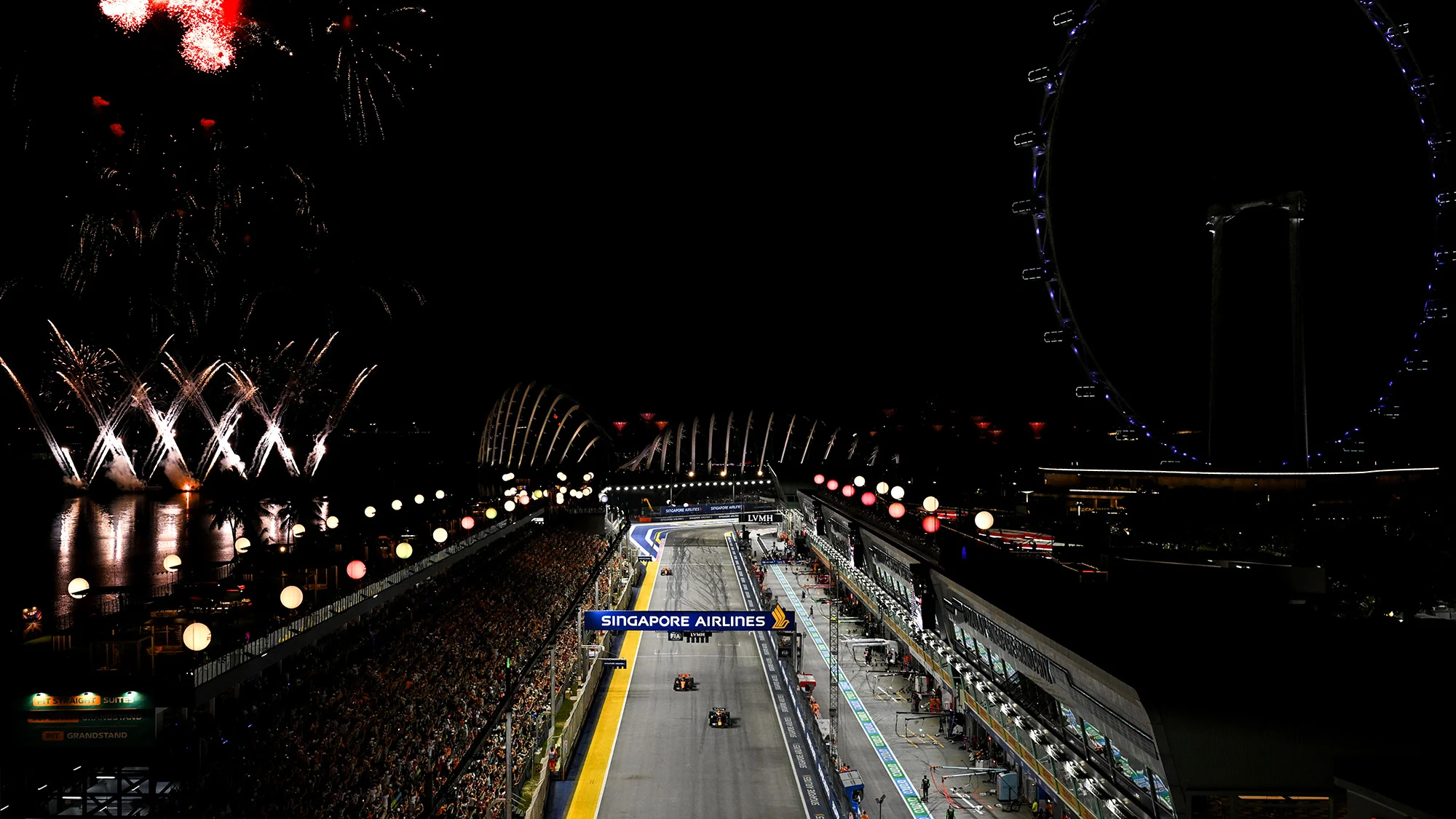
At the end of the Singapore Grand Prix, with the air around the Marina Bay pit lane still smoky from the Chequered Flag fireworks, there was quite a lot of sweat on the brows of the McLaren team. Given the heat and humidity, that was hardly surprising for the trackside crew, but the same could be said for the strategy team working back in the somewhat more temperate climes of the McLaren Technology Centre. For them, it was a busy and complex afternoon.
We had a solid result in Singapore, with both cars advancing from their starting positions in a race where the strategic picture changed three times. Each was a textbook case study in how strategy works in F1, and it’s quite rare to see all of them stacked up in the same Grand Prix.
The changing picture kept the team on their toes, with each scenario presenting a new set of problems to solve, though with a familiar feel. For newer fans, this weekend’s race in Singapore is a great example of the strategic choices teams face every weekend. With the help of FxPro, we’ll explain what questions were asked of the team and how we answered them.
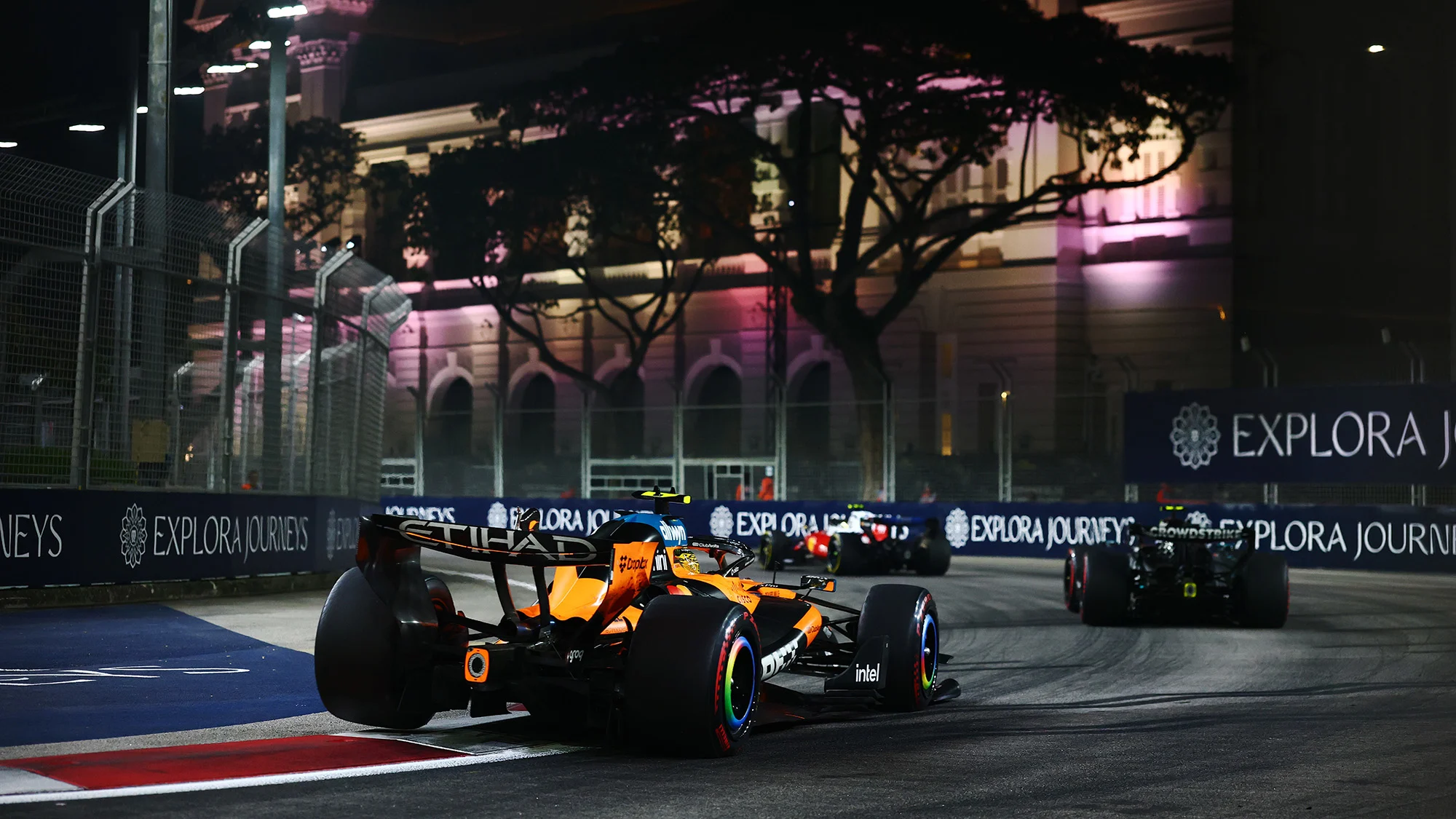
Around five minutes before the start of the Grand Prix, the timing screens display starting tyre information. In Singapore, the expectation was a one-stop race on Medium and Soft tyres. As always, the expectation was that the Medium tyre provides more flexibility to go deeper into the race, while the Soft tyre provides better grip at the start.
From a top six of Verstappen, Leclerc, Hamilton, Antonelli, Lando and Oscar, everyone went for the Soft, except Hamilton. Based on the limited running in FP1, the belief was that degradation was sufficiently low for the Soft tyre to go deep into the race, neutralising the usual advantage of the Medium.
Everyone got away well, and the top six all held position, pulling away from Liam Lawson in P7. At the back of the group, Oscar had an advantage of five seconds after five laps, 10s after 10 laps, and 15s after 15 laps. By then, Verstappen and Leclerc had pulled away, with Hamilton in P3, creating a bottleneck, while Antonelli and Lando had Overtake Mode every lap but couldn't seriously attack.
With the team considering the undercut, they asked Lando if he could go faster in clear air, he said yes, and, with Lawson within his pit window, they asked if he thought he could quickly pass the Racing Bulls driver. Again, it was a firm yes.
Sometimes unambiguous conversations like this are genuine, sometimes they’re designed to provoke a response from a competitor, and sometimes they can be both at the same time. Rather than Lando, Hamilton was the first to blink, pitting on Lap 18. He had a good stop and came out on a Soft tyre, just behind Lawson, whom he quickly passed.
Hamilton’s last complete lap before stopping was a 1m39.1. With him out of the immediate picture, Antonelli, Lando and Oscar picked up the pace immediately, dropping their pace into the 1m37s bracket. Hamilton’s pace on the new Soft was sufficient to rule out Antonelli undercutting, and Antonelli, able to pull out a few tenths each lap on Lando, deterred McLaren from attempting to undercut him. Antonelli pitted on Lap 23, to come out behind Hamilton, and Leclerc pitted on Lap 24 to maintain position ahead of Hamilton.
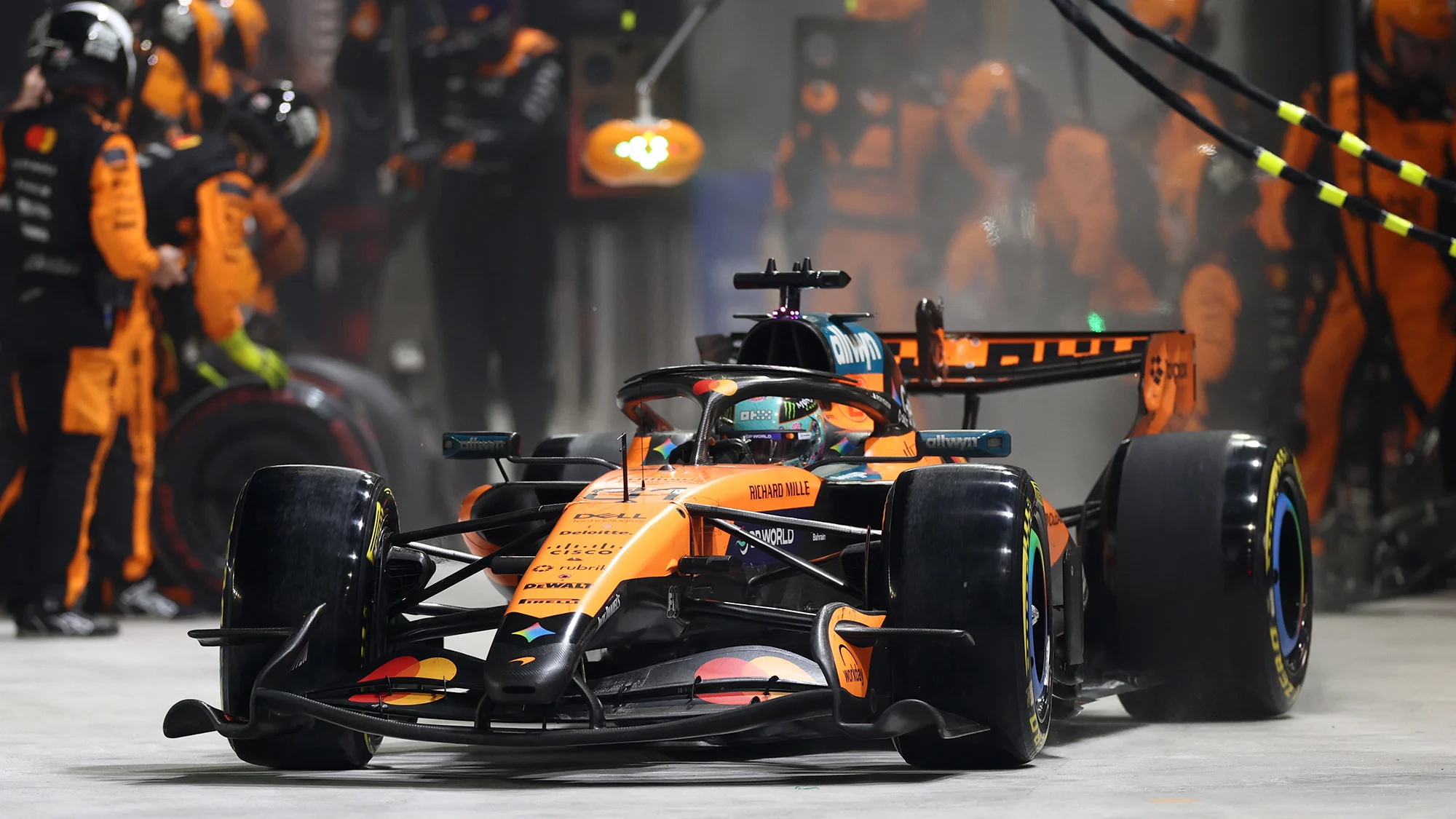
With Verstappen now the car ahead, and well clear of undercut range, and with Leclerc, Hamilton and Antonelli already within the pit window, there was no incentive for the McLarens to pit. The best race now was to stay out as long as possible, shorten the second stint, and be in position to attack at the end of the race with a sizeable tyre delta. This strategy had worked exceptionally well for Oscar in 2024, allowing him to jump both Mercedes.
The strategy comes with the potential bonus of a cheap stop under a Safety Car or Virtual Safety Car, and the crew were on the edge of their seats when a Yellow Flag came out, ready to jump up and double-shuffle the cars. It didn’t happen, and the drivers pushed on to the limit of the tyre. The plan in this scenario is to keep going until you can’t maintain a specified pace.
Lando boxed for Mediums on Lap 32 with Oscar following on 33. With all six cars now having pitted, the order from the start had not changed. Lando in the lead McLaren returned to the track with a 10s deficit to Antonelli, 14 to Hamilton, and 16 to Leclerc, and a tyre advantage of nine, 14 and nine laps, respectively. Lando cut the gap to Antonelli by three seconds over the next six laps… but it's impossible to tell what that may have led to, as a VSC on Lap 39 changed the race again.
Clutch problems for Lance Stroll triggered a VSC on Lap 39. Leclerc and Antonelli took advantage to convert to a two-stop. Crucially, Hamilton did not. Neither McLaren driver pitted, so Leclerc rejoined ahead of Lando, and Antonelli between Lando and Oscar. Lando and Oscar instantly went from having younger to older tyres.
There would not have been any particular value in a stop for the McLarens: it would have shuffled them back to P5 and P6, on the same age tyre as the cars in front. The first stint had demonstrated that they wouldn’t be able to overtake, and with a large gap back to P7, they lost nothing by staying out. Things could happen – someone might fluff their pit-stop, or a Red Flag might lock in the positions – but more significantly, with Hamilton also staying out, there was a genuine chance of gaining a position on track.
Lando’s gap to Hamilton was 12s once racing resumed. His tyre delta showed almost instantly. He had cut the gap down to five seconds by Lap 46, and was in Overtake Mode range by Lap 51. However, Antonelli, with fresher rubber, was catching Lando at the same rate Lando was catching Hamilton. The three-way fight ended with Antonelli passing both, and Lando passing Lewis.
Oscar’s race, meanwhile, had taken a strange turn. On Lap 40, the team had noticed a slow puncture on the front-right. He pitted on Lap 41, with enough pressure left in the tyre for the team to do a normal stop and swap him back to the better Soft compound. Such was the gap to P7, Oscar was able to make his pit stop without losing a position. He wasn’t going to be catching the cars ahead – but they could come back to him.
The job for Oscar, therefore, was to be tidy. He should close the gap without overstressing the tyres or overheating the brakes. He needed to be in the best shape possible to take advantage of any late-race drama, whether that was a Safety Car or a slowing driver ahead.
With 20 laps remaining, Oscar was 42 seconds behind Hamilton, but lapping almost two seconds a lap faster. The gap came down at a regular rate until Hamilton, Lando and Antonelli started fighting, and then nose-dived 15 seconds in three laps.
Unlikely to catch Antonelli, Lando asked if he should drop back towards the impending fight between Hamilton and Oscar and help out his teammate, but instead was told to stick with Antonelli, given the Italian was already on three strikes and could potentially pick up a penalty. They were also confident Oscar had it covered, and the Australian subsequently passed Hamilton for P5 two laps from home.
We’ve had races this year where the strategy was proactive, but in Singapore it was very much reactive: responding to others' decisions and choosing when to push and when to hold. Getting the strategy right ultimately earned us two places at the Chequered Flag, well worth everyone being hot and sweaty.
Learn how FxPro combines speed, innovation, and precision to drive performance in financial markets.