



1 July 2026 11:10 (UTC)
"The last few events have demonstrated just how incredibly tight the competition is at the front of the grid"

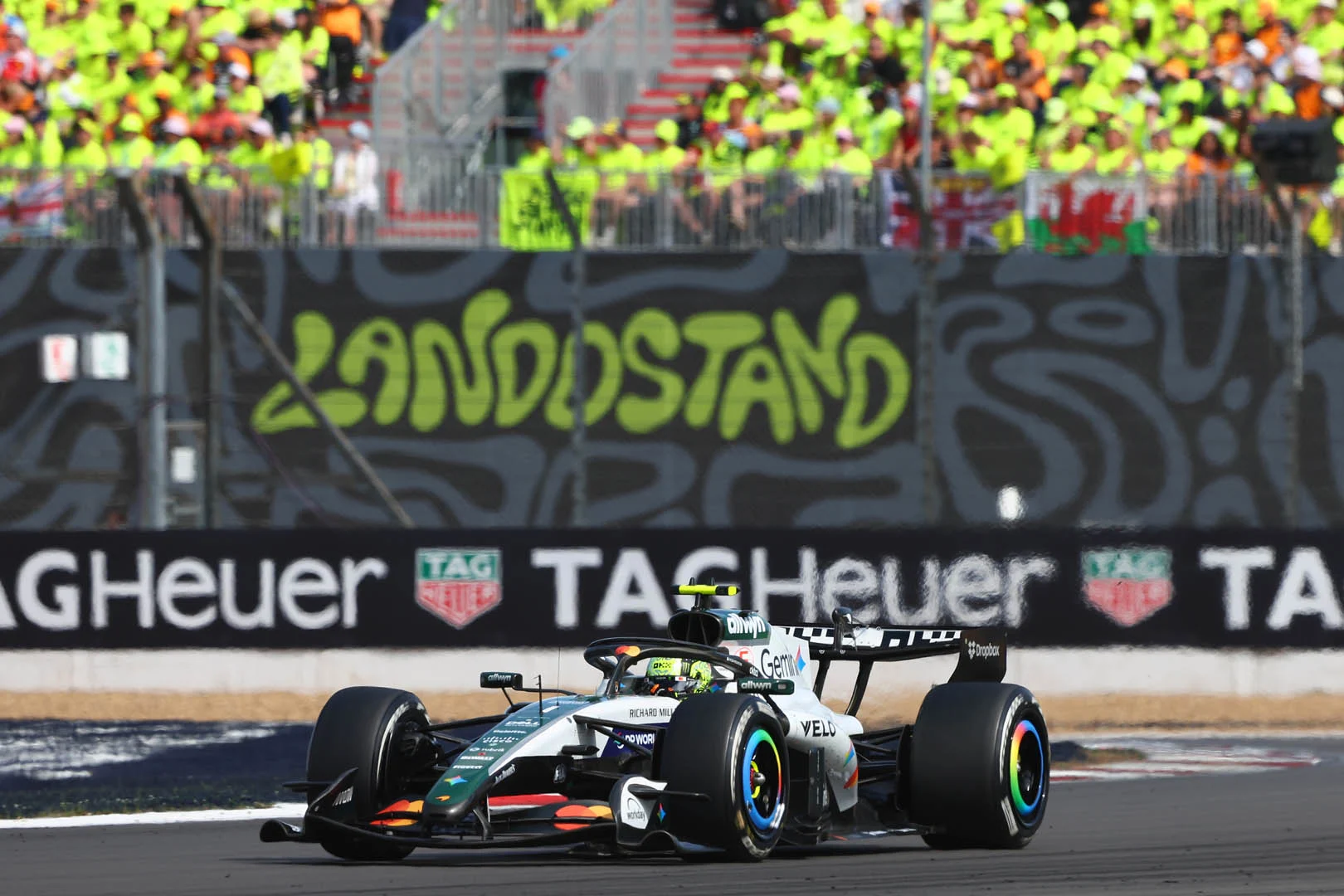
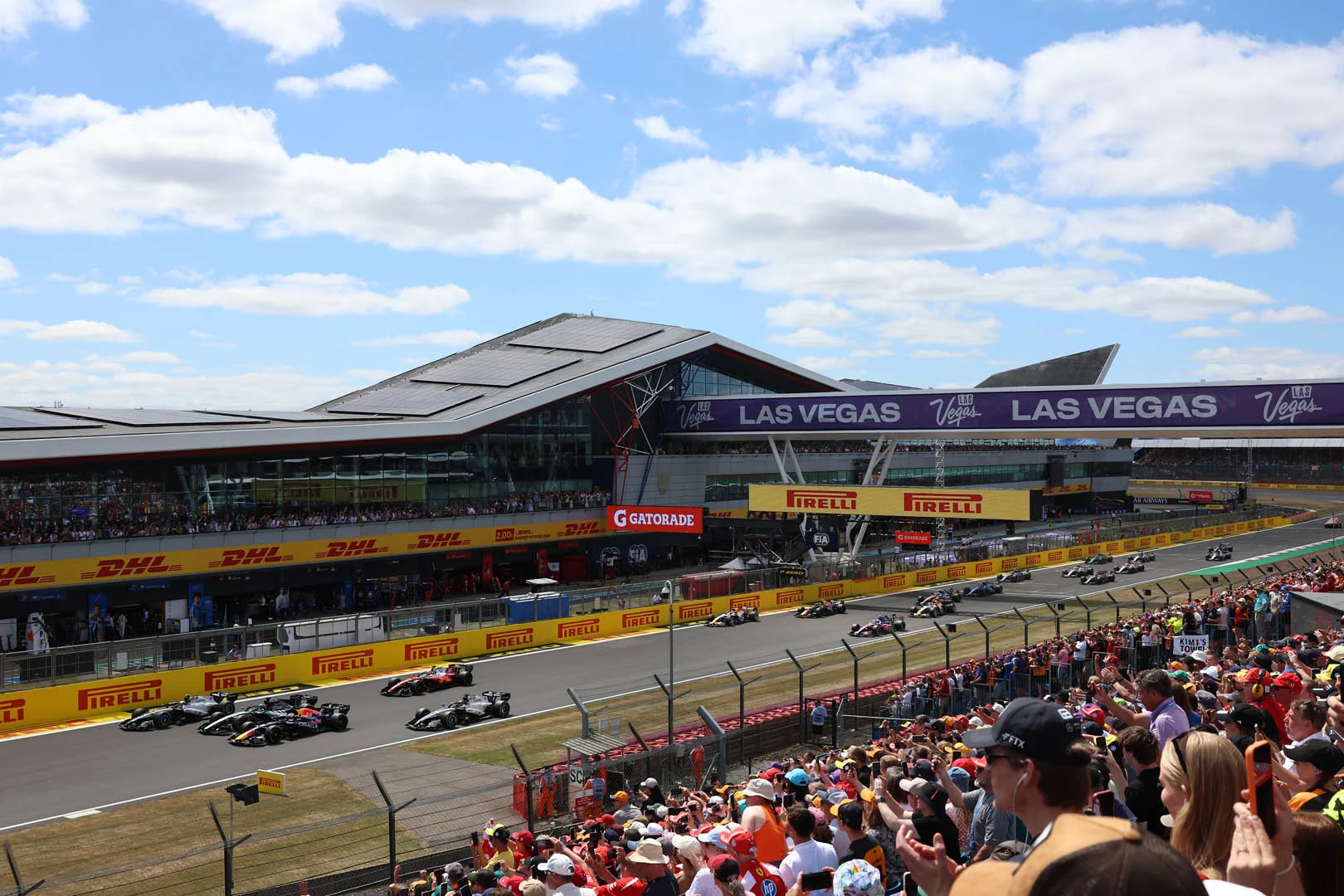
From the Styrian Alps to the British countryside. The Silverstone Circuit, a former farm and RAF airfield, has been hosting motor races for 78 years, including the first-ever Formula 1 World Championship Grand Prix in 1950.
Three circuits have held the British Grand Prix since F1’s inaugural race, but with 59 races to its name, Silverstone, in rural Northamptonshire, has become known as the home of British motor racing.
And it’s easy to understand why. Nearly eight decades on from its first race, Silverstone remains one of the calendar’s most exciting venues. It’s a circuit that has stood the test of time. A modern-day Formula 1 car looks just as good winding through its fast, flowing corners as it did 70 years ago. There have been several updates through the years to modernise its layout, but many of the circuit’s defining characteristics remain the same.
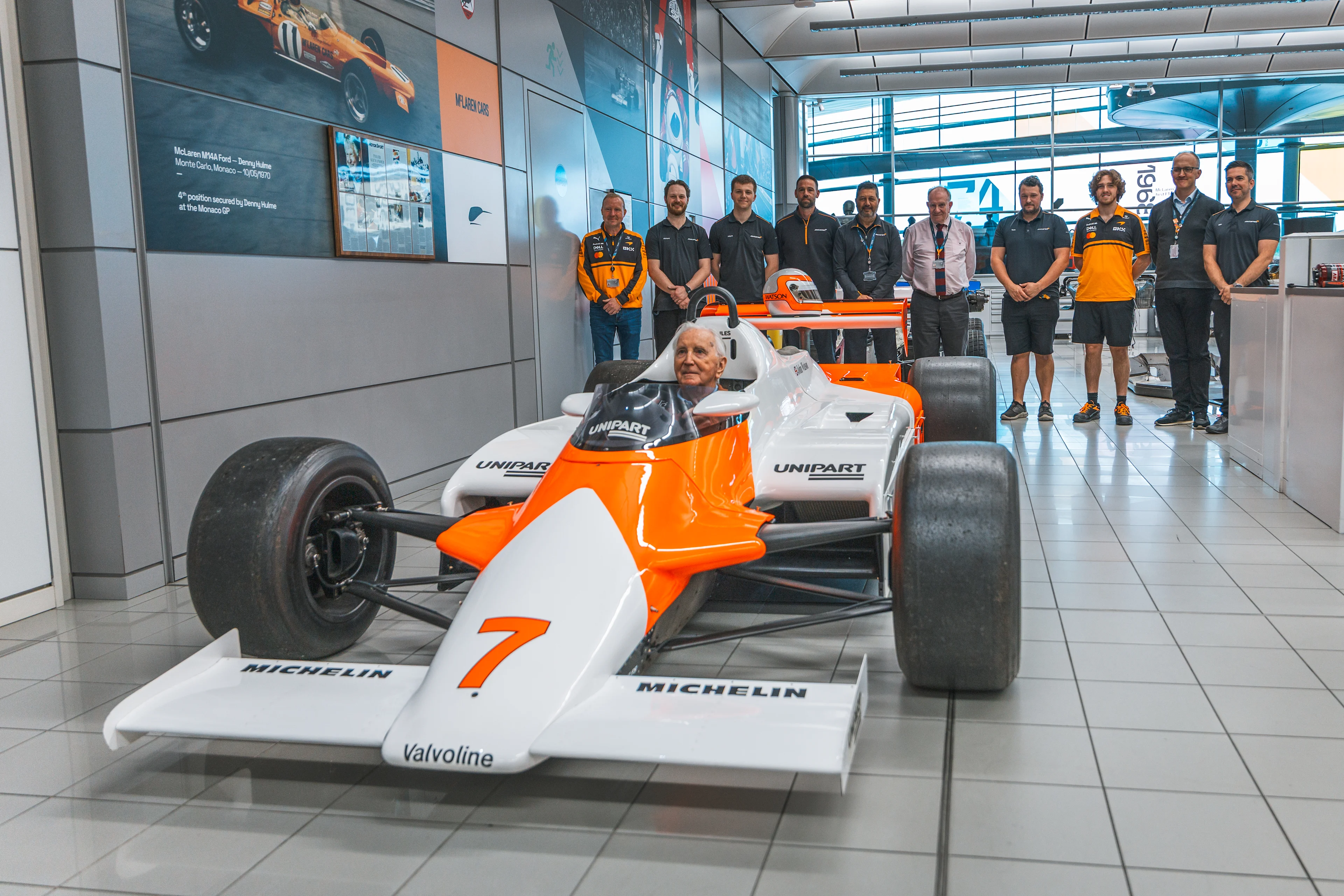
This weekend, in celebration of our history at this special circuit, four-time McLaren race winner John Watson will drive his 1981 British Grand Prix-winning McLaren MP4/1 in a special exhibition run on Saturday morning. The MP4/1 delivered the fourth of our 15 wins on home soil, and, significantly, marked the first-ever Formula 1 Grand Prix victory for a car built around a full carbon fibre chassis. The design quickly became the standard across the sport and revolutionised safety.
To help prepare you for our home Grand Prix, we’ve spoken to Randy Singh, Senior Director, Racing, and explored the key sections of the circuit. We have also looked back at an iconic race from our past here and put another quickfire question to Lando and Oscar.

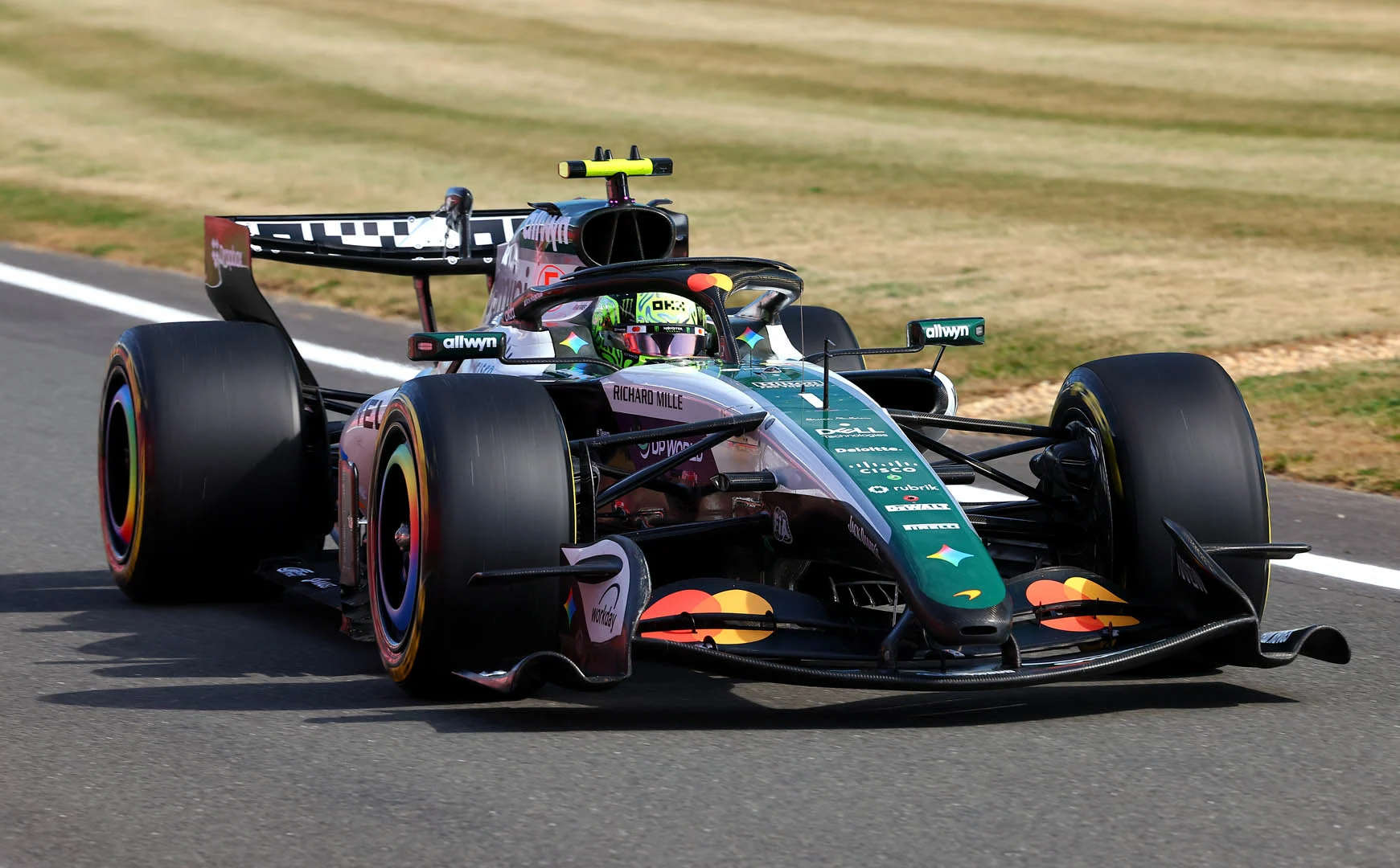
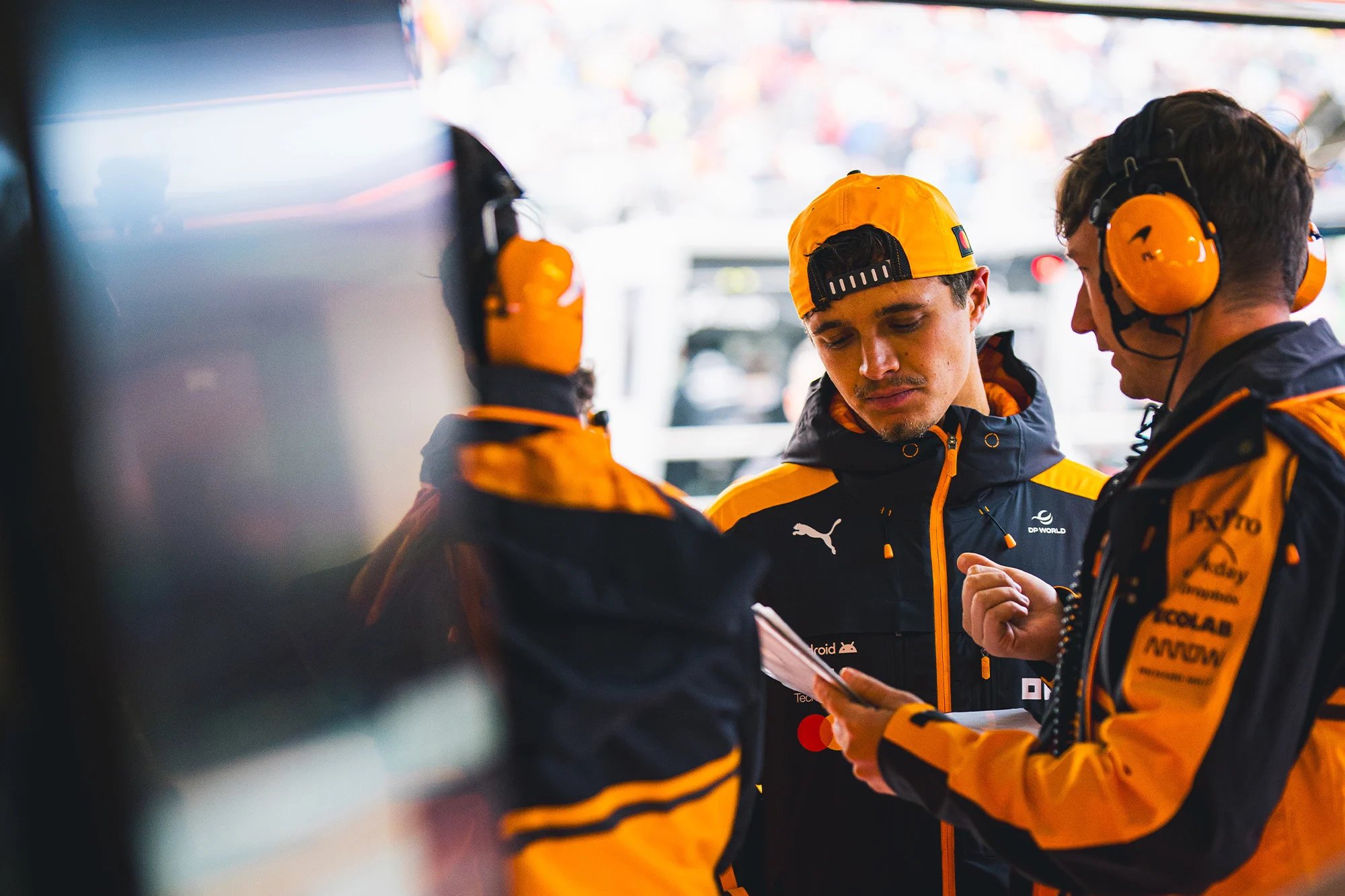
“The last few events have demonstrated just how incredibly tight the competition is at the front of the grid, with three different winning drivers in the last three races. We expect this intensity to continue across the front running teams in Mercedes, Ferrari, Red Bull, and ourselves, making it vital that we optimise and maximise every aspect of our package.
“Silverstone itself is a circuit dominated by long straights and high-speed corners, but the lower-speed, technical sections are equally critical. Efficiency is paramount, especially with the extra challenge this week around high energy management and finding the right deployment during the Sprint weekend sessions. The drivers therefore need absolute confidence in the car to extract the most from those high-speed sections where small differences have a significant impact on overall lap time.
“While Silverstone is a more flowing circuit compared to recent rounds in Austria and Spain, the high-speed corners combined with the expected challenging conditions will place unique demands on the tyres. We are preparing for a dry, hot weekend, which brings the challenge of managing tyres overheating, though we remain mindful of the potential for unpredictable thunderstorms. With this being a Sprint weekend, the limited practice time means we must hit the ground running and the ability to learn quickly through the Sprint sessions and apply those insights to the main Qualifying and Race will likely be the defining factor in such a competitive field.”
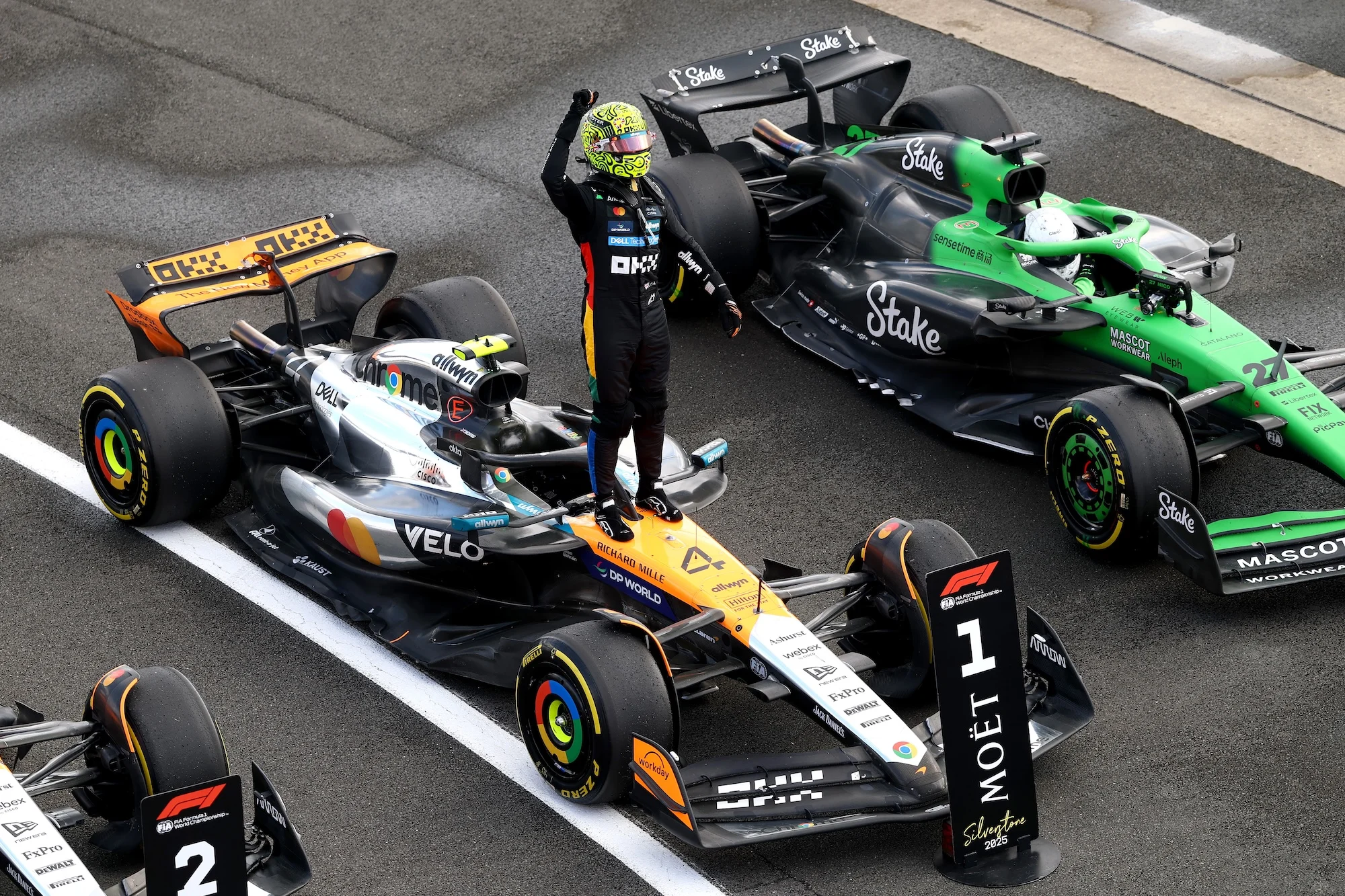
The Silverstone Circuit is a challenge that both drivers and teams love. Drivers, because it’s a track where they can put their foot down and fight tyre-to-tyre, and teams, because it presents a range of complex, often conflicting demands.
The 5.891km, 18-turn circuit really pushes a car to its limits. Wide, fast and free-flowing, with high-speed, sweeping corners, Silverstone is what’s known as a power circuit, albeit not quite in the same way as Monza or Baku.
Featuring three straights over 500 metres, an average speed in excess of 200km/h, and with more than 60% of the lap spent at full throttle, Silverstone demands a lot from the power units.
However, unlike a traditional power circuit, Silverstone has several high-speed corners, such as Copse, Chapel and Maggots/Becketts, which require a lot of downforce to maximise grip.
This combination also puts a lot of strain on the tyres, which have to sustain high speeds for the vast majority of a lap.
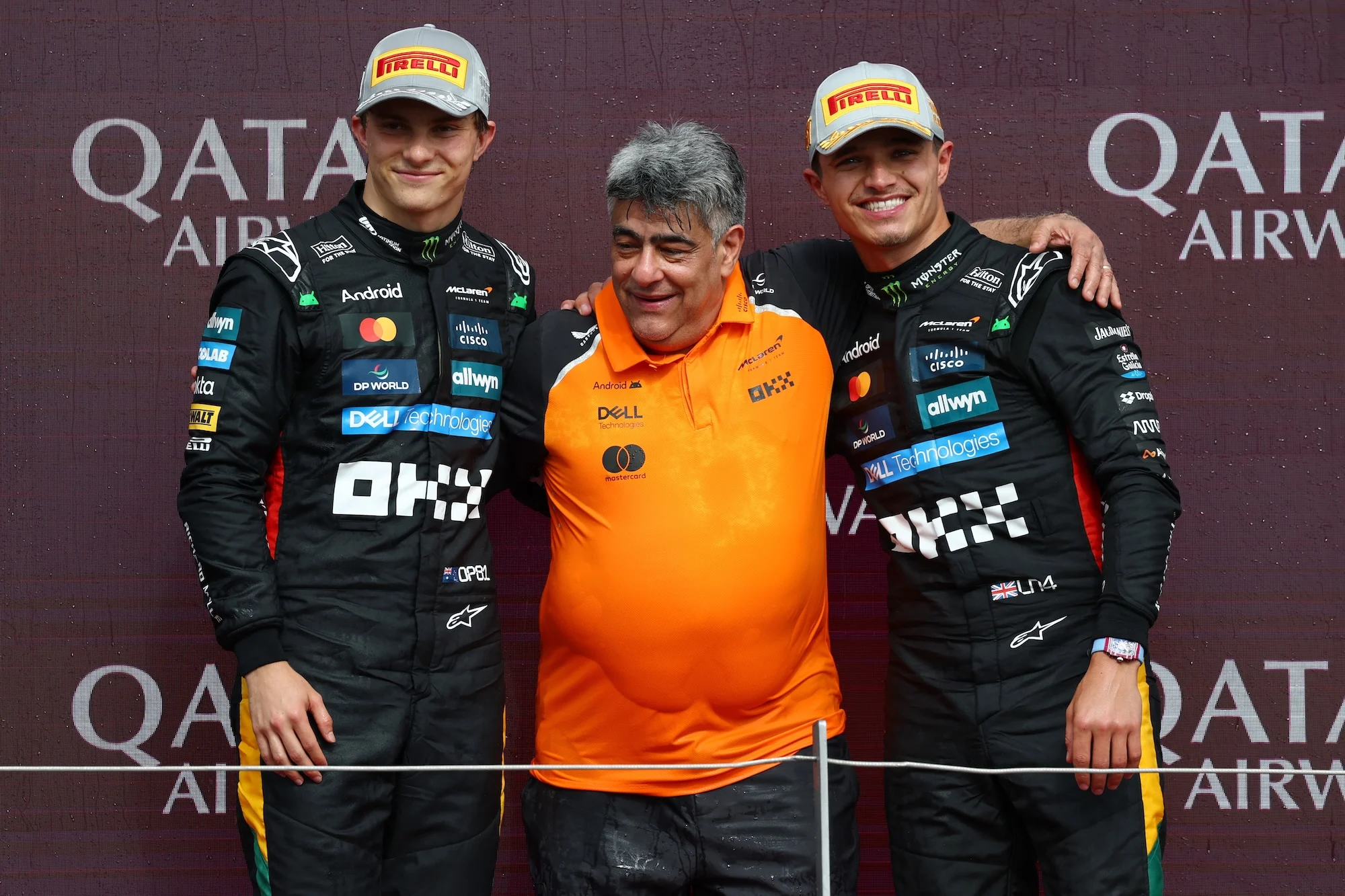
Oscar gained three places in the Austrian Grand Prix to finish fourth, while Lando secured seventh, ensuring we remain third in the Constructors’ standings with 159 points, 45 behind second.

3 - 5 JULY
John Watson’s victory at Silverstone in the 1981 British Grand Prix marked the beginning of a new chapter for McLaren. After several seasons off the pace, the team had merged with Project Four, the F2/F3 team founded by Ron Dennis.
“Reflecting on my time with McLaren, the period from 1980 was truly transformative,” says 1981 McLaren Formula 1 Driver, John Watson. “The arrival of [famed F1 car designer] John Barnard signalled a pivotal cultural and technical shift, and his insistence on design integrity over workshop convenience was fundamental.”
John Barnard created the MP4/1, featuring F1’s first carbon fibre monocoque, and while it hadn’t proved hugely successful in the opening few rounds, podiums in Spain and France, the two rounds prior to the British Grand Prix, showed that it was a step in the right direction.
“We turned a difficult car into a race-winner,” says John. “The aero on the car suddenly began to work as it never had previously worked. That evolution was a testament to the new vision and engineering discipline that laid the foundation for decades of success.”
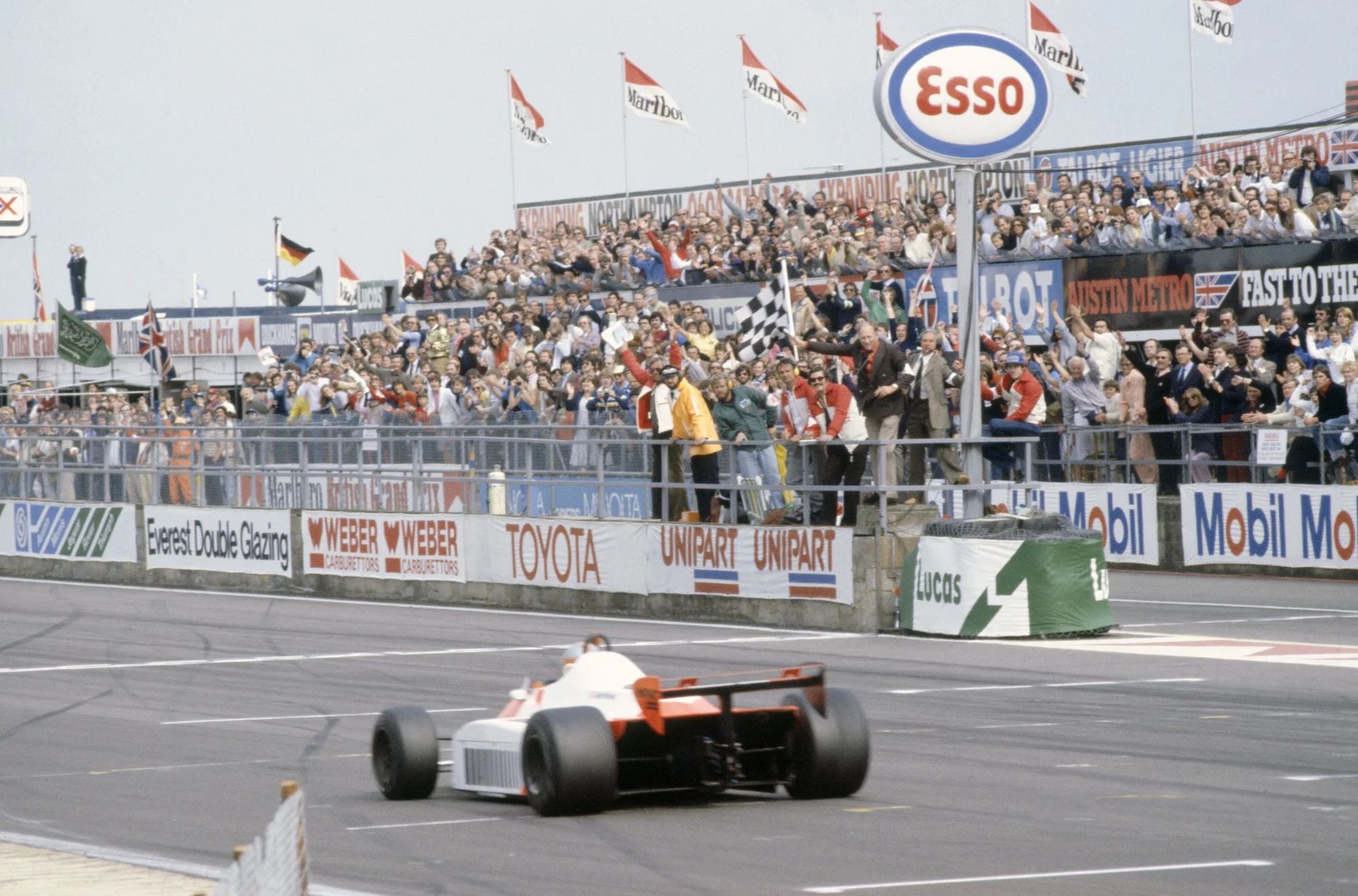
Silverstone was the high point of the season, though the path to victory wasn’t obvious in Qualifying, with John in P5. A poor start, followed by a crash ahead of him, dropped Watson to eighth.
This is when the recovery began. The very stiff MP4/1 ran well at the high-speed Silverstone track. From eighth, Wattie began to steadily climb the order, emerging in second by Lap 17, when Prost retired. This looked like where he was going to stay, with Arnoux comfortably in front, but the Renault began to slow, and conceded the lead to John on Lap 61.
This was the start of a new era for McLaren. “That victory at the British Grand Prix in 1981 remains the most special of my career,” says John Watson. “Winning at home is every driver's dream, but this was more. It was the moment that validated the immense effort and investment in the team's new direction and, crucially, it was the first-ever win for a full carbon fibre chassis.
“It was a victory for McLaren, for British innovation, and for the thousands of fans at Silverstone, whose support I could feel on every lap. To be reunited with that very car 45 years later is a fantastic honour, and a powerful reminder of a day that changed Formula 1 forever.”
Each race week, we’ll be putting the same question to Lando and Oscar to find out just how similar (or different) they really are. The question could be anything: from their favourite corner on the F1 calendar, to their ultimate pre-race anthem, or even the one food they absolutely refuse to eat on race week.
This week, we asked them which race from their past race they would most like to relive.
Oscar: The 2024 Azerbaijan Grand Prix. It was a really exciting, very nerve-wracking win. It wouldn’t be the same if you knew the result, of course, so if I was going to relive it, I’d want to go into the race not knowing. If I could do that, it would be cool. Crossing the line in Baku that day was very special.
Lando: Oh, I think you know the one. I’m going to have to go with Abu Dhabi last year, when I won the Drivers’ Championship. It’s difficult not to choose Miami in 2024, where I won for the first time, but it has to be Abu Dhabi, with Miami not far behind.
Follow all of the action this weekend via the McLaren Racing App, available to download on Android and iOS.