

3 June 2026 13:00 (UTC)
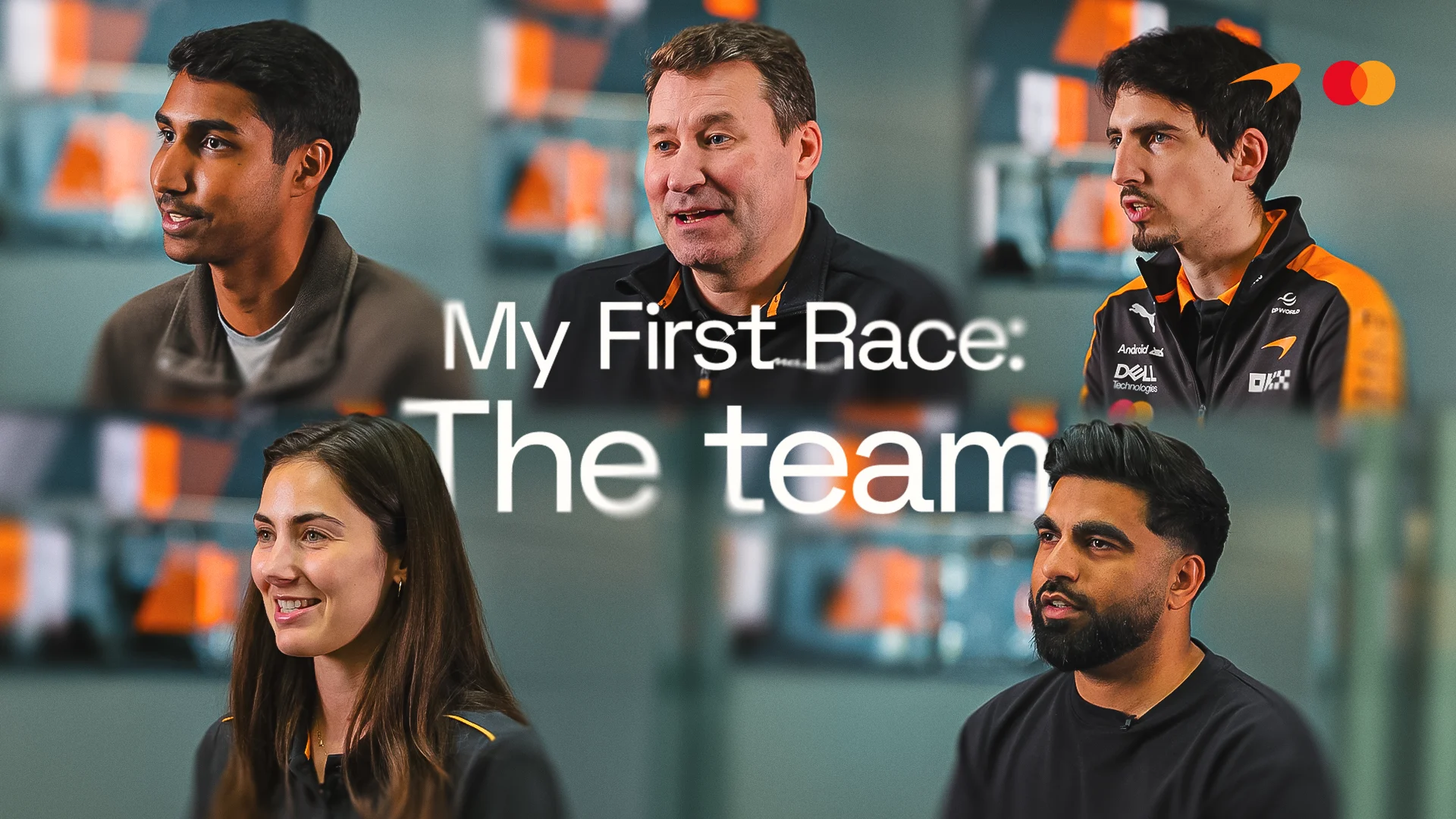
As part of our 1000th Grand Prix celebrations, we asked our teammates to reflect on their first races with McLaren

When tackling any retrospective, the narrative tends to be seen through the lens of those who occupy the majority of minutes on your television screens: drivers, team principals, and other members of senior management. But the story of a team is shaped by thousands more people, trackside and at the factory, all channelling their expertise, passion and commitment towards getting those two cars to the finish line.
Every one of them has their own tales to tell of how Formula 1 has impacted their lives.
From the days of rolling fourth cars up to ‘fisherman’s hut’ garages in Monaco to today’s teams of strategists working at the MTC, our team members made their Grand Prix debuts in vastly different times and roles. As we mark 1000 Grands Prix, here are some of their first-race memories.
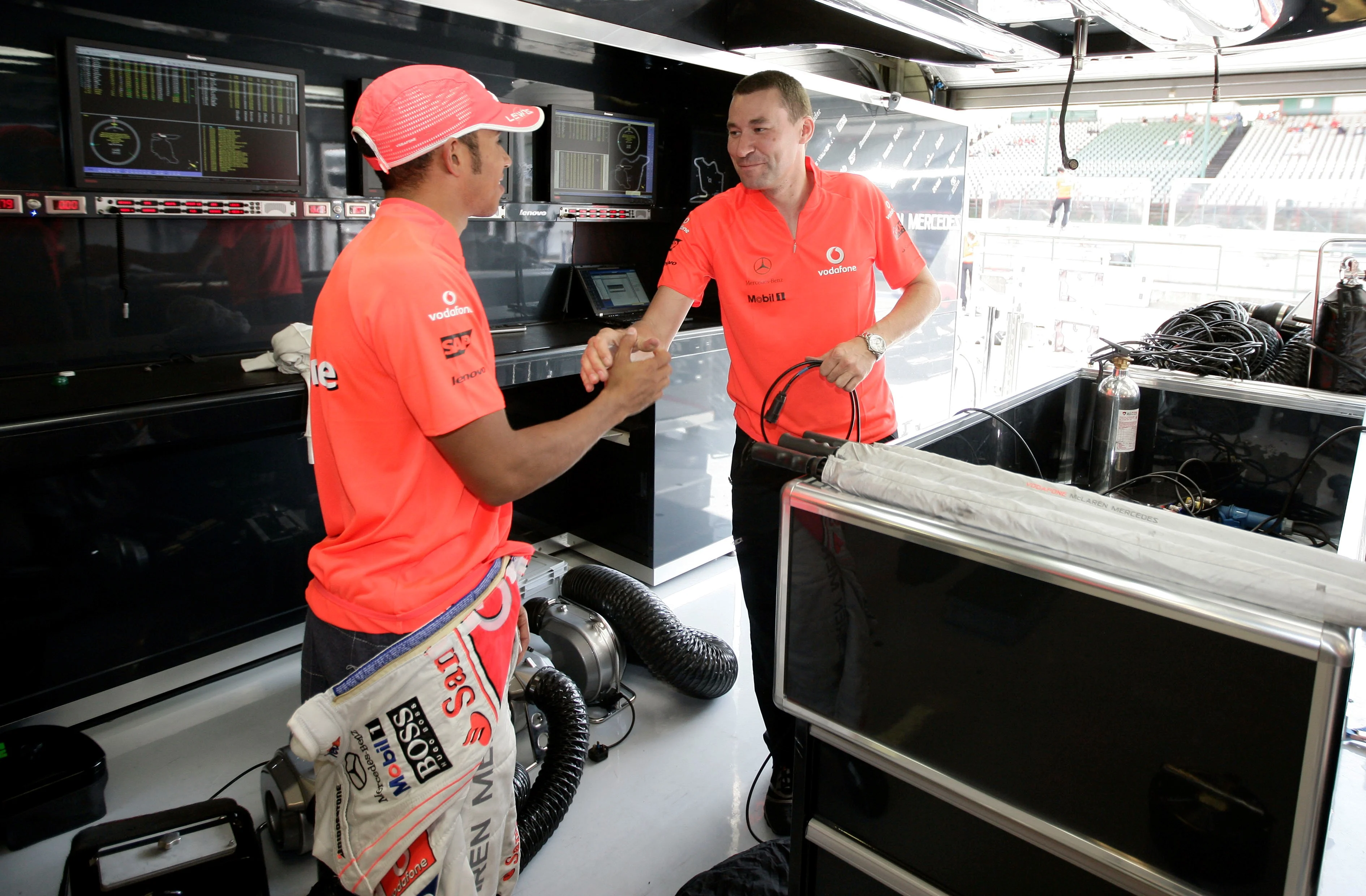
For our Operations Director, Jono Brookes, that tale goes all the way back to 2001.
“In those days, I was a number two mechanic on the test team,” he says. “And for Monaco, the team always used to take four cars [two race cars and, extravagantly, two T-cars or test cars], so it was a little bit unique. I was lucky enough, after two years on the test team, to get to go to that year’s Monaco Grand Prix as part of the crew on that fourth car.”
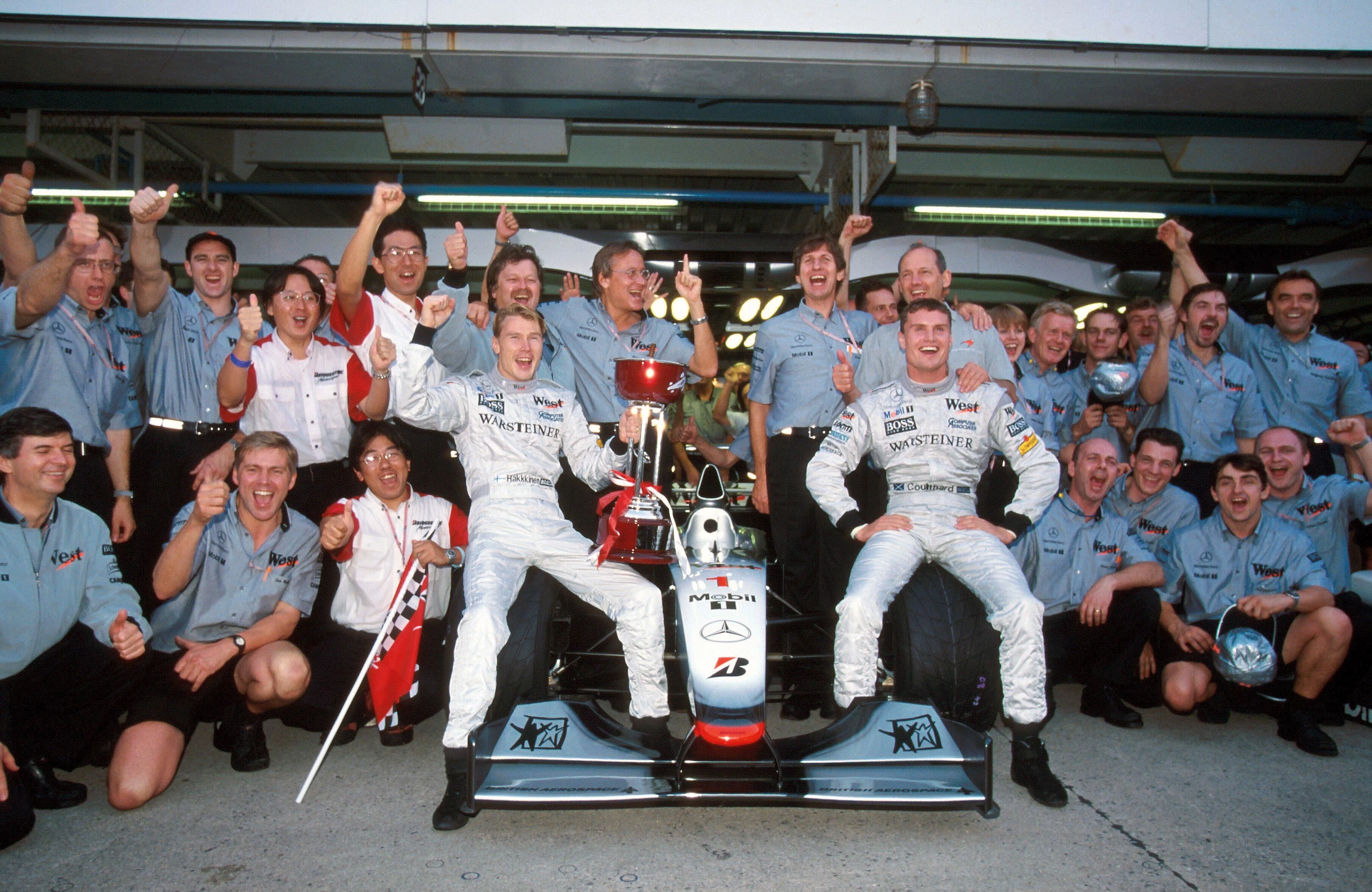
This was the era of Mika Häkkinen, David Coulthard, grooved tyres and the MP4-16. It was a very different Formula 1 and a very different Monaco.
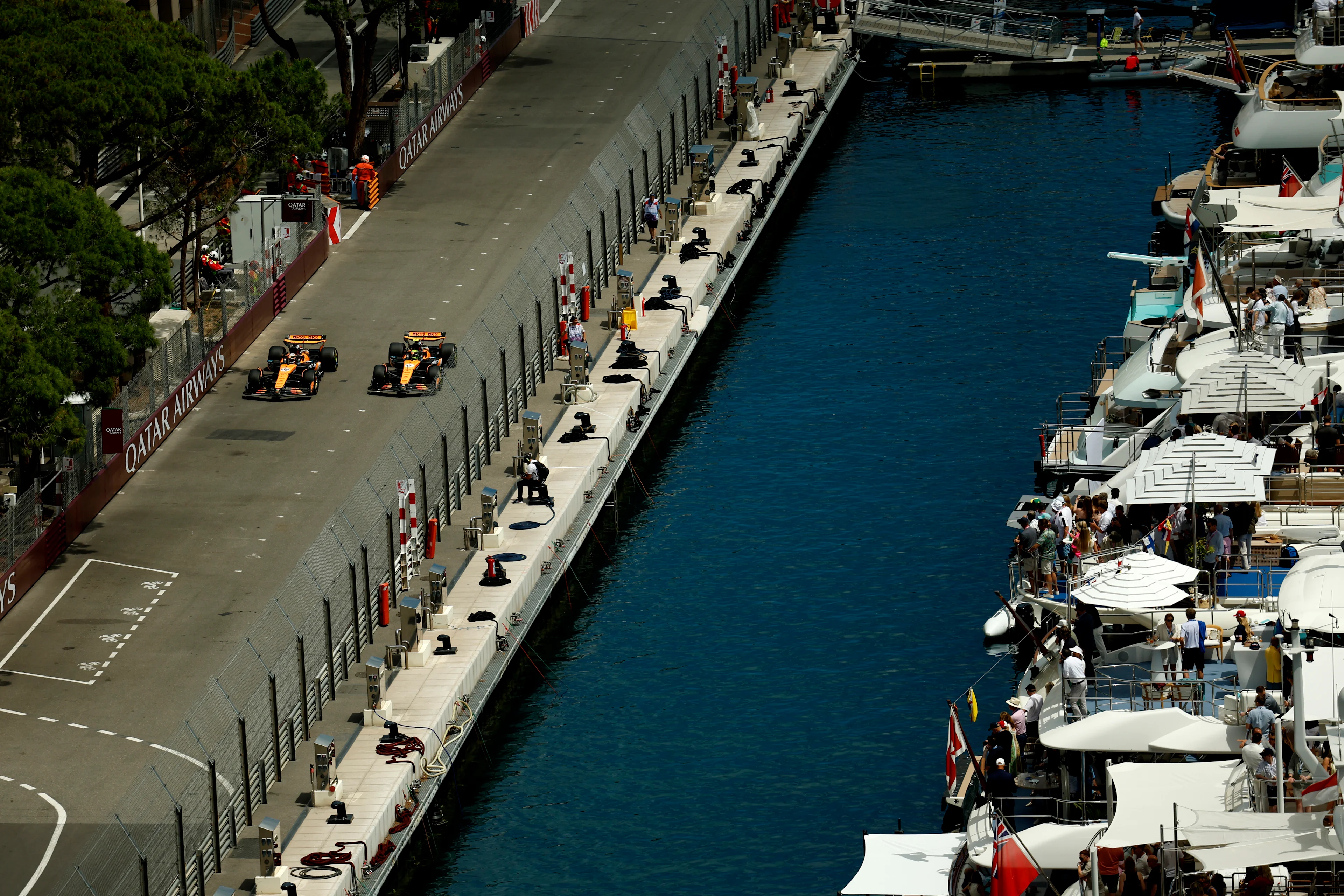
“Monaco was very different then to what it is now,” says Jono. “We used to prep the cars under an awning on the side of the truck, and then we’d push the car up to the pit lane for each of the sessions. The garages [as we now know them] didn’t exist. There’s no way you could fit a [current] car in there. They were fishermen’s huts, so not much bigger than a cupboard, really. It was quite rough and ready.”
And because of the close confines, the T-cars and their crews were shunted to the end of the pit lane.
“We were amongst the trees at the end of the pit lane. David Coulthard was on Pole, and we were all sat there chilling at the end of the pit lane, waiting for the race to start. The cars go off to do the formation lap, and Coulthard stalls on the grid. The radio went mental, because it wasn’t like now, where you’ve got intercom. We had just one channel, everyone talking at once, and you couldn’t hear anything.
“We leapt into action. The car didn’t even have wheels on it, but we were firing it up. A set of tyres appeared from somewhere, and we were trying to get them gunned on because we thought we were going to be called into action. All of a sudden, it dawns on you that this car that you built could end up doing the Monaco Grand Prix. But in the end, they managed to restart David, he got into the race, and he finished fifth.”
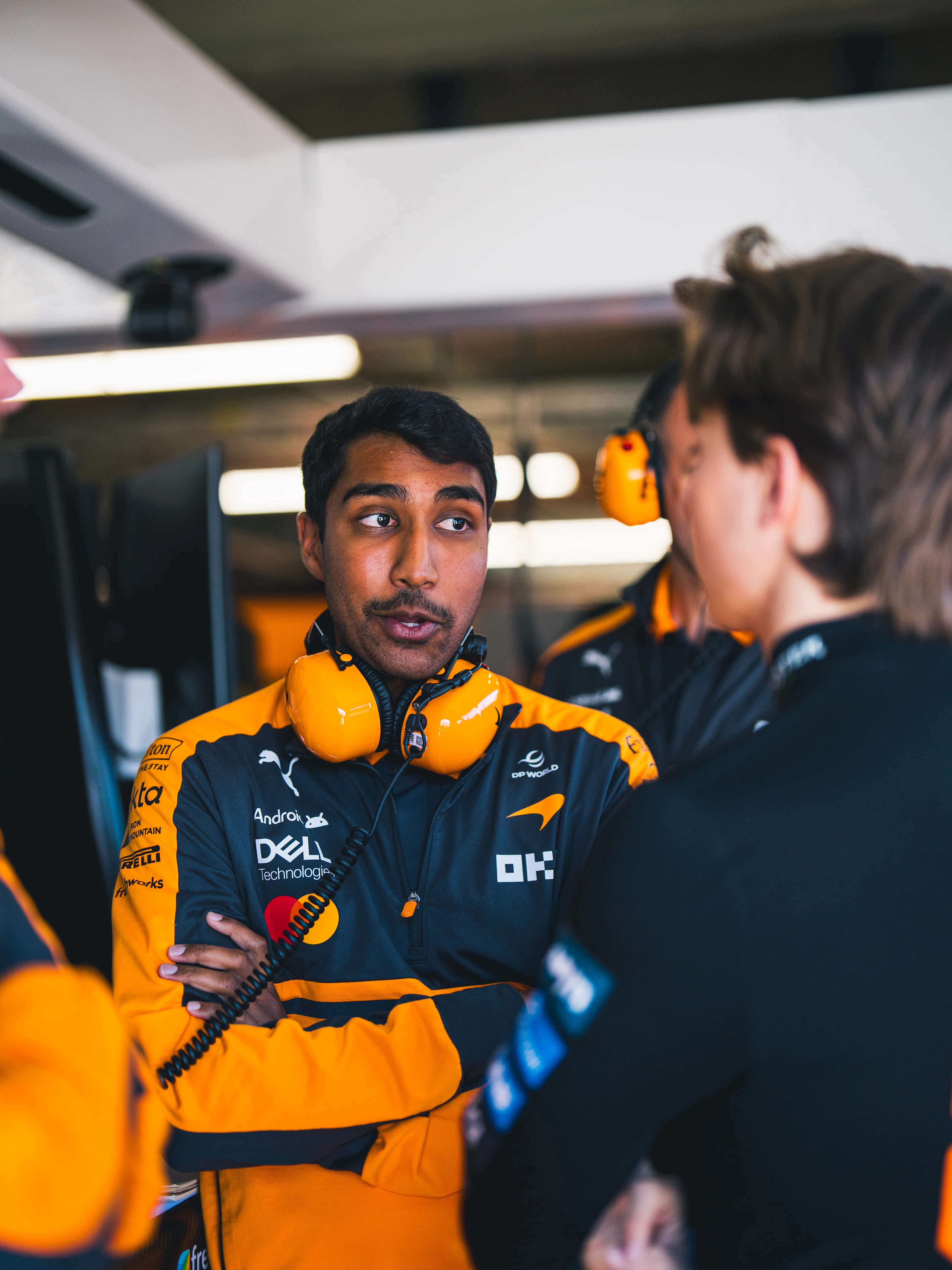
From 2001, and now to the current season, Performance Engineer Amir Sampat made his Grand Prix debut at the start of the 2026 campaign, at the Australian Grand Prix.
With a particular focus on F1’s new power units, Amir predominantly works on Oscar Piastri’s side of the garage.
“The new power unit is quite a different challenge to what we’ve had in the past, so there’s a big focus on that. And then there are other things that fall within my remit – fuel, skid wear, car weight. With Oscar, I’m trying to get the most out of him and help him get the most out of the car and the power unit.”
It was that process that brought Amir trackside after two years in Mission Control at the MTC. He admits that walking into the paddock for the first time was strange, but also oddly familiar.
“It was quite surreal. It had been a goal to get to that point for a few years, so it was nice to walk in and see it all,” he says. “It didn’t actually feel as weird as I thought it would, though. I guess you see so much of it through the TV and so much of it through the different cameras we have in the garage, in the office, that you kind of have an idea of what to expect before you actually turn up. So, it actually didn’t feel quite as different and surreal as I expected, though it certainly is crazy!”
For Amir, the most impactful part of his debut race was the build-up to Qualifying.
“The atmosphere pre-Quali is quite unique, and just the rush you get through Qualifying, hearing cars and hearing fans out on the main straight as well,” he says. “That was probably the craziest, most interesting, memorable bit of the weekend.”
He’s also grateful for the support of his fellow team members in helping him navigate the intensity of a race weekend.
“A lot of the things, I was doing them for the first time in a live environment,” he says. “There was a lot of leaning on other people to figure out exactly what the best process was. McLaren has a very supportive culture, which makes it easy to reach out to different people. You never feel uncomfortable asking questions. The team’s done a pretty good job of building that culture.”
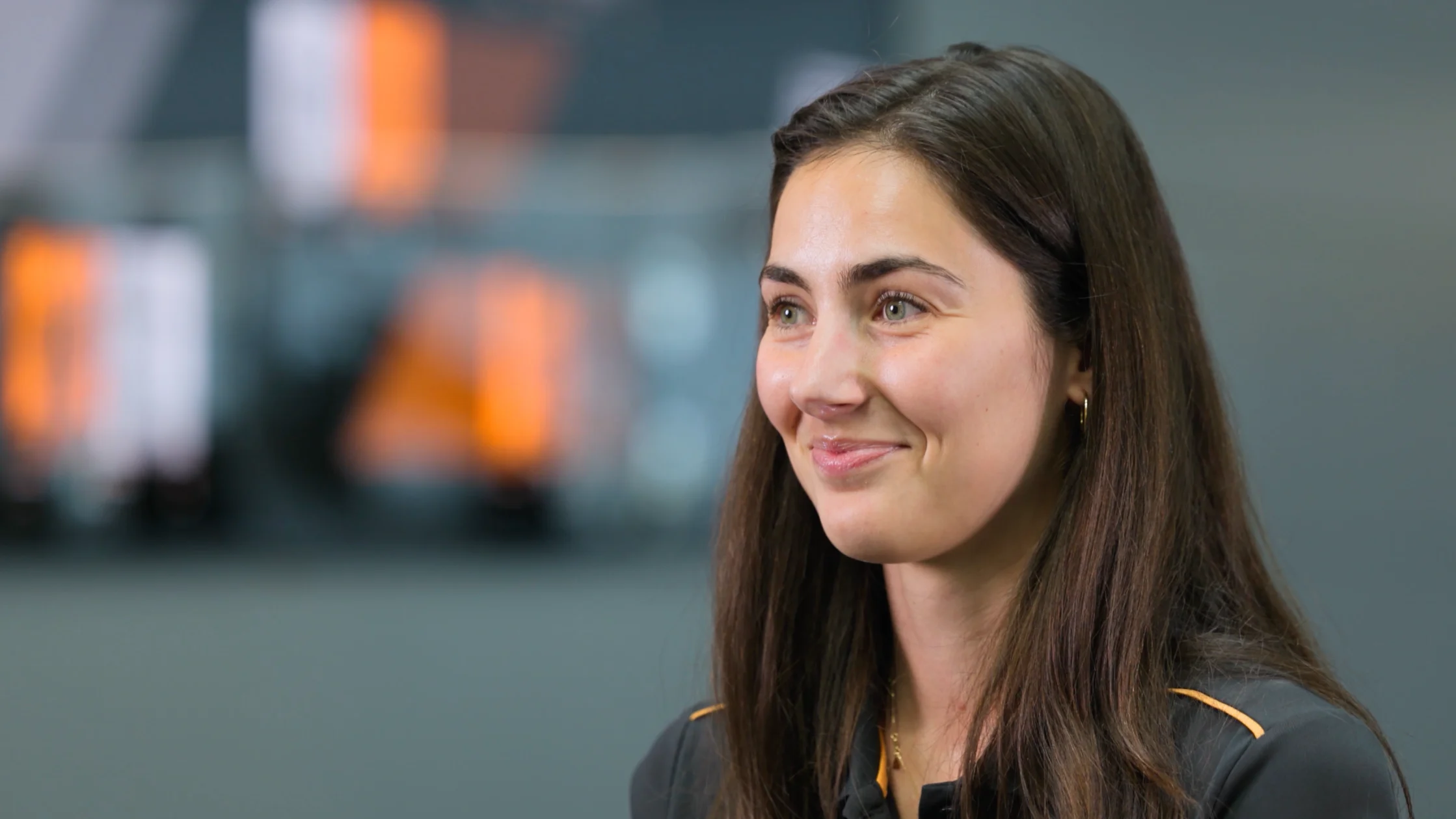
Juliane Duvivier’s debut Grand Prix was similarly daunting, but in her case, her first experience of working an F1 weekend arrived remotely, at the MTC, where she signed up to be a strategy volunteer for the 2023 Canadian Grand Prix.
Juliane’s day job is as a Structures Engineer working in the Design Department, but on race weekends, the crew at Mission Control at the MTC is supported by volunteers from across the organisation who assist with tasks such as monitoring the radio traffic of rival teams and drivers.
“It really helps Strategy,” she says. “It helps us to understand what the other teams are doing, knowing when they’re pitting or when we should pit in order to cover them. There were multiple volunteers on that Sunday during the race, listening to other drivers, and I was listening to two drivers for the laps to the grid and one during the race.”
She admits that, prior to the start of the race, she was racked with nerves.
“I was crazy stressed. I couldn’t eat before the race, so I had snacks during the race. It was very different from my everyday job. We are helping make critical decisions in the race, so when one of the drivers or engineers has a strong accent, it can make it much harder to quickly and accurately interpret their messages. Being French, it’s easy for me to listen to Pierre Gasly, Charles Leclerc or Esteban Ocon, but for other drivers, it can be complicated!”
But even though Juliane was over 5,000km away from the track action, the experience was viscerally real.
“What really hit me was when I was sitting in Mission Control and the lights turned on. It was like, ‘okay, this is really happening. This is me, right now, supporting the race, working for McLaren. This is us.’ We’ve all worked so hard to get to Formula 1, so yeah, dream come true.”
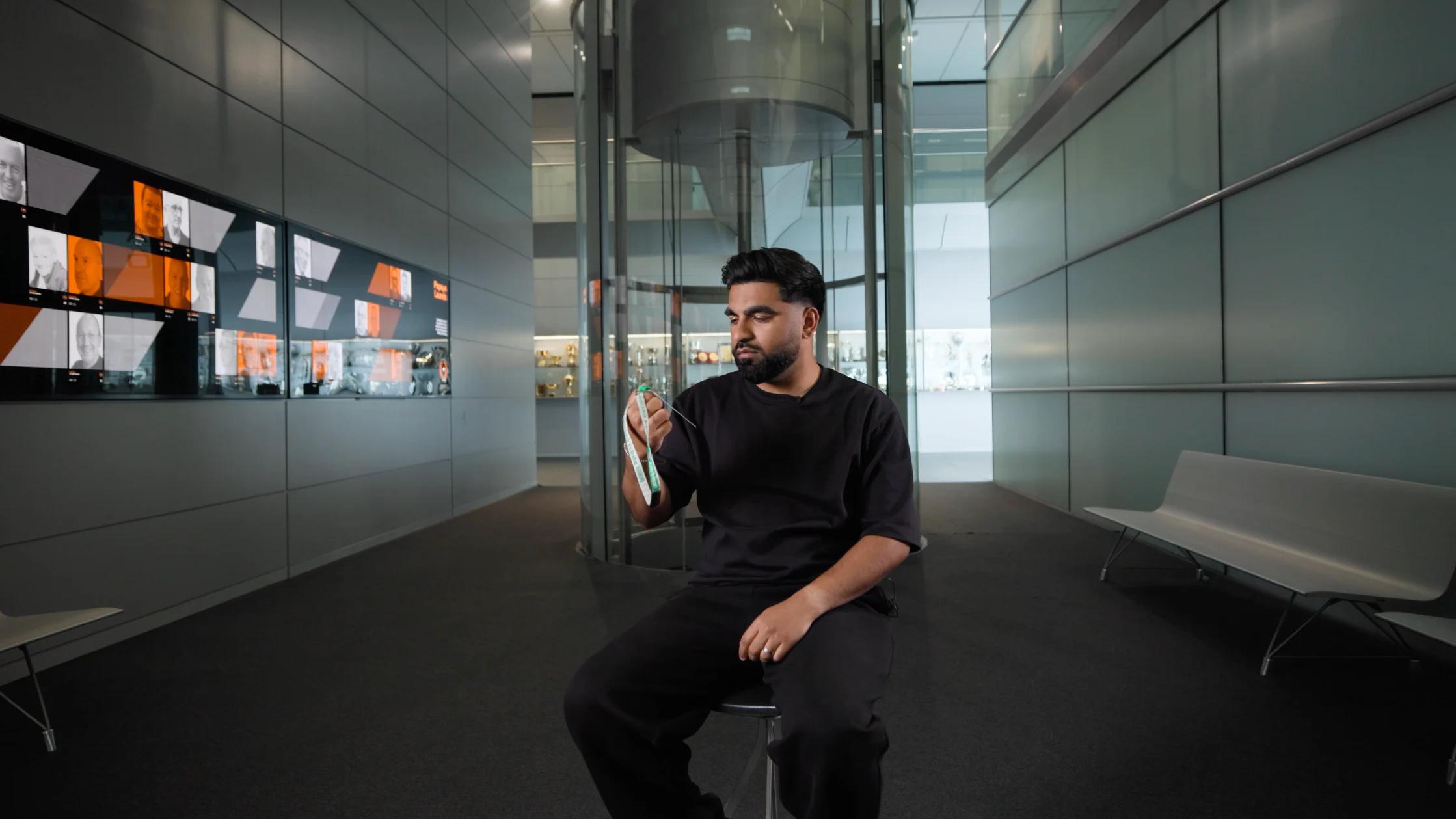
The team that travels to the track is not only comprised of mechanics, engineers, analysts and strategists, however. The race team also encompasses the crew running and working in the Team Hub and Paddock Club, including content creators who bring what happens at the track to life for fans around the world. One of those creators is videographer Qas Alam, who has been filming the team since 2021.
“My first race was the Azerbaijan Grand Prix,” he says. “I was essentially there to capture the weekend for social, shooting for things like Unboxed, taking photography, and showcasing the event. It did feel quite surreal. Everything felt larger than life, super loud. I remember feeling quite overwhelmed.”
In such an environment, it would be easy to retreat into the shadows or go in the opposite direction and get in the way. As a result, Qas was keenly aware that he needed to watch and learn.
“I had never experienced anything like that before in my life. I was definitely nervous, but also confident in myself. I knew I needed to absorb everything that went on, take things as they come, learn and observe before I really started to go ahead and do some really cool stuff.”
Despite the baptism of fire that is being thrown into a race environment for the first time, Qas still made time to take in everything that was happening to him.
“One pinch-me moment was when we first arrived in Baku,” he says. “The team stayed in the Hilton hotel, and we went up to the rooftop bar, and just outside it, there’s a balcony that overlooks the entire track. You can see the track, the paddock, the city skyline, and it was this beautiful moment at sunset. I remember thinking to myself, ‘This is insane.’”
In the years since, he’s become “a lot more comfortable” with the paddock and says that the most important lesson he’s learned about working in its pressure-cooker atmosphere is that “you can’t control everything”.
“You can’t be in 100 places at once,” he says. “You have to pick one moment and own that one moment, because at the end of the day, you’re not going to be able to capture everything. It’s so unpredictable, but it’s always refreshing, every single race. It’s always a different feeling, a different setup. You’ve got to pick your moment and be intentional with what you shoot.”
Luigi de Martino Norante smiles at his overriding memory of his first race with the team trackside.
“I was a junior performance engineer, and I think it was the first time we managed to get both cars in the points since I had started in July 2018, so that was memorable.”
In Baku, Luigi was managing the aerodynamic configuration of the car and supporting the set-up direction, as well as “doing aerodynamic tests and experiments on behalf of the aerodynamic department”.
“My role was usually MTC-based, as a dedicated aero performance engineer for Carlos Sainz,” he says. “I had done races from Mission Control, so I was already accustomed to wearing my team kit. But entering the paddock with the team kit, it hits you hard, because it gives you that sense of belonging and of being part of a family, a pawn in the grand scheme of things. But it also carries, a bit, the weight of the legacy of McLaren, the history, the success, and you are a small brick in the big wall of history.”
Like Amir, one of the key things that struck Luigi at his first race was how well supported he was.
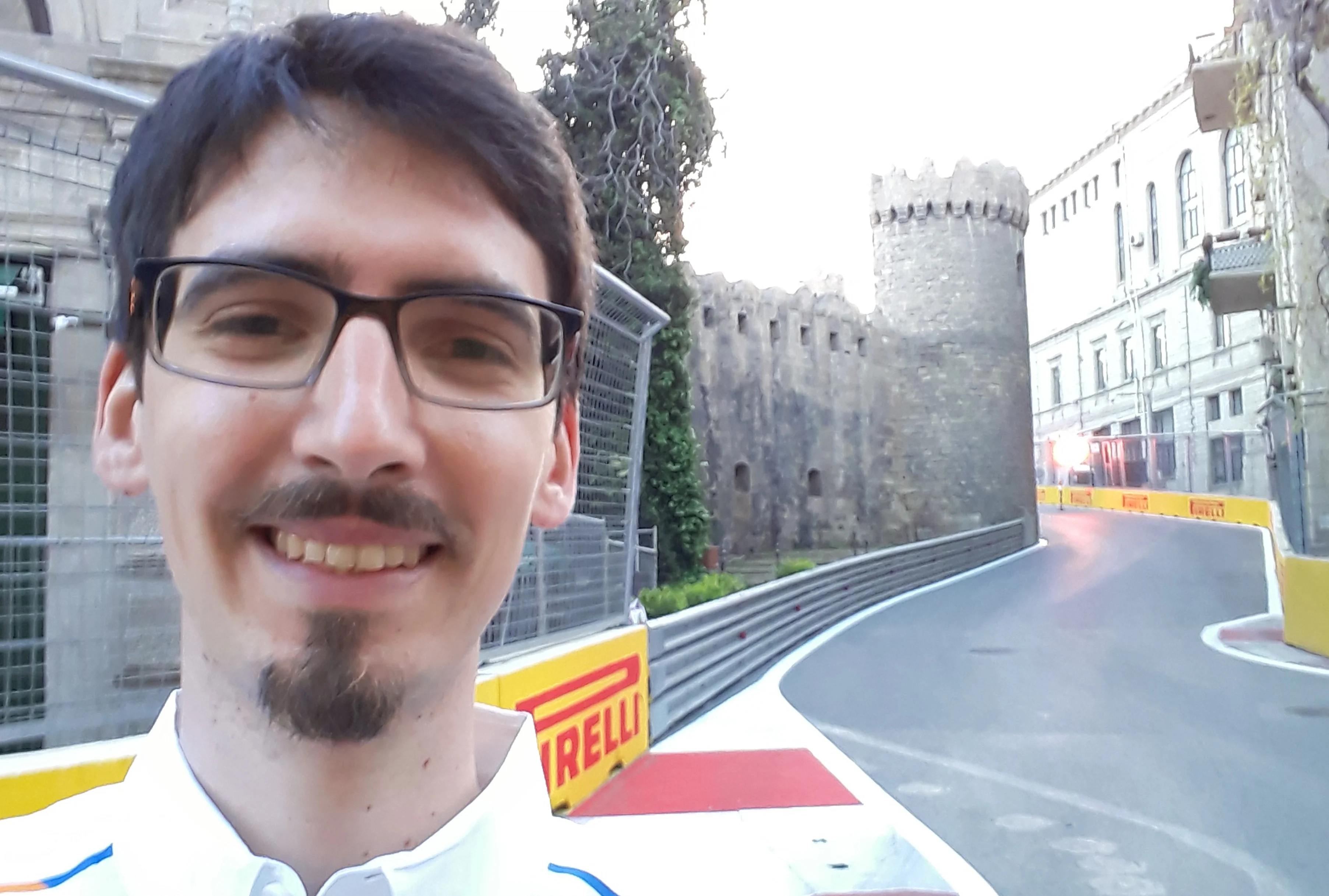
“The team is a family. You initially feel a bit out of place, but everyone is welcoming and they’re giving advice and tips, both in your role and outside of your role.
“I recall in particular Tom Stallard, who’s currently a race engineer for Oscar,” he adds. “At that time, he was a race engineer for Carlos. He always took care of me at my first races and continues to do so, from simple things like giving advice on which is the right debit card when you go around the world, to what is the best local food, but also giving more impactful feedback on just believing in yourself when, obviously, you’re a bit stressed the first time you go trackside, knowing that if you have made it to that point, you should have confidence in what you have created.”