

27 November 2026 17:15 (UTC)
Twenty years on from his signing, we revisit five of Lewis Hamilton’s greatest races in McLaren colours

With the benefit of hindsight, McLaren’s decision to recruit a then 21-year-old Lewis Hamilton for the 2007 season appears to have been obvious choice, but at the time it caused quite a stir.
Partnering an untested, albeit very highly rated, rookie with incoming two-time Champion Fernando Alonso felt like a risk, with many suggesting a season or two with a midfield team would have served him better. But Ron Dennis was unequivocal in his view that Lewis was ready, judging him to be better than the vast majority of his would-be competitors.
Without doubt, history shows him to be right.
Twenty years on from the announcement of his signing in November 2006, we have looked back on five of our favourite Grands Prix with Lewis.
Lewis had long been touted as a future star of Formula 1, and few doubted success would follow his promotion in 2007, but the speed at which he acclimatised wasn’t anticipated. The then 22-year-old looked immediately at ease.
On his very first competitive corner, he pulled off a sensational double overtake to pass both his two-time World Champion teammate, Fernando Alonso, as well as BMW’s Robert Kubica. Ending the race in third, he claimed the first of five successive podiums, becoming the first rookie to achieve five top-three finishes from their first five races.
In Canada, he put himself in an excellent position to not only make it six from six, but to earn a historic first win. Lining up alongside his more experienced teammate, opinion was split on whether Fernando or Lewis had the edge – or if it was those behind them.
Fernando attempted a move reminiscent of Lewis’ overtake at the start of the race in Australia, but his bid to go around the outside saw him run wide and fall to third. Lewis, with clean air, scurried off into the distance and quickly built up a 19-second lead in his first stint. But that was as easy as it got.
His route to the Chequered Flag would be fraught. After his first stop, made in the nick of time, the first of four Safety Cars was called, each time reducing Lewis’ lead to zero and forcing him to fend off a fresh attack.
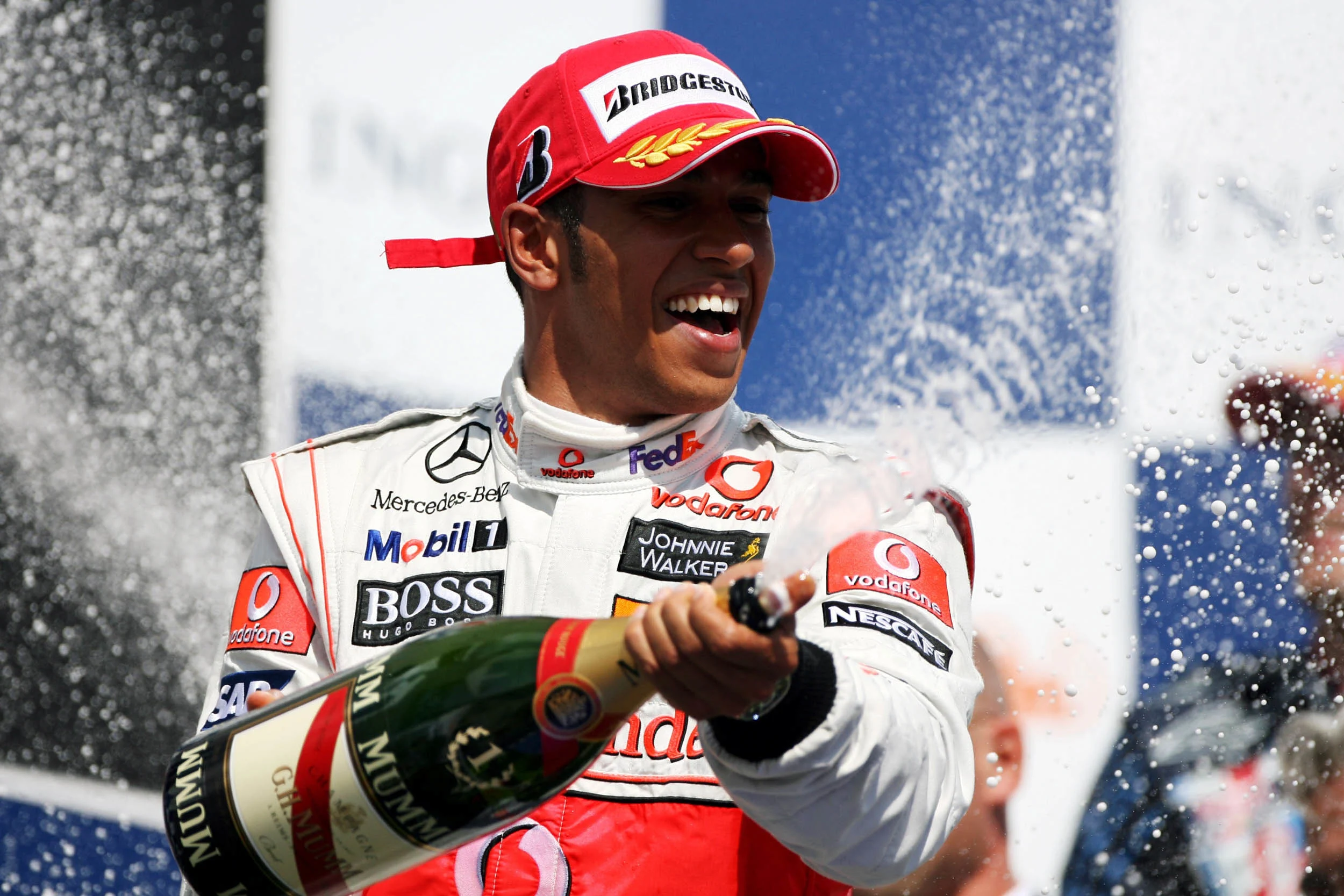
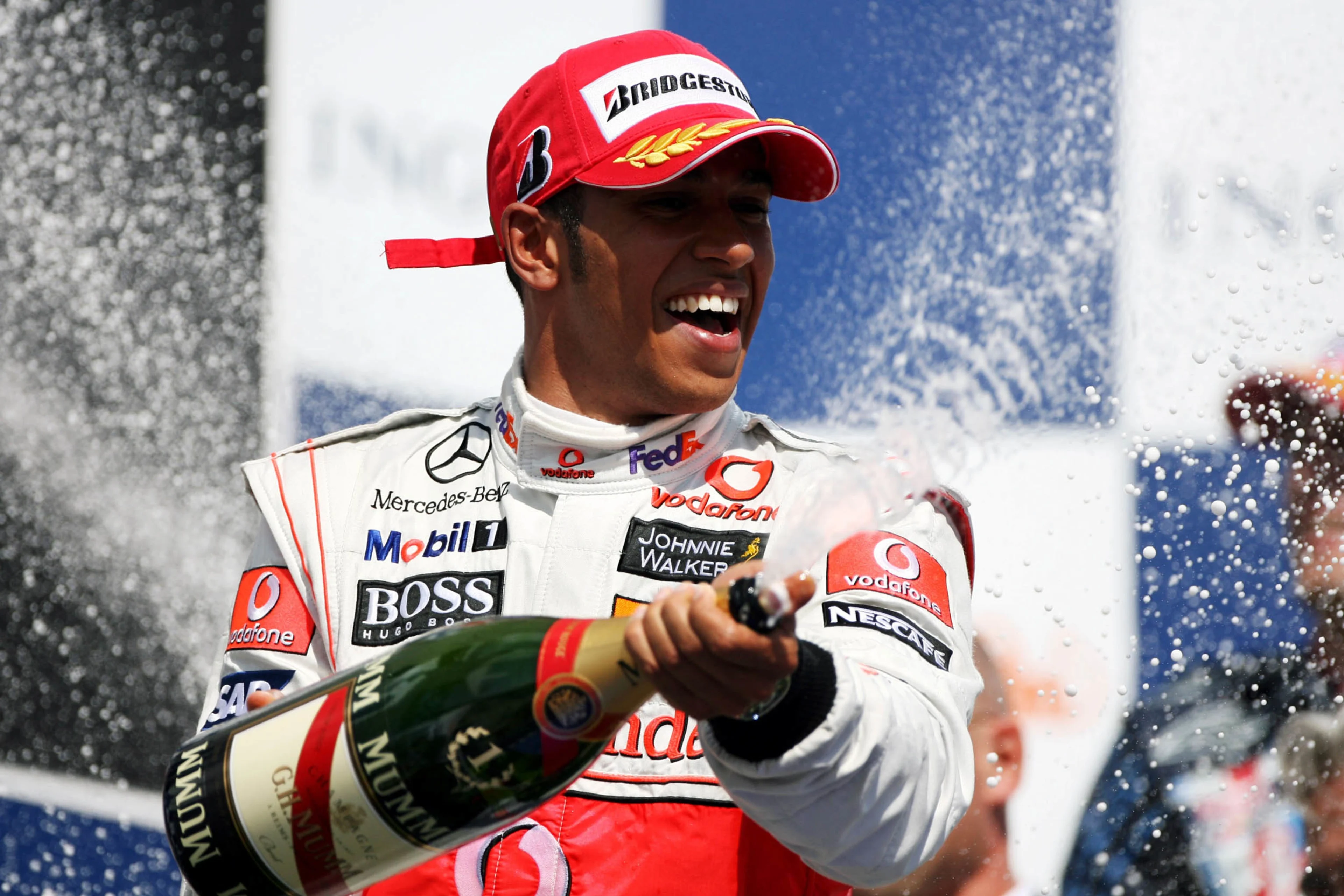
But he didn’t put a foot wrong. Unfazed by the repeated restarts, Lewis would simply pick back up from where he had left off, calmly holding onto the lead and reinstating his advantage. He eventually crossed the line with a healthy 4.343s buffer. It made him not only a race winner, but also the Drivers’ World Championship leader.
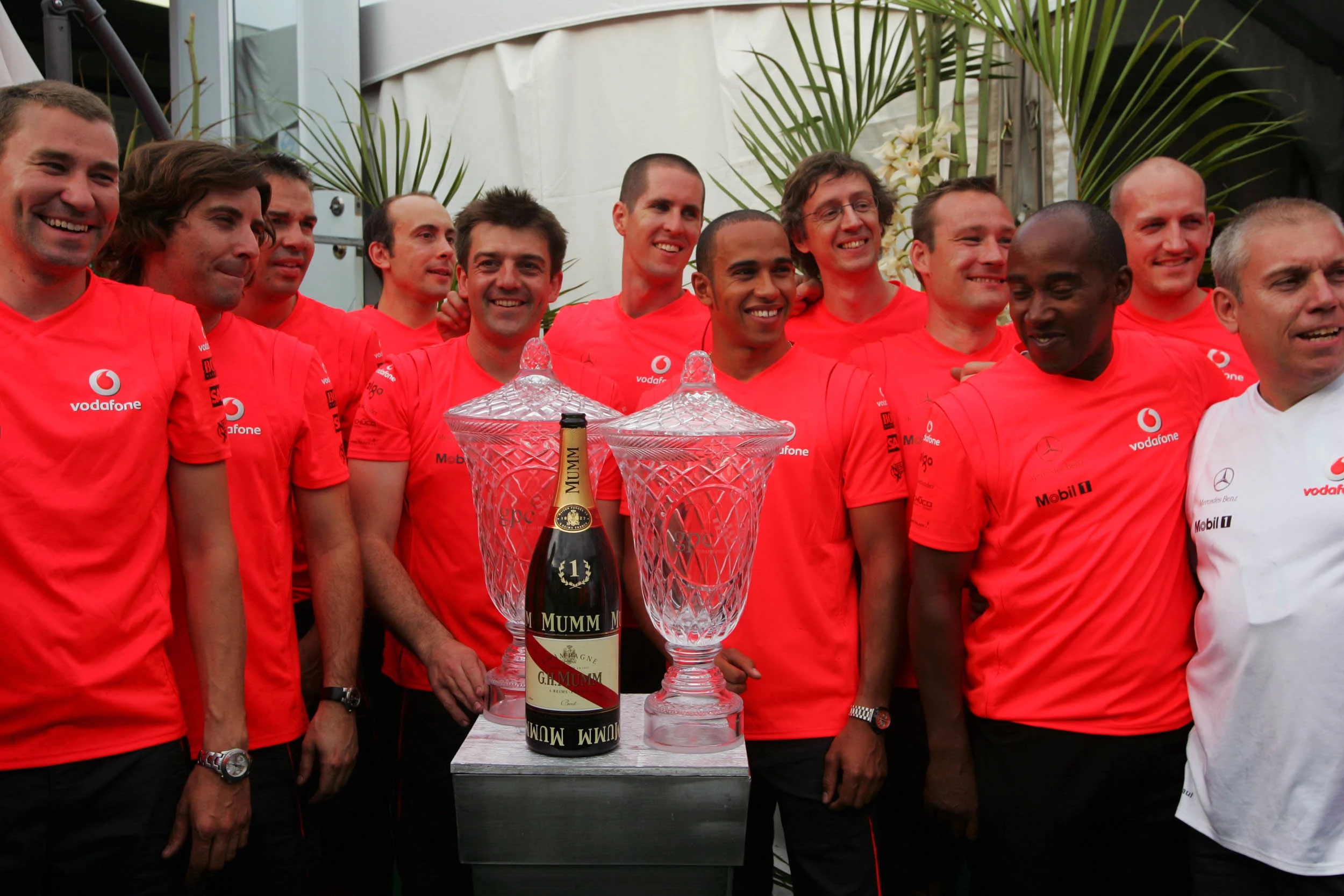
Performances like Lewis’ 2008 British Grand Prix victory simply shouldn’t be possible. People love motorsport because they can watch elite athletes do things they couldn't. And on 6 July 2008, Lewis did something not even his peers could.
On a miserably wet day in Northamptonshire, Lewis found grip where it didn’t exist. While those behind him spun, slipped and slowed in the rain, he sped up.
Midway through his sophomore season, Lewis arrived at his home Grand Prix on the back of two pointless races. Sitting 10 points off Championship leader Felipe Massa in fourth, a positive result would ensure his second assault at a title remained on track.
Come race day, it was his teammate Heikki Kovalainen on Pole, with Lewis back in fourth after a tricky Q3. But it didn’t deter him, and neither did the rain. Whether through the fearlessness of youth or a remarkably staunch belief in his own ability, Lewis drove as if the track was dry. Heading into the first turn, he flung his MP4-23 ahead of Mark Webber and Kimi Räikkönen for second and began to hunt down Heikki.
As he caught up to his teammate, those behind them were finding the conditions increasingly difficult, including Massa, who would go on to endure five spins throughout the contest. Lewis, however, was able to keep his boots on the ground and scampered ahead of Heikki on Lap 5, at the second attempt, with an excellent move up the inside at Stowe.
Räikkönen looked best placed to challenge him, but the Ferrari driver never got close. Over the next 55 laps, Lewis built up a frankly ridiculous 68-second lead. An extraordinary result from an extraordinary driver.
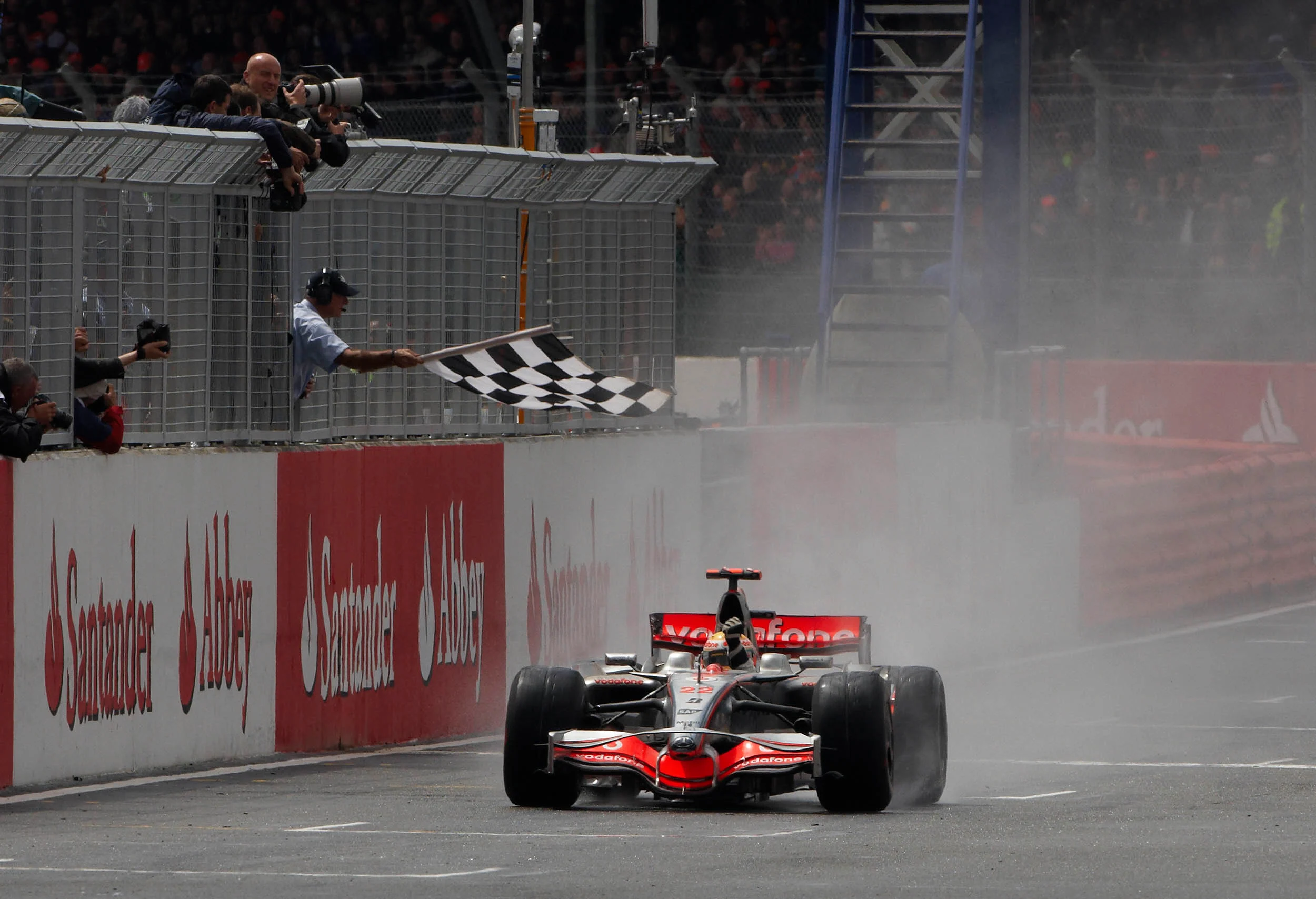
Was Brazil amongst Lewis’ best drives? No. But it is among his most iconic in McLaren colours. Worthy of a World Championship, and worthy of this list.
At Interlagos in 2007, Lewis had heartbreakingly missed out on the title to Ferrari’s Kimi Räikkönen, surrendering a seven-point advantage to lose by a single point. He arrived in Brazil in 2008 with the same advantage, needing to finish at least fifth to clinch the title over Ferrari’s Felipe Massa.
Massa did his part, winning from Pole, which left Lewis needing P5. But unlike most races in 2008, where a combative, on-the-limit style had brought him success, Lewis’ performance in Brazil was cautious, nervy and, at times, scrappy.
He spent most of the afternoon hovering around fourth and fifth, doing just enough to secure the result he needed. It was a tactic that would be hailed as cleverly cautious if it paid off, but judged as leaving too fine a margin for error if it didn’t.
At times, the tactic looked like it might work, but whenever Lewis slipped back into the pack, the team watched on with bated breath. While time was on his side, there was confidence in his ability to turn up the heat and recover. But when he fell to sixth behind Vettel on Lap 69, with just two laps remaining, the team feared the worst.
Lewis couldn’t get close enough to Vettel to make a move, and time was running out. The rain began to fall harder, making the cars difficult to keep on track. Lewis’ chances of catching and passing Vettel looked increasingly slim. But it was the rain that threw him a lifeline, as Timo Glock lost grip on his dry tyres and was forced to slow, falling behind both Vettel and Lewis.
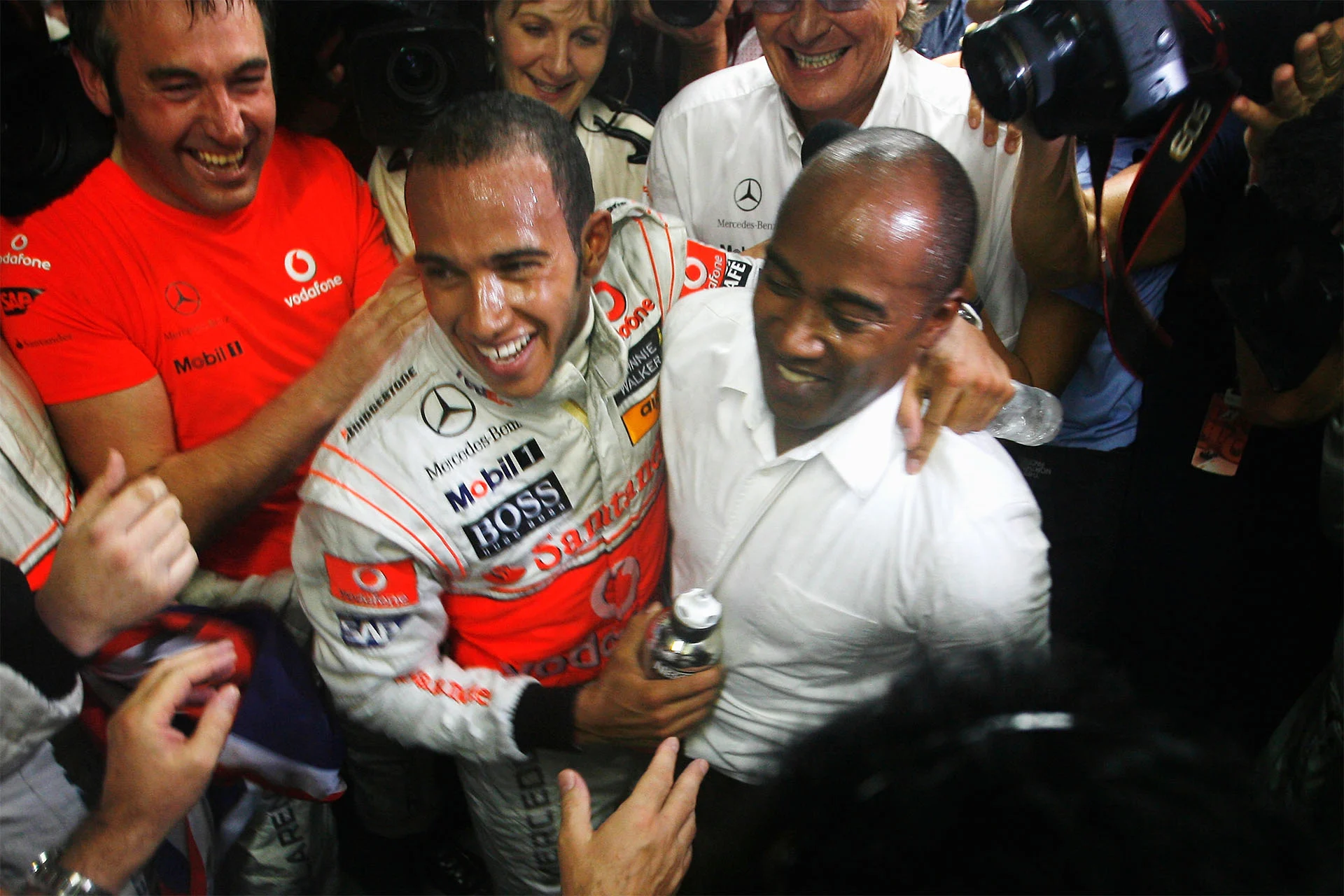
Lewis was up to fifth, exactly the position he needed. The garage erupted. From the brink, he had emerged triumphant.
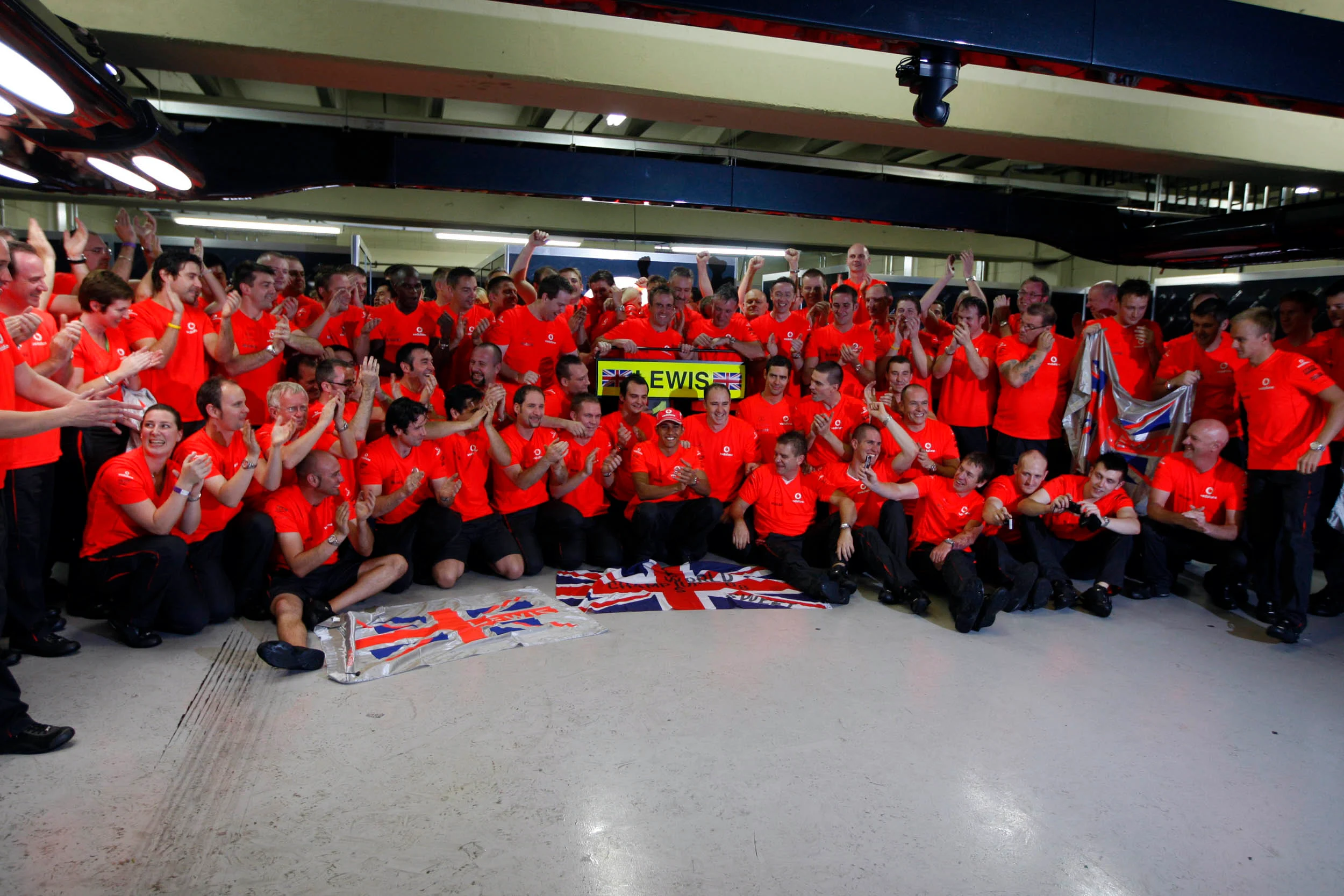
Five years into his career, 2011 felt like something of a crossroads for Lewis Hamilton. He had transitioned from a fearless rookie to a seasoned racer, but Lewis 2.0 wasn’t quite fully formed.
He had sharpened many of the rougher edges while retaining much of the aggression that earned him his early success, but at times still struggled to balance these two versions of himself, leading to costly mistakes.
Pirelli’s highly degradable first F1 tyres didn’t help, punishing his late-braking style. Nor did the MP4-26, which was more suited to his teammate, Jenson Button, favouring a more balanced driver. It also, put simply, wasn’t as competitive as the Red Bull or Ferrari.
That is exactly why the 2011 German Grand Prix stands out. Lewis missed out on Pole by just 0.055s to Mark Webber, but in the race he blasted past the Red Bull driver going into Turn 1. What followed was a superb demonstration of driver over machine, and evidence of how much an elite racer can influence their own results.
He went wheel-to-wheel with Webber and Alonso, both in superior machinery, and came out on top. He was passed twice by Webber, and both times he regained the lead: the first via a brilliant overtake, and the second by going longer than the Red Bull through superb tyre management. Alonso then jumped them both in the second cycle of pit stops, but Lewis immediately swept back past him and pulled away to win by 3.980s.
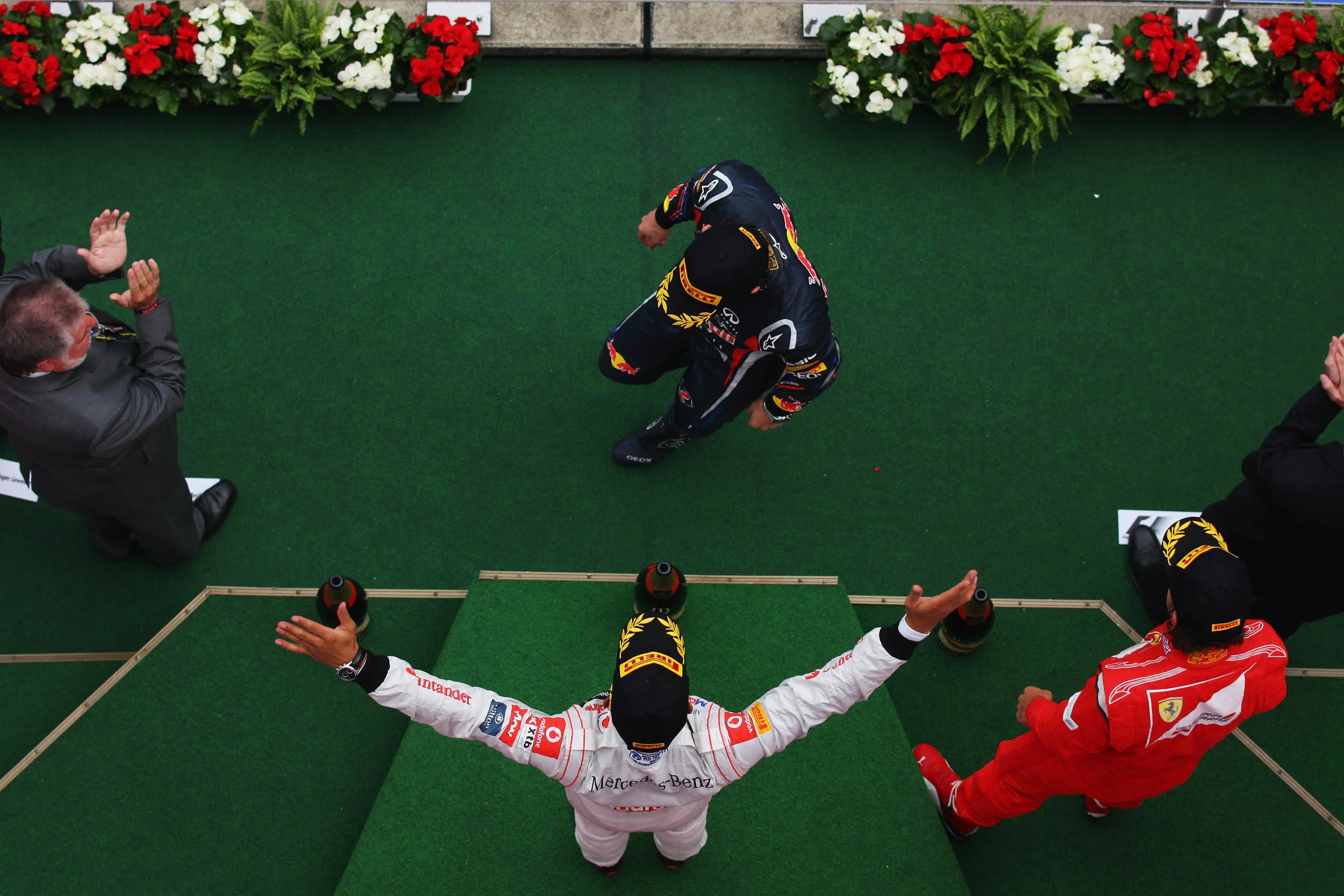
2012 saw Lewis 2.0 fully emerge. Sadly, it would also be his final season with McLaren.
The errors and inconsistencies that had plagued him at times in 2011 were ironed out. In their place was a more assured driver – fearless but with a streetwise edge. He was cleaner and calmer, with a better handle on tyre management, but still relentlessly tenacious.
The MP4-27 had its limitations, like its predecessor, but it suited Lewis’ style far better, with a sharper front end that complemented his heavy-braking approach.
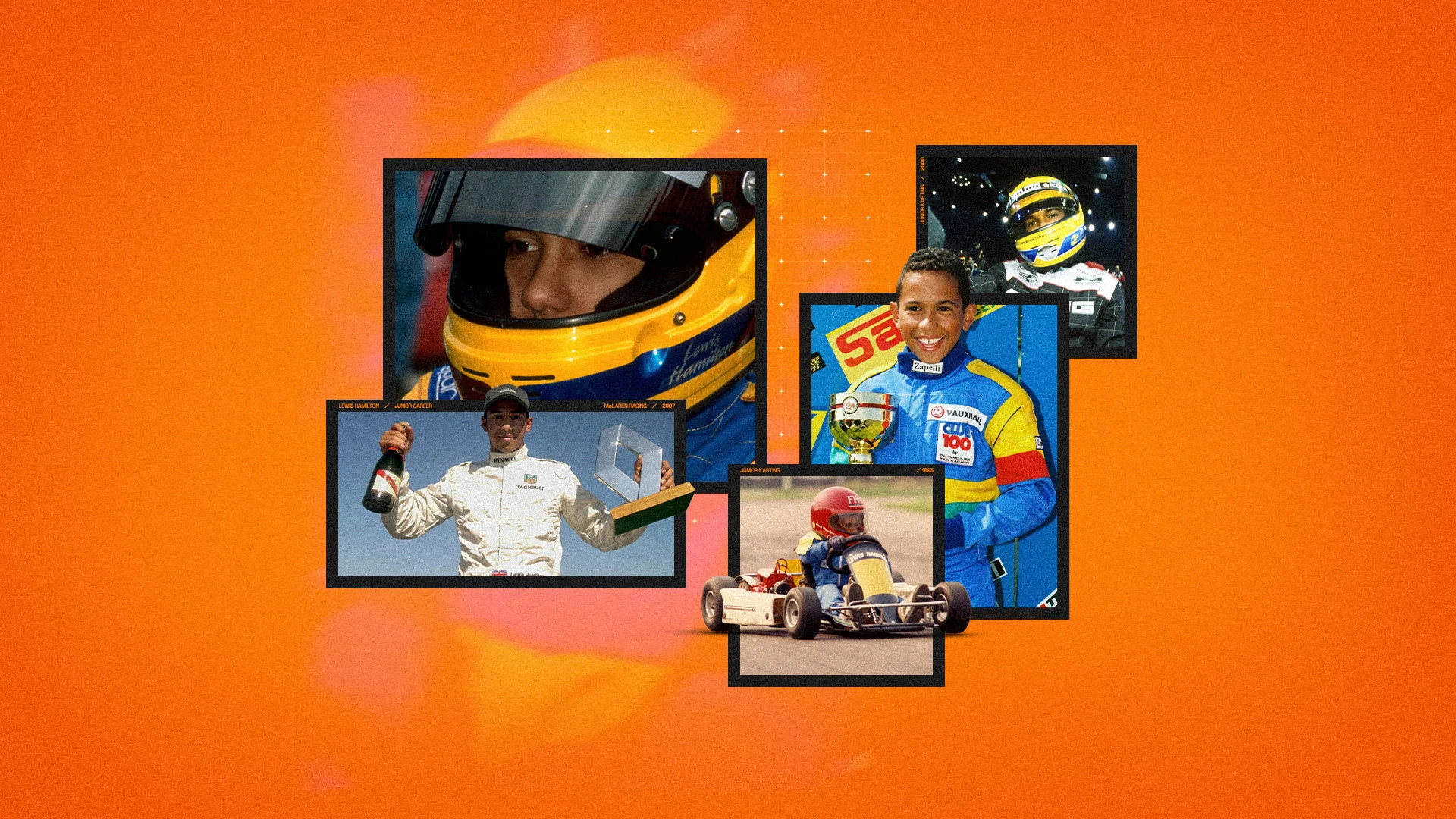
By the US Grand Prix in Austin, 2012’s penultimate round, Lewis’ move to Mercedes had been confirmed. Both sides wanted to bring a partnership that had begun in 1998, when Lewis was just 13 years old, to a close on a high note.
Qualifying second to that year’s would-be World Champion, Sebastian Vettel, meant that Lewis would have to start from the dusty, low-grip left side of the circuit, hampering him off the line.
After dropping to third behind Mark Webber at the start, Lewis took four laps to reclaim the position, and from there he gained momentum. Rather than launching past Vettel at the first opportunity and risking his tyres, he waited, lurking patiently behind.
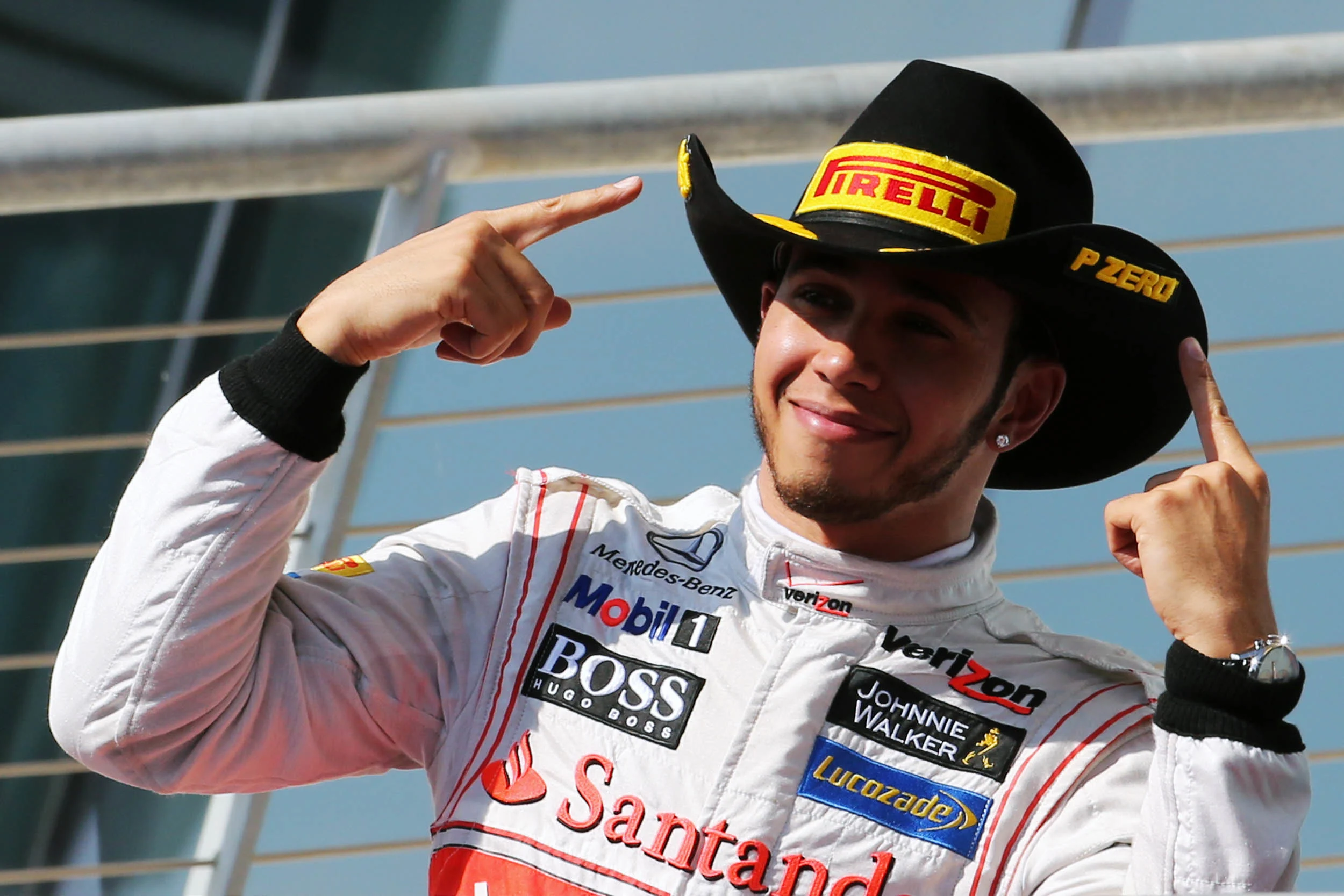
Vettel resisted his eventual attempts, but Lewis was inevitable. The Red Bull driver lost time lapping the cars ahead of him, and Lewis pounced, using DRS to sweep past him down the back straight on Lap 42. From here, Lewis was unmovable, going on to win and take his final victory in McLaren colours.