


5 December 2025 11:10 (UTC)
Beam wing choice, a track resurfacing, and running at different times of the day: Answering this weekend’s key questions

Welcome to The Briefing, where we’ll be answering the key on-track questions ahead of the Abu Dhabi Grand Prix.
Each week, powered by Google Cloud, we’ll be speaking to one of our trackside experts to walk you through the biggest talking points and provide you with a simplified guide of what you’ll need to know to jump straight into the action. This week, ahead of FP1, we spoke to Henry Fidler.
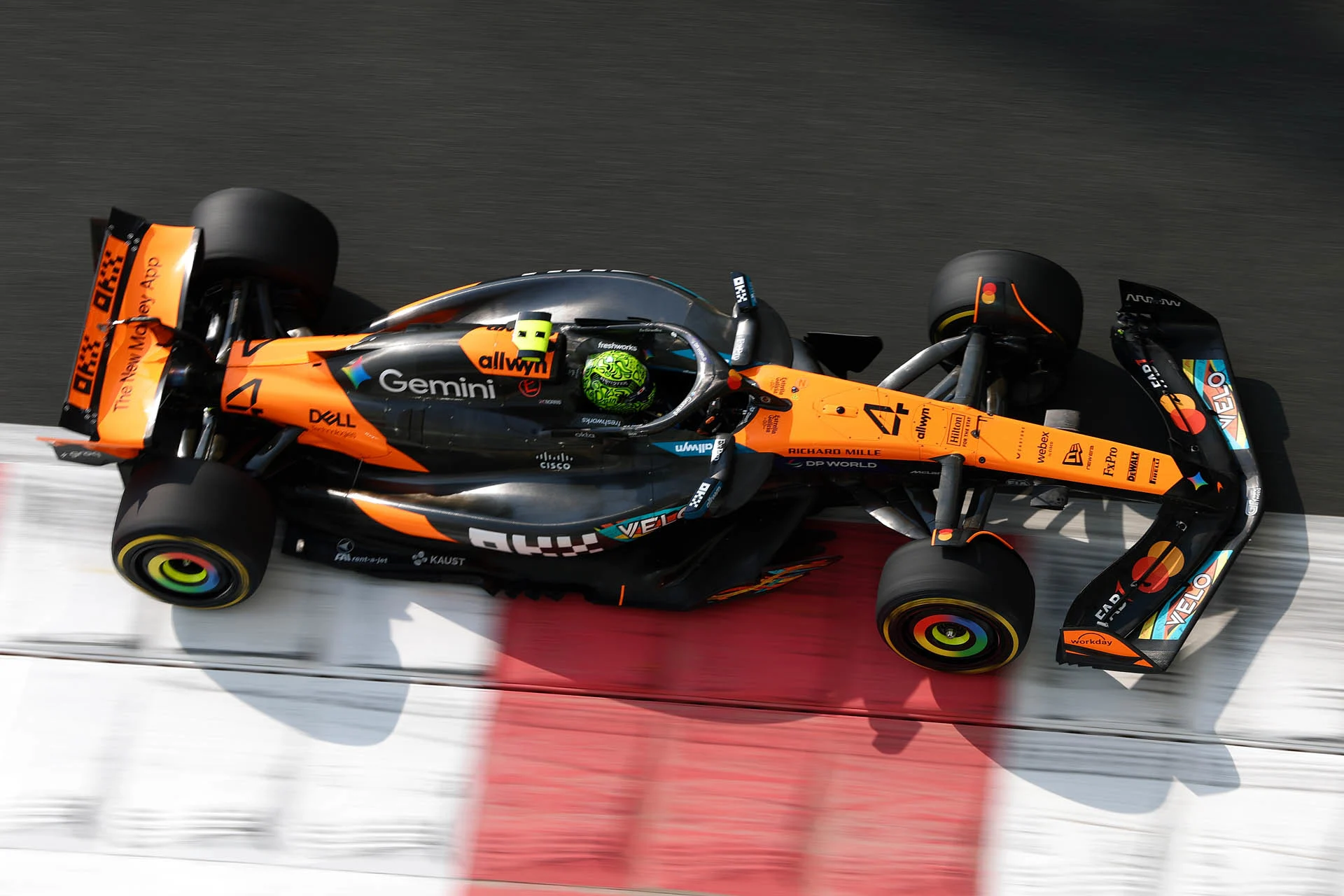
There are several questions that the team are looking to tackle in this weekend’s three Practice sessions, including whether the quickest route to the flag in the Grand Prix is going to be a one-stop or a two-stop strategy, which beam wing we should be pairing with the Medium downforce rear wing, and what impact a partial resurfacing of the circuit has had.
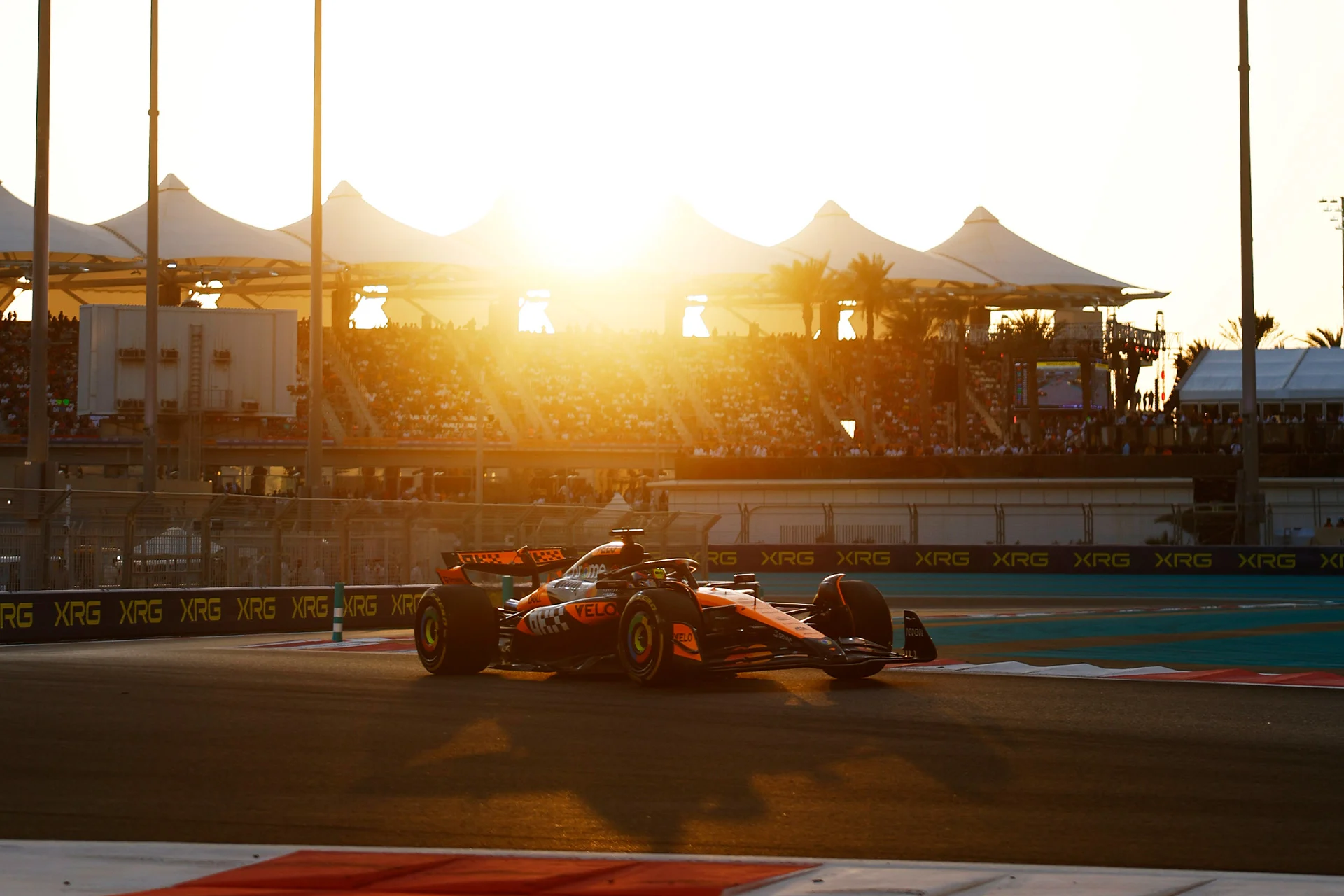
As always in Abu Dhabi, answering these will be made trickier by the differing conditions we’ll encounter, with FP1 and FP3 taking place during the day, and FP2, Qualifying, and the race taking place in the evening. With the help of Henry, we’ll explain what this means for the team and how they were planning to tackle these questions.
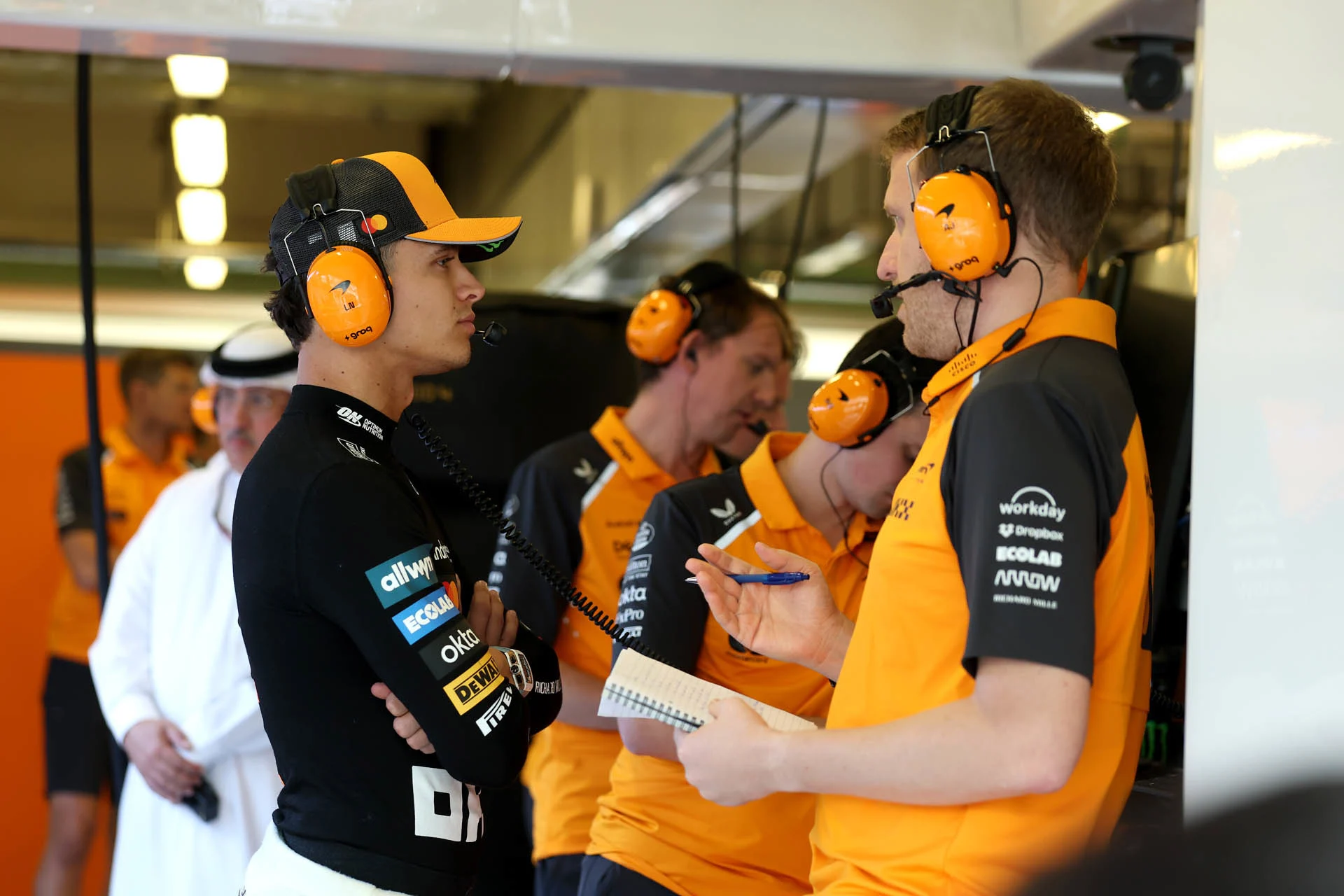
As always, tyres. We’d really like to know whether the race is likely to be a one- or a two-stop. Last year, we went into the race thinking it might be a two-stop and the way it played out, it was a one-stop. This year, the tyres are a little more robust and that pushes everyone further towards a one-stop – but there’s still perhaps merit in carrying an extra set of race tyres for Safety Car opportunities.
Therefore, what we want to discover is: do we have the qualifying pace to be happy taking only four sets of Soft tyres into Qualifying? And, if so, do we want to retain two sets of Hard tyres or two sets of Medium tyres for the race. This bit of learning is the priority.
Yeah, they’re not great for representative running – but there are things we can do. FP1 will be too hot but we can learn about set-up and ride heights and get that sort of thing dialed-in – because that’s more dependent on straight-line speed. So, that’s what we’ll concentrate on for FP1, and then FP2, at 17:00-18:00, we’ll be concentrating more on our tyre learning.
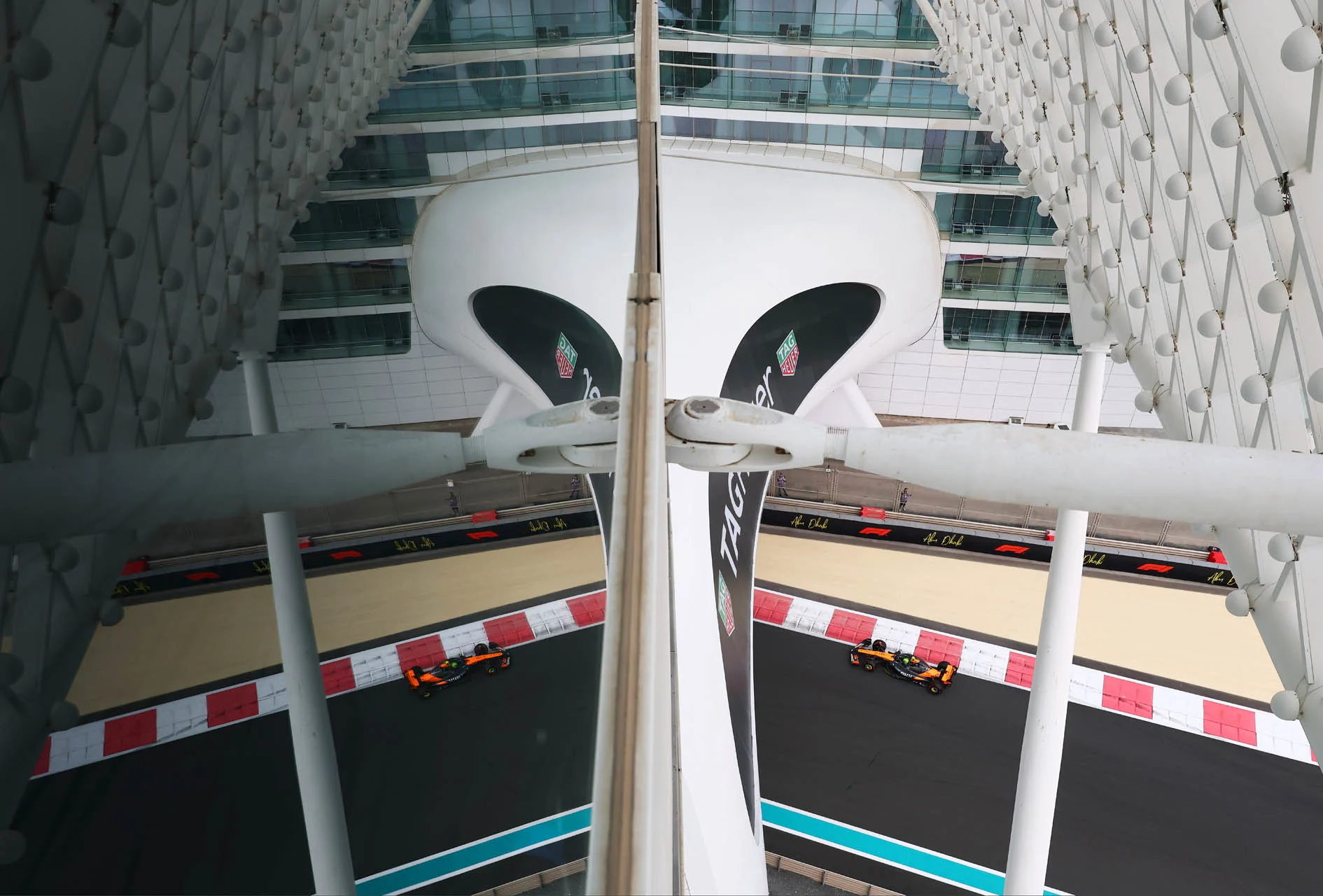
Overall, this is a smooth track, which means we can run it pretty low. The main limitation to how stiff we can run the car is the chicane in Turns 6 and 7, and the kerbs the car will run there – plus a little bit of off-camber running under the hotel. If the car is too stiff to run the kerbs in T6-T7, then it’s bad for Qualifying – but it’s also bad for race-ability: if you’re fighting other cars, being able to use the kerbs is useful to ensure you get a good exit onto the next straight.
The other thing that really limits how stiff you can run is that, despite the surface being mostly smooth, there are some notable bumps. In previous years, there have been some big ones through Turns 2 and 3, that’s where the resurfacing has taken place, and we need to understand if the work has removed those bumps – or simply resurfaced on top of them.
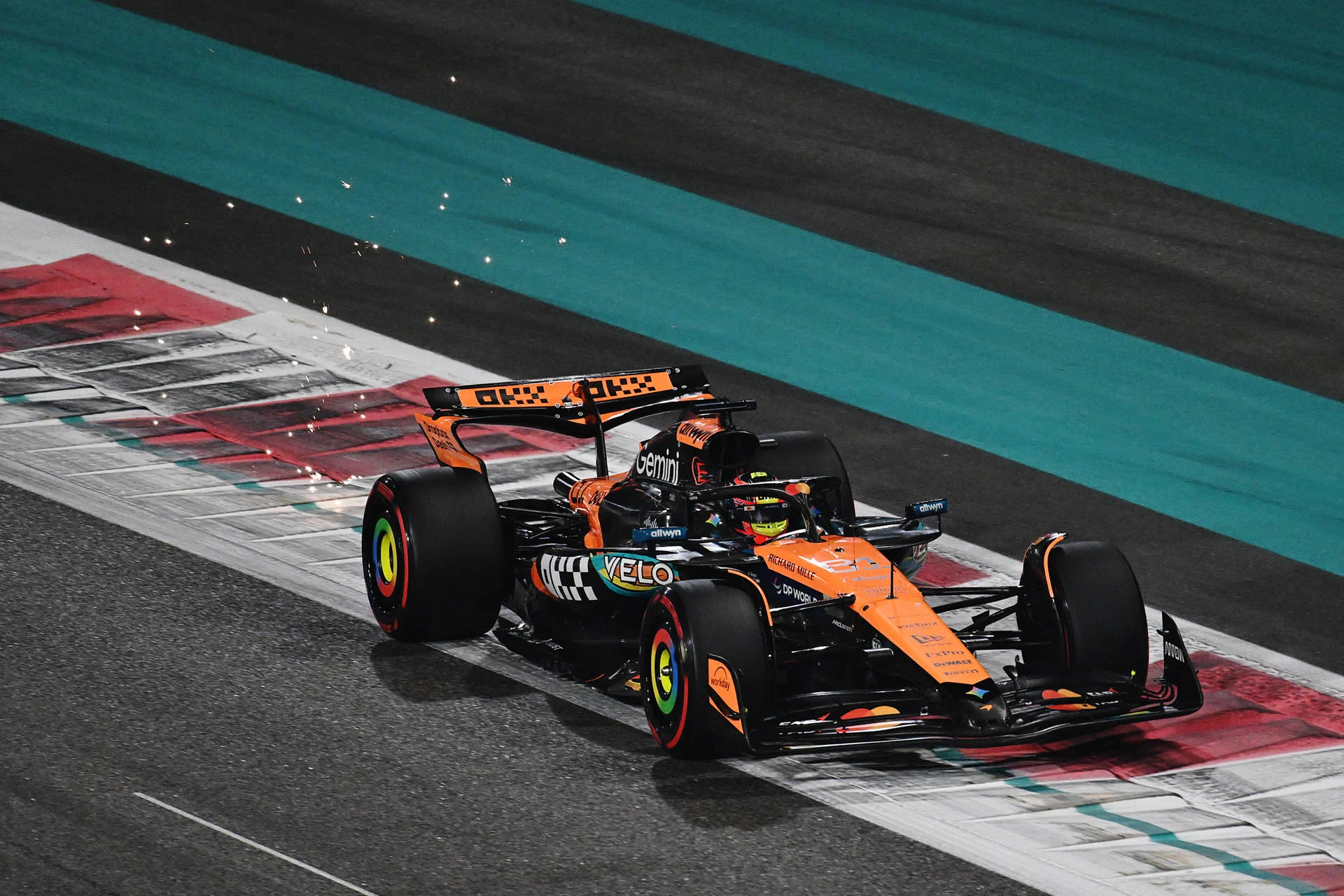
We’re in the middle of the range with the medium-downforce rear wing, similar to what ran in Canada and Austria and, most recently, in Brazil. The thing we’ll want to discover during Practice is which beam wing to pair that with.
With the long straights from T5-T6 and T7-T9 there’s quite a big impact on race-ability if we take a hit to straight-line speed, so we need to understand the compromise between having a bit more load to be quick in the Turn 5 hairpin versus a little less drag on the long straights. It’s not entirely straightforward, because having more load also helps with traction onto the straights.
Since the track was reconfigured in 2021, it’s pushed us towards running a little less downforce. The only real low-speed corners we have now are Turn 5, and then the section under the hotel. That tends to put a little bit more of a premium on straight-line speed versus overall load.
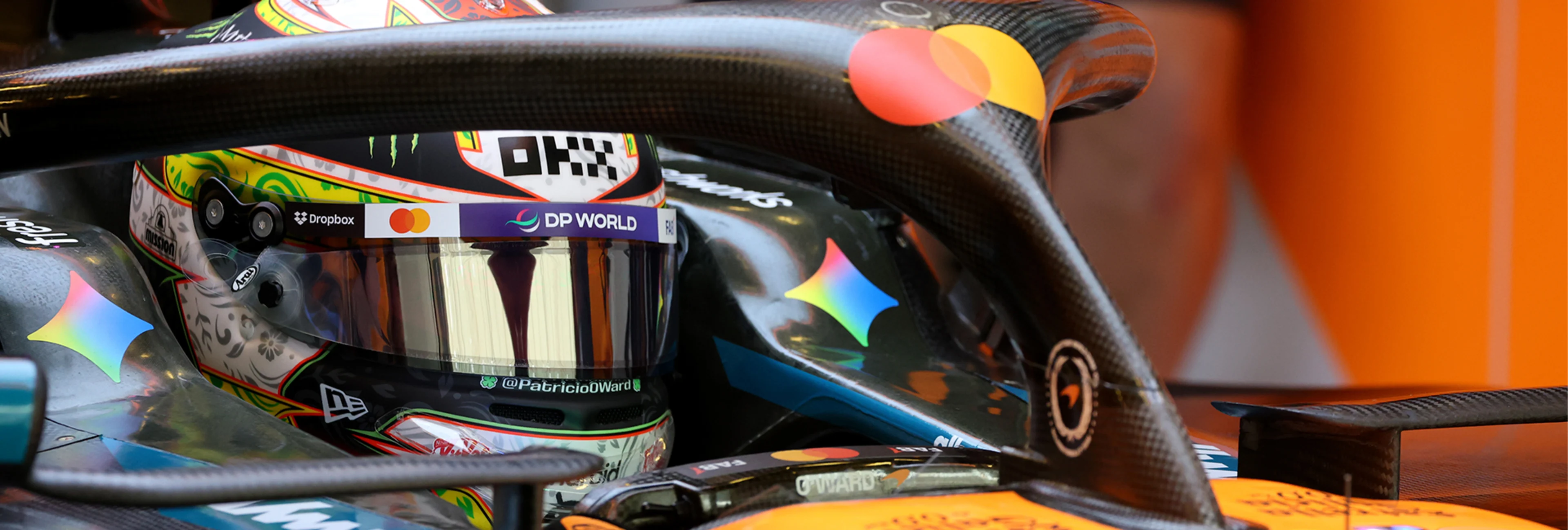
Not really: Over the last few years, Pato has done an awful lot of laps in Abu Dhabi, so there’s no concern about having to bring him up to speed.
In terms of the run profile with Pato in the car, I think the only thing we might consider is being a little more flexible on tyre usage. There is potentially more value in switching around the tyre allocation, compared to what we would use in FP1 on a standard weekend, if we think that is more likely to help Oscar learn later in the weekend.
McLaren Racing leverages Google Cloud AI to gain a competitive edge by visualising race data to provide real-time insights, and creating efficiencies across processes and resources.