


2 April 2026 15:00 (UTC)
The strategy puzzles at Suzuka were in the normal range – but the 2026 season is still anything but normal

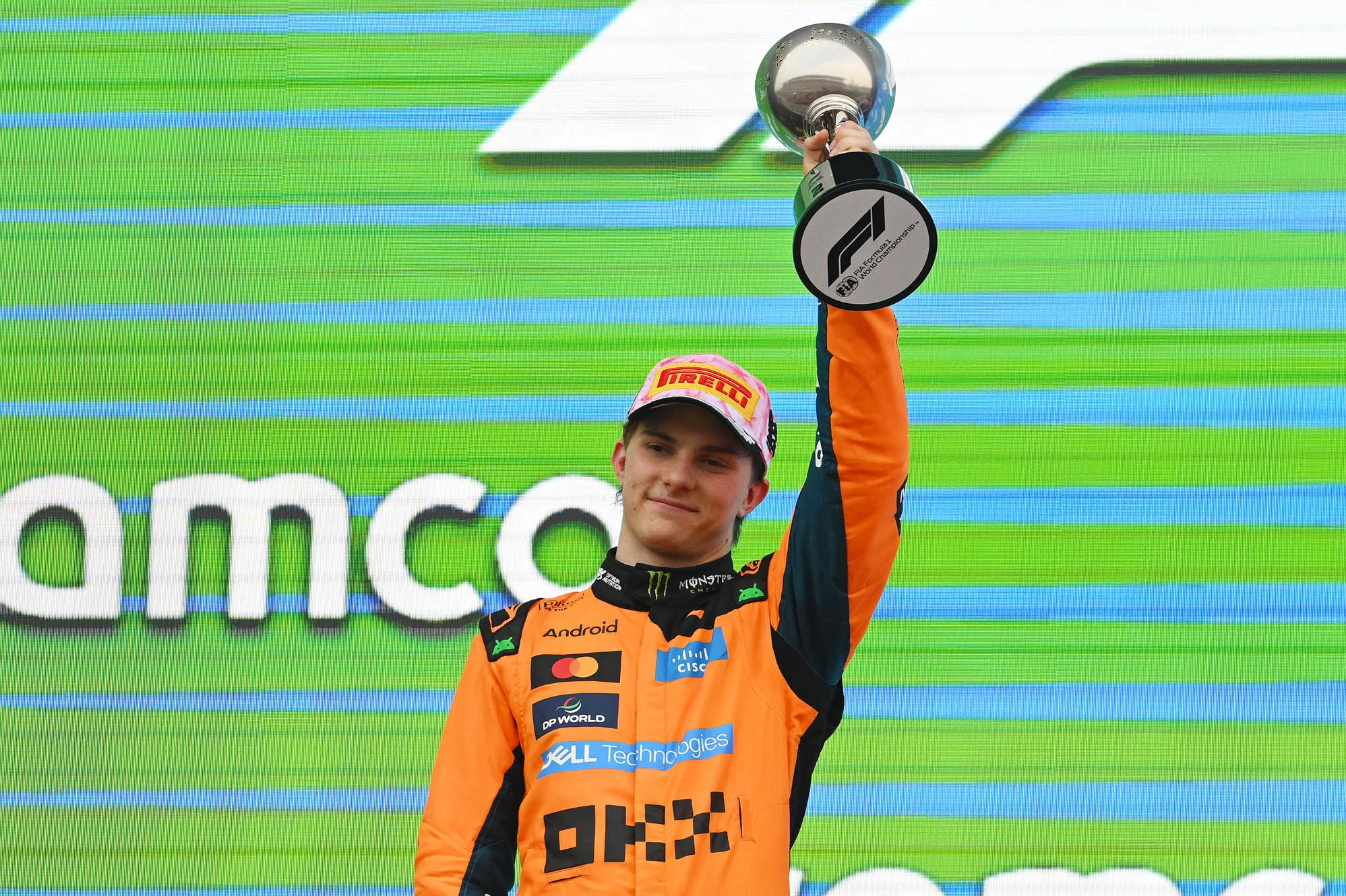
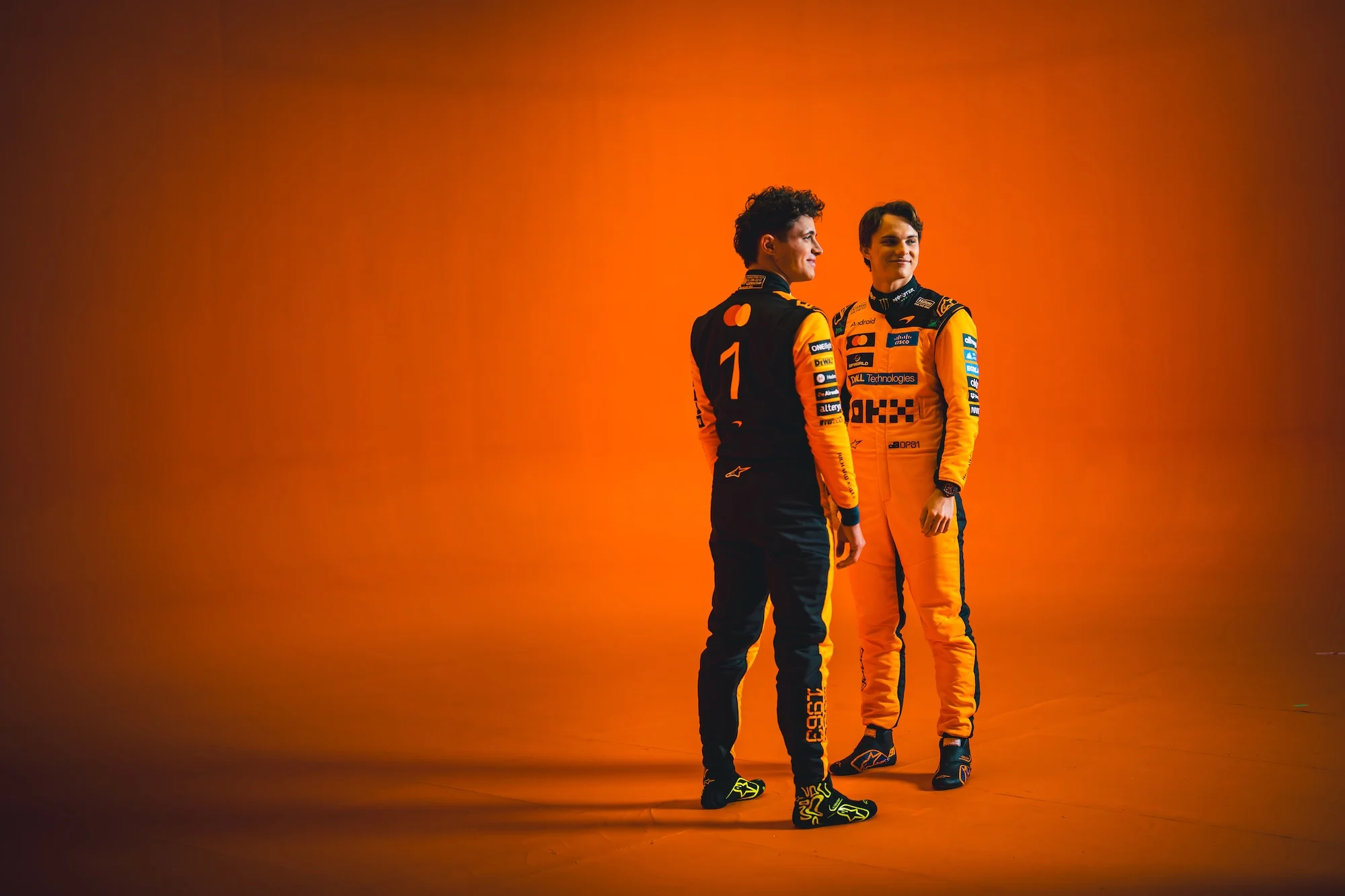
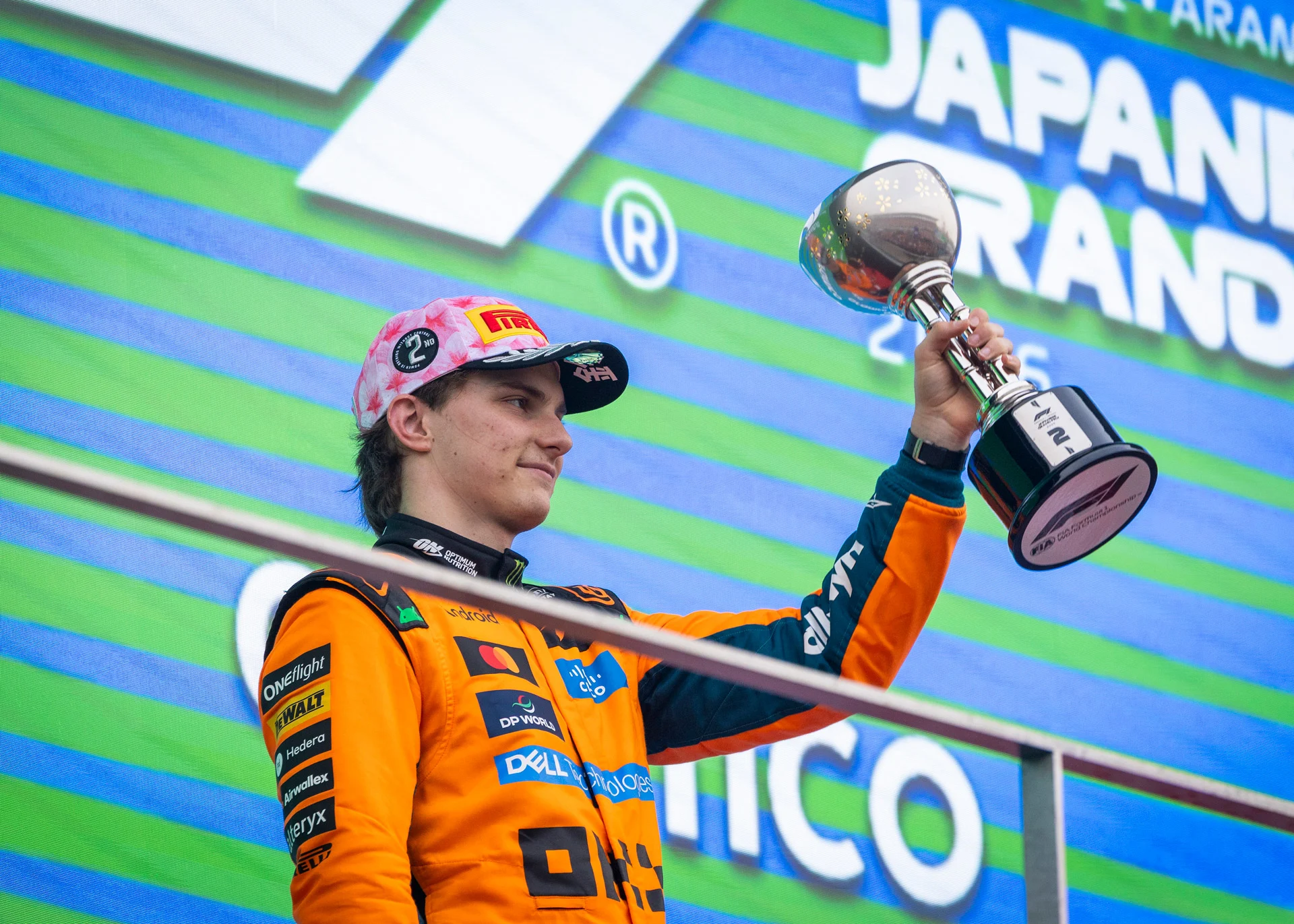
The learning curve in 2026 is steep. Somewhere down the line, probably before the end of this campaign, all of this will be familiar and mundane, but for the moment, the new regulations are still fresh. Going to an old-school circuit like Suzuka merely amplifies the newness of everything: we’ve won the Japanese Grand Prix seven times here and taken two Constructors’ and six Drivers’ titles on the figure-eight track. It’s a place we know intimately… and yet, with the MCL40, it feels like something new. And so, how do you make the most of what you’ve got? The Japanese Grand Prix was a good race for the team: both cars took the start for the first time this year, and both finished in the points. Oscar delivered our first podium of the season – and can count himself a little unlucky to have not been fighting for the victory further into the Grand Prix – while Lando had a nice battle with Lewis Hamilton in the final stages, eventually coming out ahead of the Ferrari driver. After winning consecutive Constructors’ Championships, second and fifth may sound disappointing, but this is not the case. The team departed Mie Prefecture in good spirits: the month of March has delivered sizeable advances in our understanding of how to get the best out of the MCL40, especially in terms of power unit exploitation. The points and podium are very nice, but the biggest plus from Suzuka was the development of our competitive position. In years past, this might have been the result of upgrades, but in 2026, the changes, so far, are more operational. Our understanding of the car is going to keep developing at pace this year, but for the moment, we maximised our potential in Japan. With the help of FxPro, we’ll explain how and why we were able to achieve this.
Our assumptions heading into the race were that the team had executed a very good Qualifying session to line-up P3 and P5 – but that the Ferraris in P4 and P6 would be similar to us in terms of race pace. The expectation was for a tough afternoon to consolidate our positions. On a track now completely resurfaced, Friday’s high-fuel running showed relatively low degradation and, while the front-left tyres did exhibit some graining, it was largely superficial. A one-stop strategy was predicted in simulation, with Medium>Hard the most likely approach. This was slightly quicker than Soft>Hard, but had also the advantage of greater flexibility in the length of the first stint. Pirelli’s sims suggested an optimum window for the pit stop would fall between laps 15-21.
Twenty-one of the 22 cars started the race with a Medium tyre fitted. Both McLarens had a rocket start. Oscar was in the lead by Turn 1, while Lando muscled his way up to P3 by the exit from Turn 2, but dropped back to P5 in the opening exchanges after both Mercedes cars recovered from their poor starts. Lando’s preparations for the race had been hampered by a variety of hydraulic and PU problems: with track time more vital than ever, as drivers and their engineers learn how to optimise energy use, the lack of track time in the Practice sessions led him to declare himself “not the most confident I’ve been going into a Sunday.” It was therefore encouraging to see that, sandwiched between the two Ferraris, he was able to pull away from Lewis Hamilton and attack Charles Leclerc for P4. On Lap 15, with the pit window opening, Lando was 1.1s behind Leclerc and 1.3s ahead of Hamilton and offered the opinion that he could go quicker in clean air. He pitted on Lap 16, but with cold tyres, fell momentarily behind Esteban Ocon, which allowed Leclerc to respond and come out narrowly ahead to keep the net position.
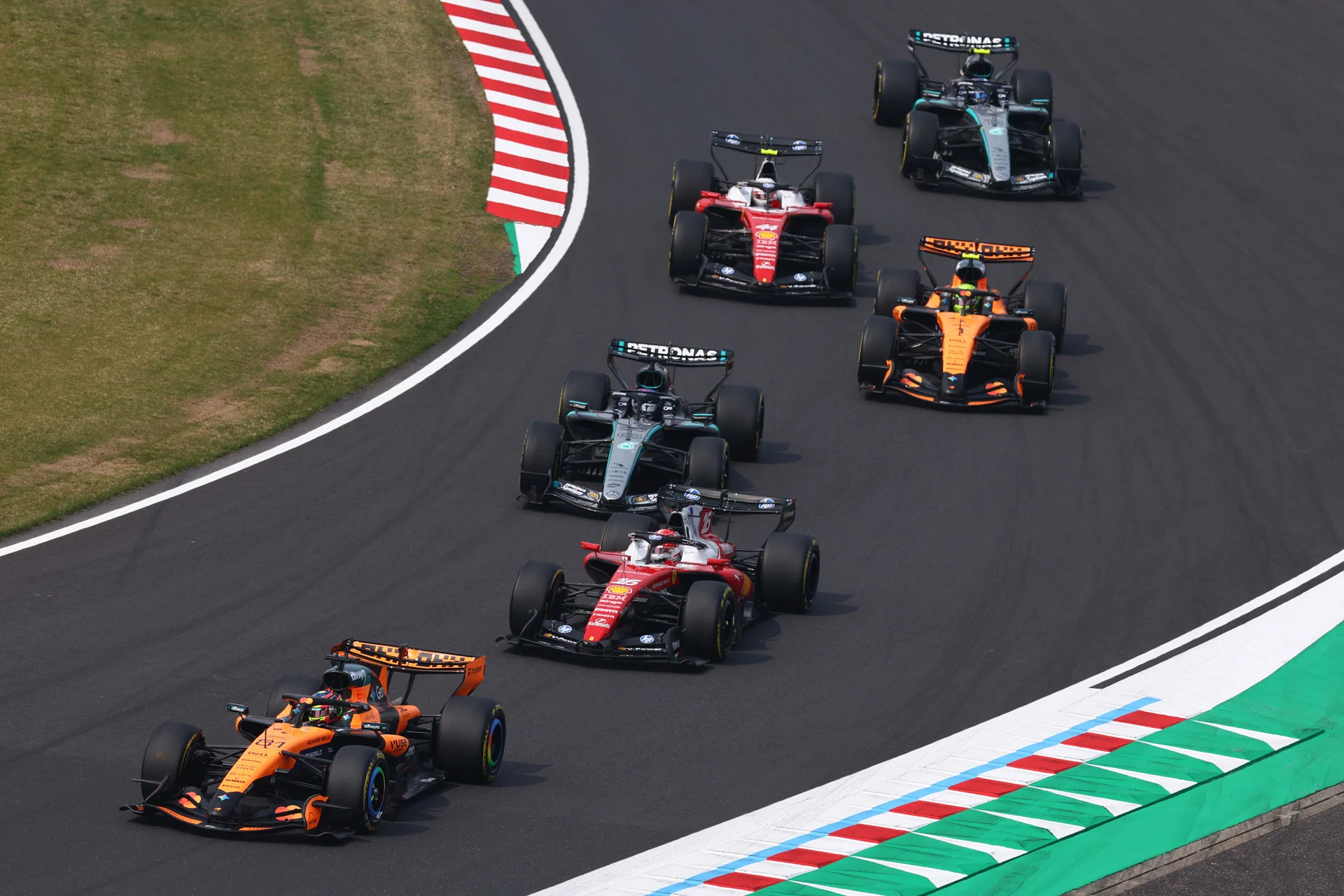
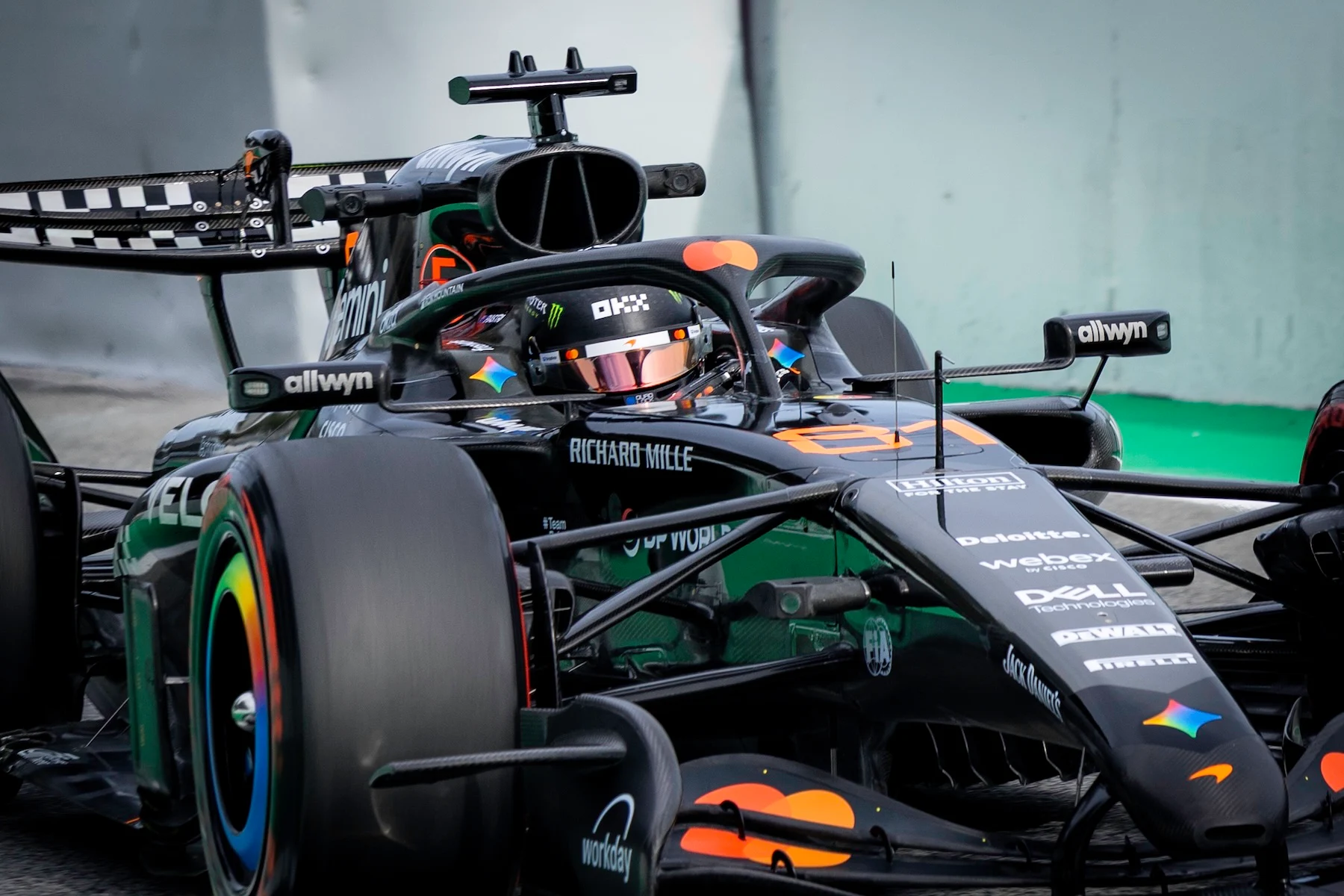
Two good things happened for Oscar at the start of the race. The first was that he got a better start than either of the front row Mercedes and swept into the lead. The second was that Charles Leclerc followed him through, and by the time George Russell had made his way back up to second place, Oscar had warm tyres and a fighting chance of keeping the Mercedes at bay. Russell attacked and briefly took the lead on Lap 8, only for Oscar to retake it on Lap 9, with the sort of energy-deployment battle we are becoming more accustomed to. As the tussle went on, Oscar grew more confident in holding his position and broke free from the Overtaking Mode zone by Lap 13. He stated on the radio that he thought staying ahead was possible if he had track position. The team were thus considering an early stop to prevent an undercut attempt, but held fire while Oscar was pulling away at around a tenth of a second per lap. Instead, Lando made the first stop on Lap 16, followed by Leclerc on 17, with Oscar next to jump on Lap 18. Russell stayed out for a few laps, attempting to build a tyre delta, but was compelled to stop on Lap 21 to avoid being undercut by Leclerc. He emerged 2.4s behind Oscar.
Stopping first or early can lock in a position, as was the case for Oscar, or it can allow a driver to attempt an undercut, as was part of the thinking for Lando. The downside is that it risks the driver losing positions should a Safety Car (SC) or Virtual Safety Car (VSC) follow… which is exactly what happened in Japan after a crash for Ollie Bearman. The pit-loss delta between a Green Flag stop and a SC/VSC stop was about 12 seconds, and both Kimi Antonelli and Hamilton made up places by pitting during the first of six laps behind the Safety Car. When the order shook out, Oscar had dropped to P2, behind Antonelli, while Lando was P6, with Hamilton up to P3 with a net three-place gain.
At the restart, Antonelli was able to pull away, and it became clear Oscar no longer had a realistic shot at victory – but he was able to pull out a valuable gap over the chasing pack, while Russell battled first Hamilton and then Leclerc. And while Oscar’s advantage never extended far, he didn’t allow any of his pursuers into the Overtaking Mode zone from Lap 35 onwards, coming home P2 in reasonable comfort. While he was left to rue whether the Safety Car ruined a shot at victory, Oscar noted the many positives: “I think for us, at this point, to be disappointed about finishing second is a pretty good place to be.” Whilst we can plan for the likelihood of a Safety Car, we have to make decisions on the balance of probabilities and not pitting with Oscar would have risked the Grand Prix win, in a race absent any race intervention. The second half of Lando’s race was rather more involved. In the early part, he dropped back a little from the front five to protect his tyres, closing up in the last 10 laps to attack the car in front, who was by this point Hamilton, dropping back through the field. Twice, Lando passed the Ferrari into the chicane before losing the place on the following straight, with Hamilton able to deploy more energy. The team was contemplating the high-risk strategy of leaving the move to the very last lap, but Lando made it through with two laps remaining and was able to break the elastic and pull clear.
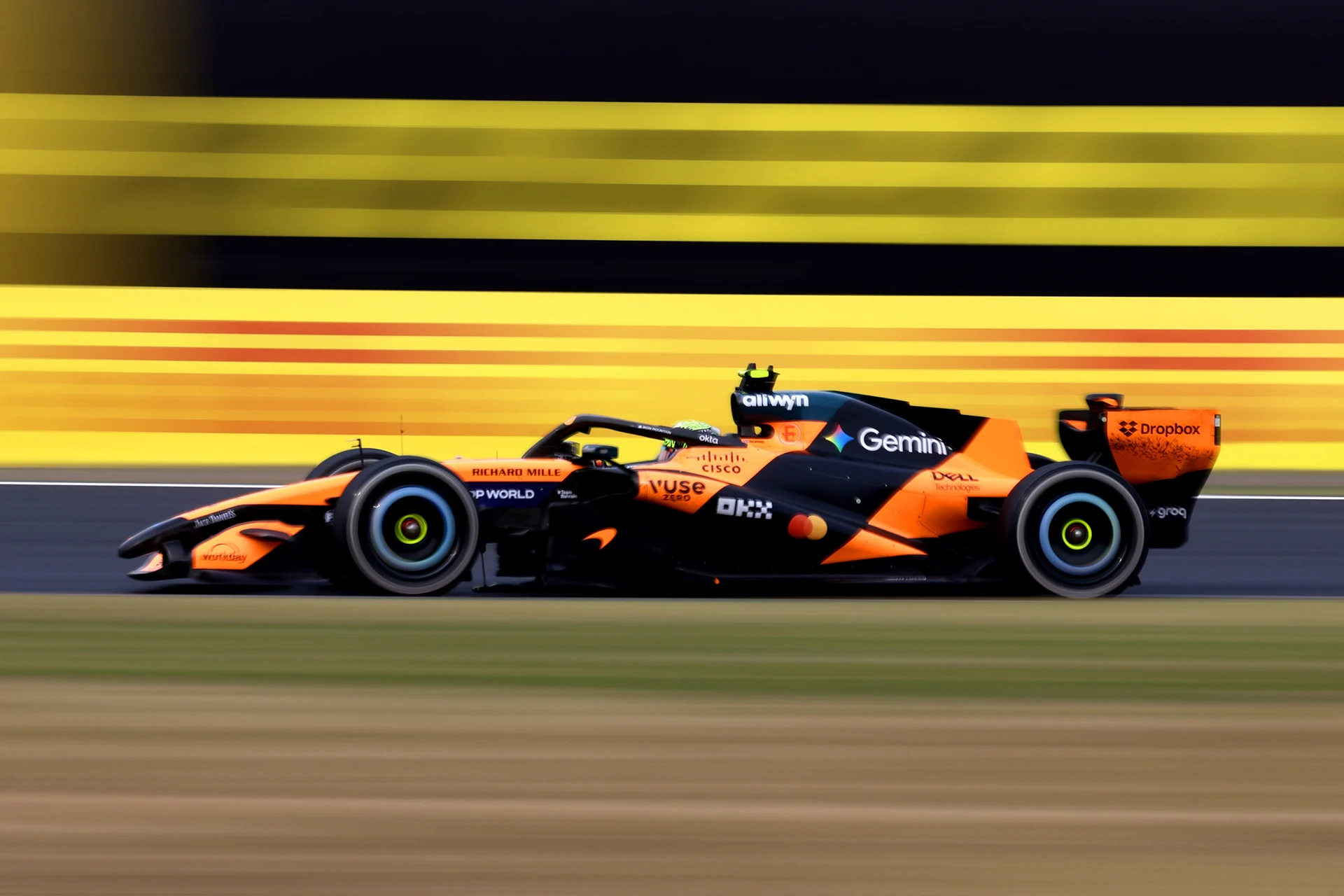
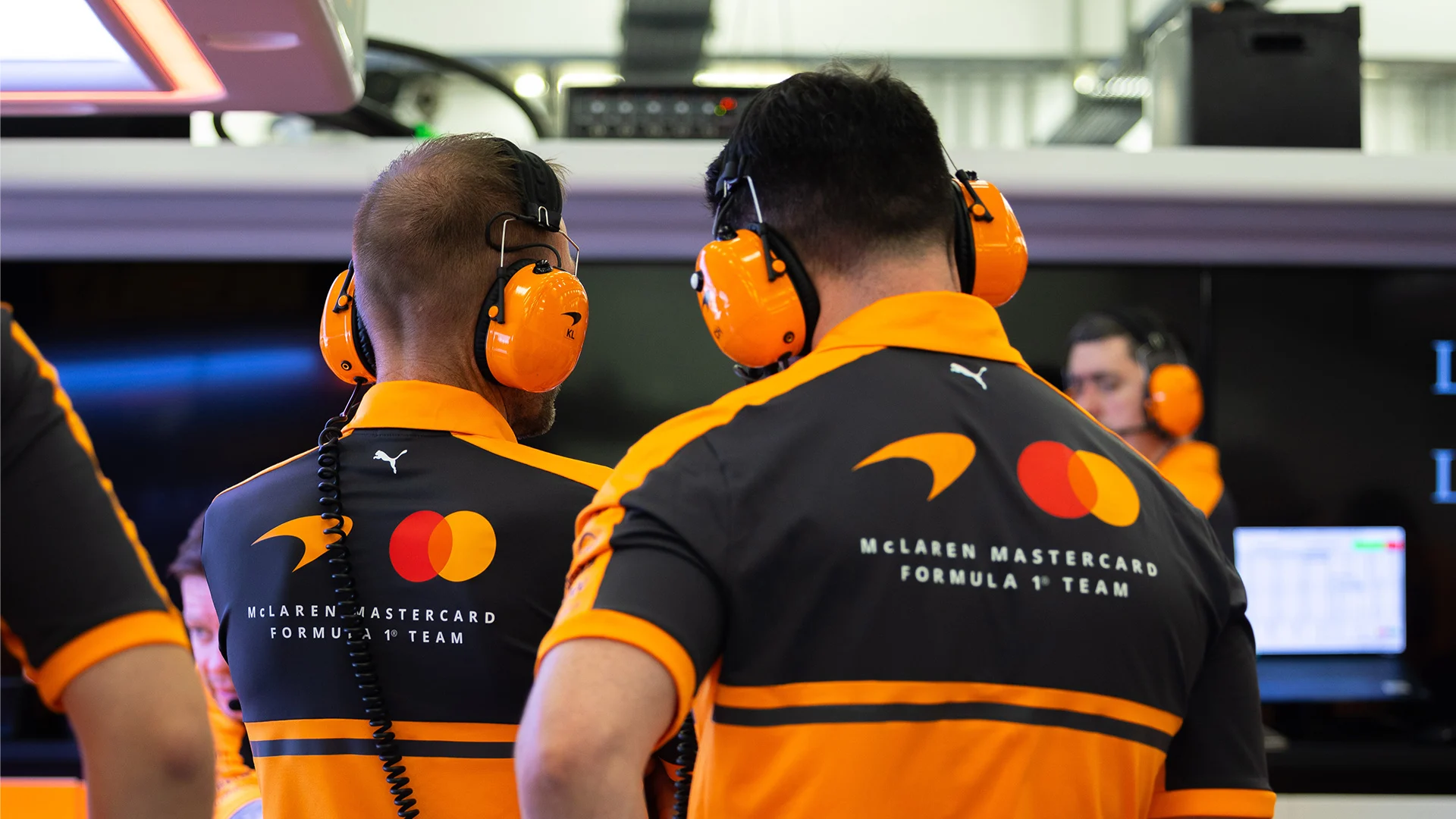
Japan was our first Grand Prix of the year with both cars starting (and finishing), and the sense during packdown – applauded as always by the fans that stayed to watch – was that we had maximised our potential in a hard-fought race. It’s a nice thought to take into the hiatus. We’re also starting to see the shape of things to come, with races following different patterns from what we’ve become accustomed to across recent decades. An element that we’ve noticed across our three 2026 outings is a relatively chaotic sequence of laps at the start of races, with drivers still fine-tuning their energy strategies, followed by periods becoming increasingly ‘normal’ as the drivers and their engineers figure out what works best, and also what their rivals are doing. The situation never becomes entirely stable, however, because the energy use of the cars is a dynamic state, changing as fuel loads fall, grip levels increase, and lap times decrease. Superclipping starts to happen at different points on track, requiring a response in the driving style… and this happens in addition to – rather than instead of – the usual strategy dilemmas. It means the race engineering and strategy teams in 2026 are very, very busy on race day. But like everything this season, the load is likely to lessen as this becomes the new normal. Learn how FxPro combines speed, innovation, and precision to drive performance in financial markets.