





12 March 2026 12:00 (UTC)
From the format of the sessions to the points on offer, here’s everything you need to know about F1’s shortened 100km race
Like the F1 Sprint, we’ll keep this guide short and sharp.
Formula 1’s Sprint format has been running for six years and will continue in 2026 with six Sprint weekends in total.
We’ve compiled a lowdown on everything you need to know to enjoy the action-packed dash to the line, from how the weekend works to what points are on offer.
The Sprint is effectively a bitesize version of the fully-fledged Grand Prix, providing avid Formula 1 fans with an additional wedge of overtaking action and acting as an intro to racing for newcomers.
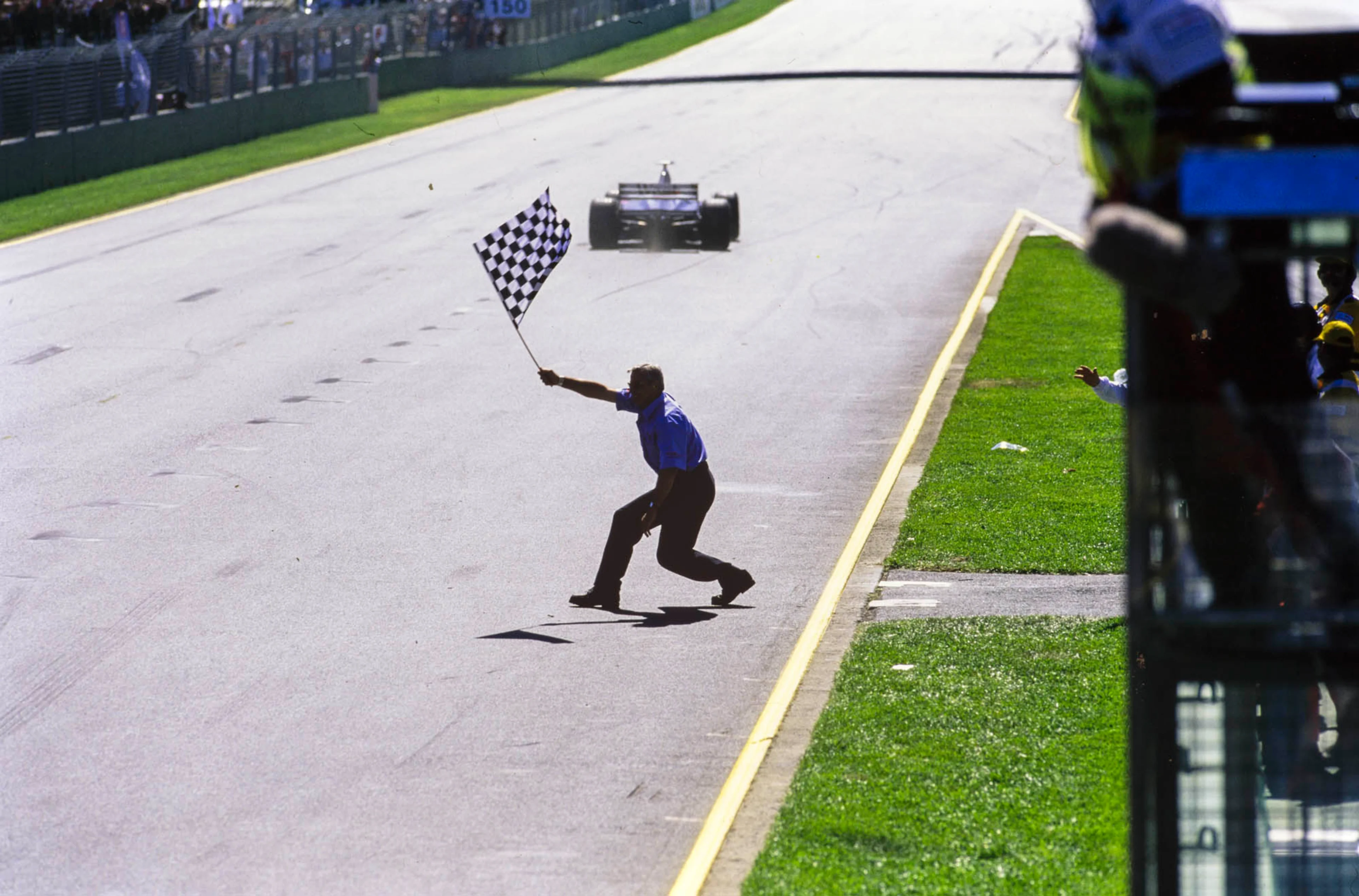
As the name would suggest, it’s short and sharp, with the entire race taking place over just 100km - around one-third of the standard Grand Prix distance. There are no mandatory pit stops, so it’s a straightforward run to the line. As always, whoever passes the Chequered Flag first wins, so it’s a battle of pure speed and overtaking prowess without any massively complicated strategy matters.
Friday | Free Practice |
Sprint Qualifying | |
Saturday | Sprint |
Grand Prix Qualifying | |
Sunday | Grand Prix |
The finishing order of the Sprint will not affect the starting grid for Sunday’s Grand Prix. The full-length race takes place as usual, with the grid decided by Qualifying, which takes place on Saturday afternoon after the Sprint.
Of course! Points are handed out to the top eight finishers, which go towards the main Drivers’ and Constructors’ World Championship standings.
Position | Points Awarded |
First | Eight |
Second | Seven |
Third | Six |
Fourth | Five |
Fifth | Four |
Sixth | Three |
Seventh | Two |
Eighth | One |
The F1 Sprint features its own shortened Qualifying format, split into three sections. SQ1, SQ2, and SQ3 last 12, 10, and eight minutes, respectively, separated by seven-minute intervals.
Based on their best lap times, the six slowest drivers are eliminated SQ1 and SQ2, narrowing the field to the top 10 for SQ3, where they battle it out for Sprint Pole.
With less time for each of SQ1, SQ2, and SQ2, compared to the standard Qualifying format, teams typically only have time for a single run in each, putting pressure on drivers to get their fast laps right at the first time of asking. With there being no time for multiple runs or tyre changes, fresh rubber is mandatory for each segment. Teams must use Medium tyres for SQ1 and SQ2 and Softs for SQ3.
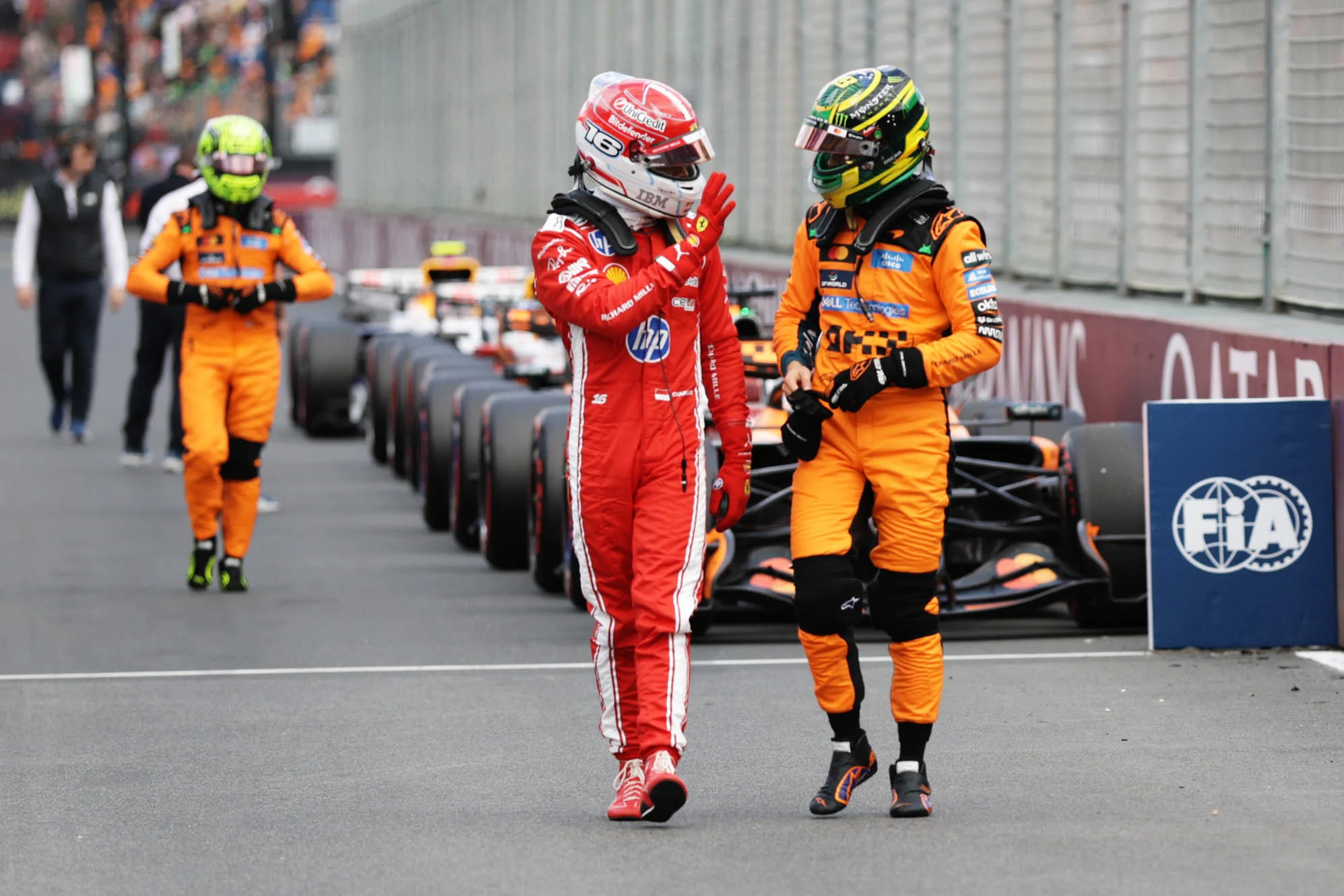
On a Sprint weekend, we get only one hour to finalise our setups, with a single Free Practice session. That leaves us with a lot to do in just one session and increases the importance of our team's work back at the factory, both in the lead-up to the weekend and during it.
Parc fermé rules - when teams are prevented from making any major changes to their cars - were changed for Sprint races last year. Cars are now initially placed under parc fermé conditions at the start of Sprint Qualifying until the end of the Sprint.
We can then make further changes to the MCL40 between the Sprint and the start of Grand Prix Qualifying. From the start of Qualifying, cars are then locked back into parc fermé for the final time. This gives teams more flexibility to change their setups for the Sprint and the Grand Prix, which have their own unique requirements.
Date | Grand Prix | Venue |
13-15 March | Chinese GP | Shanghai |
1-3 May | Miami GP | Miami |
22-24 May | Canadian GP | Montreal |
3-5 July | British GP | Silverstone |
21-23 August | Dutch GP | Zandvoort |
9-11 October | Singapore GP | Singapore |
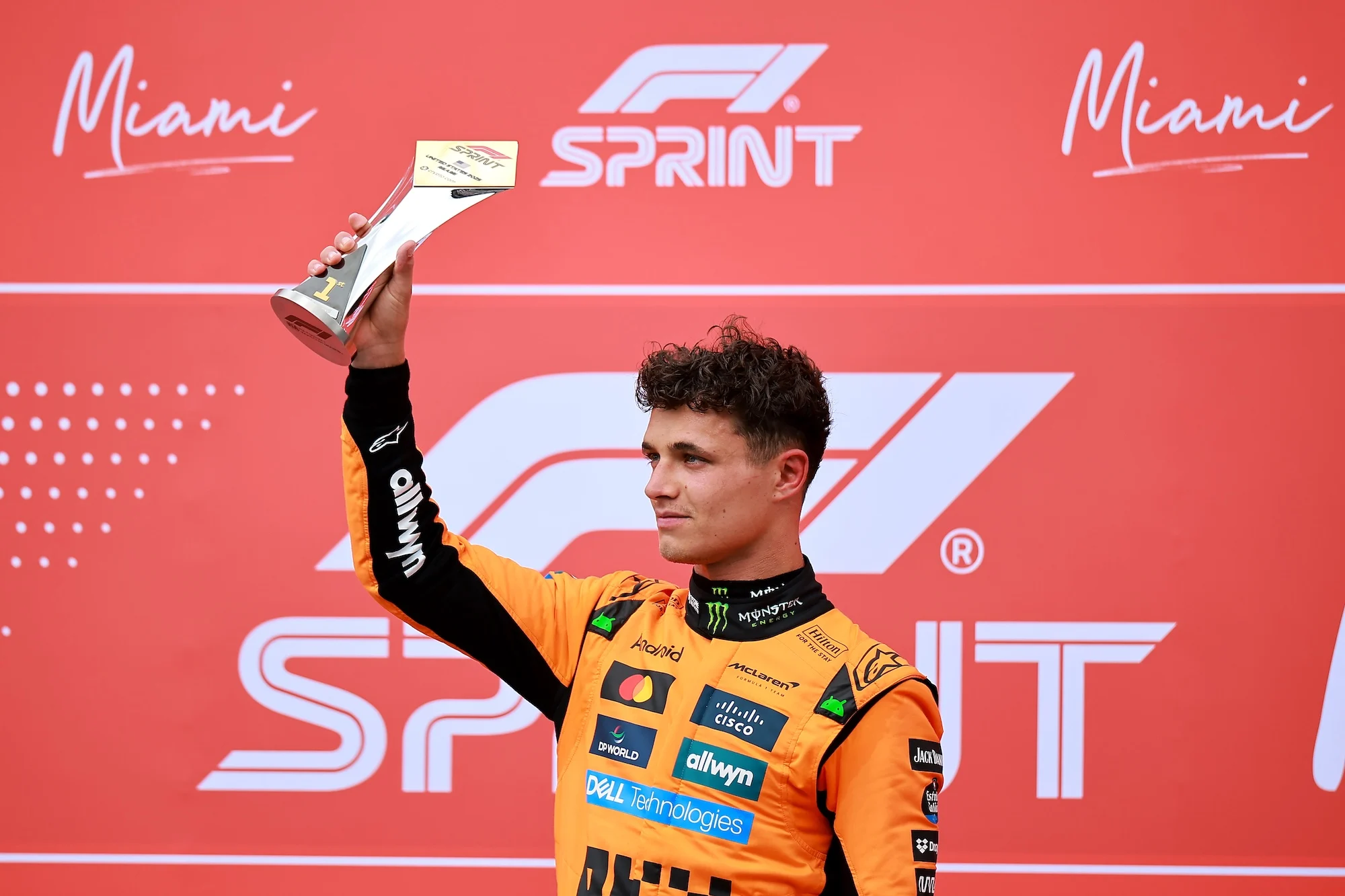
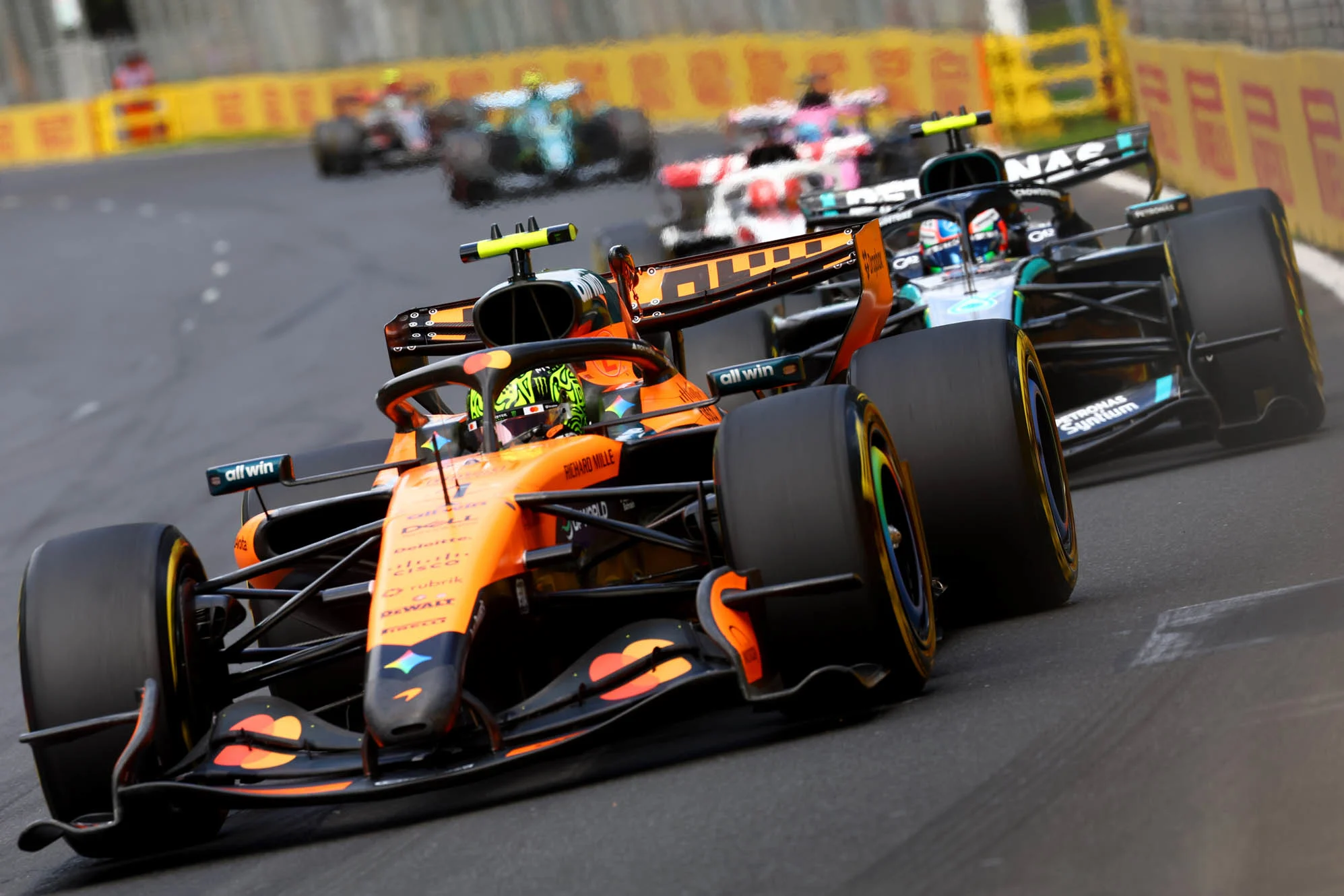
McLaren performed well in last season’s Sprint races, winning three of the six events. Lando claimed Sprint victories in Miami and São Paulo, while Oscar finished first in the Qatar Grand Prix Sprint.