



27 October 2026 15:30 (UTC)
F1 mailbag: Why the steering wheels are rectangular, who talks to the drivers over team radio, and what a ‘standard drop’ means
As a sport at the cutting edge of technology and performance, Formula 1 naturally provokes a lot of questions. Some are more complicated, and would take an entire article to explain, while others are more niche, requiring less page space, but just as much prominence...
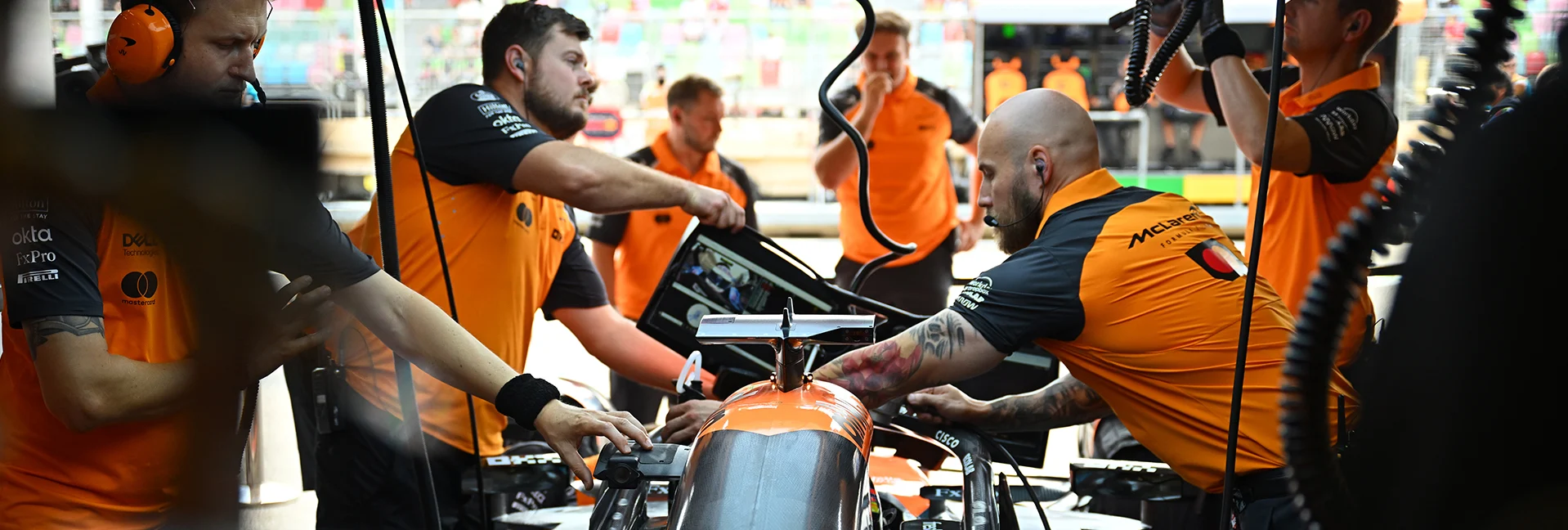
Don’t the mechanics burn their hands when they touch the cars? How loud does the garage get? And can the drivers talk to each other over the radio during sessions? These are a few of the questions you’ve been asking us recently, and in the latest edition of F1 questions you’ve been afraid to ask, our series where we make room for the less talked about topics and quirkier questions, we’ll attempt to answer them.
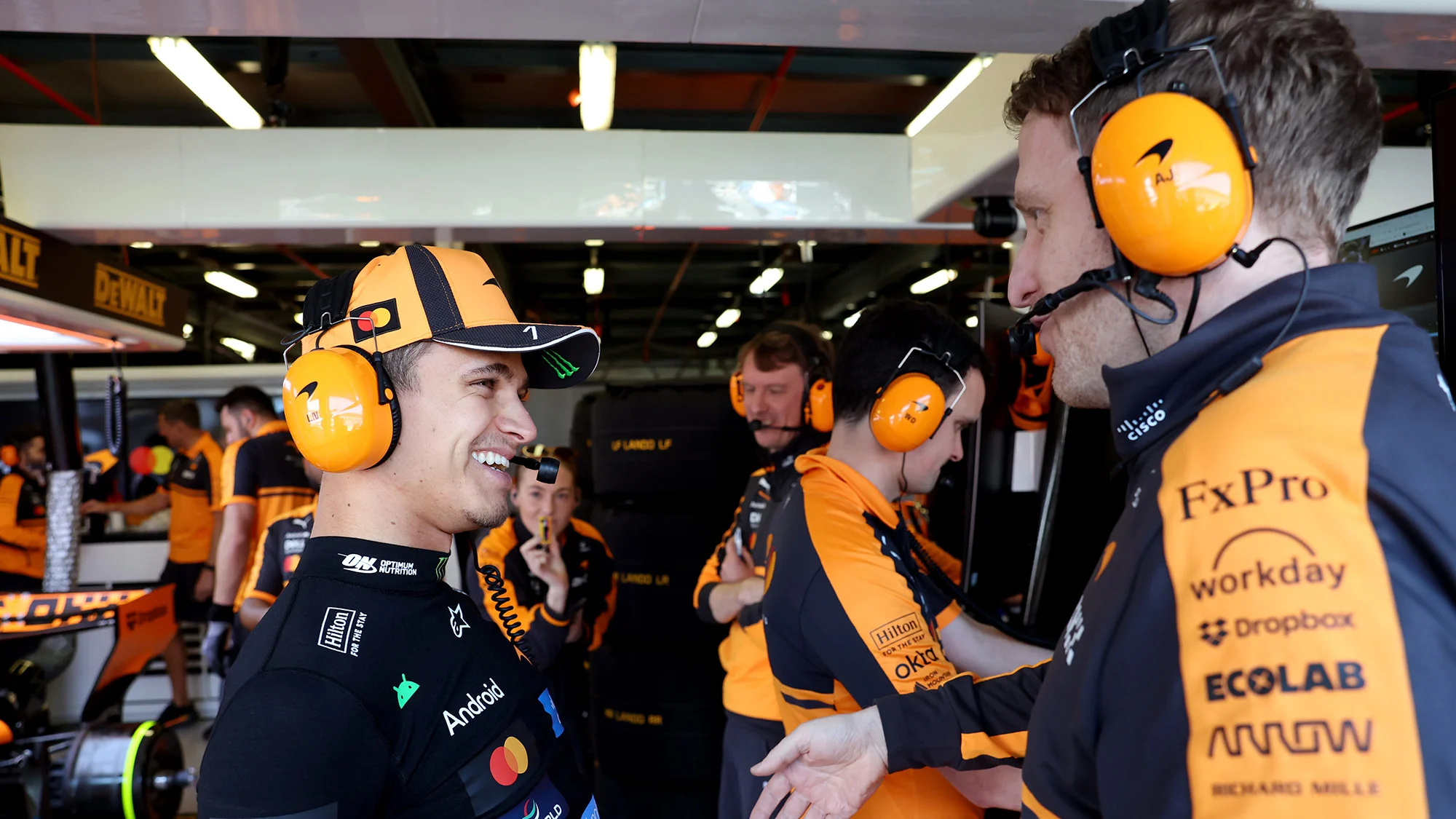
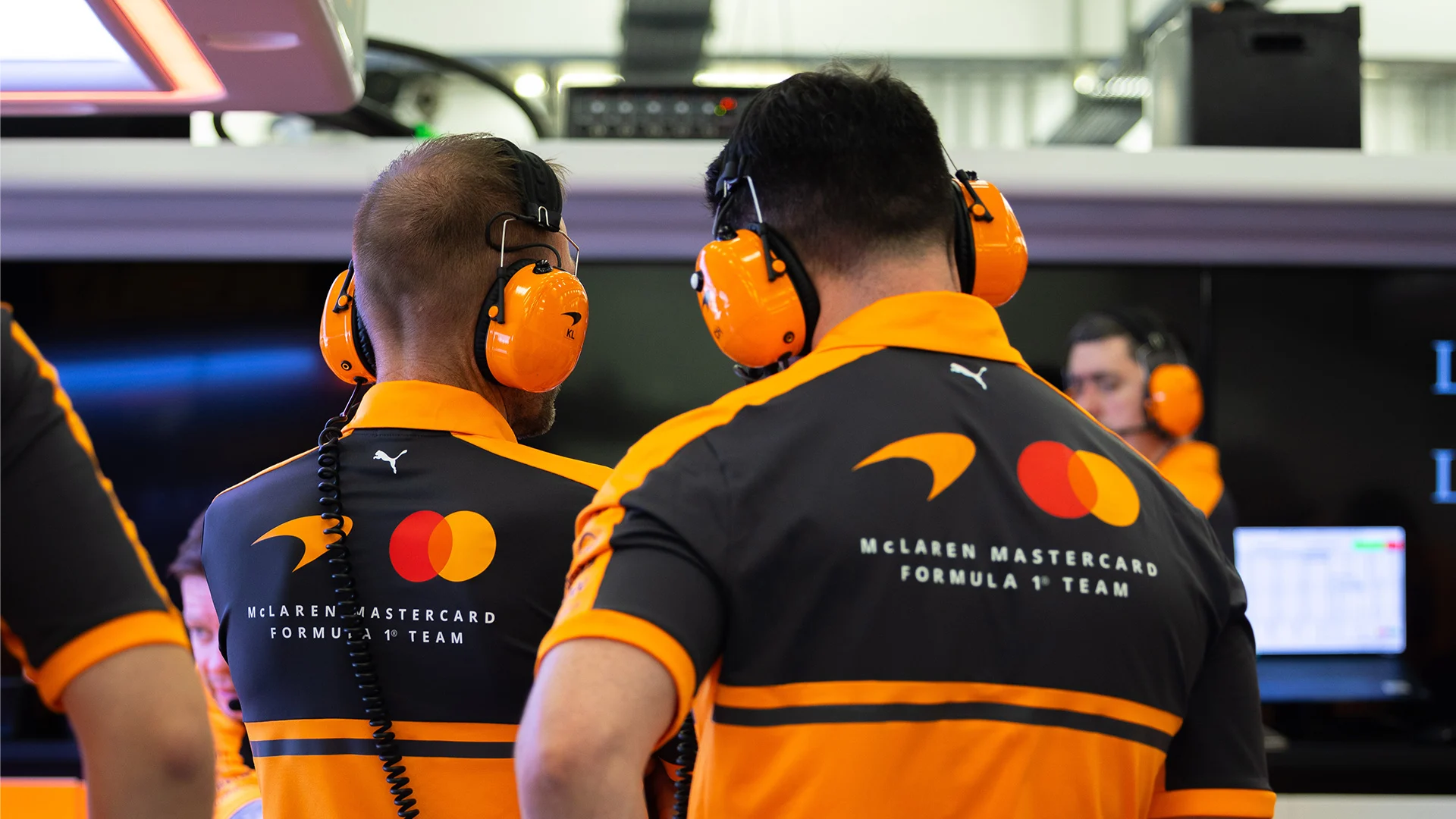
It gets very loud! Not quite as loud as when we had V10s, but certainly loud enough that you couldn’t hold a conversation. Garages tend to be enclosed spaces, which amplifies the noise.
And so, everyone in the garage communicates via intercom. Whenever the cars are likely to be running, everyone wears a headset and can talk to others on their channel(s).
Even if you’re standing next to the person you’re talking to, it’s all done via the intercom, either through a belt-pack radio or, for the engineers at the island or on the pit wall, by plugging into a comms panel. The driver can also communicate only via the radio.
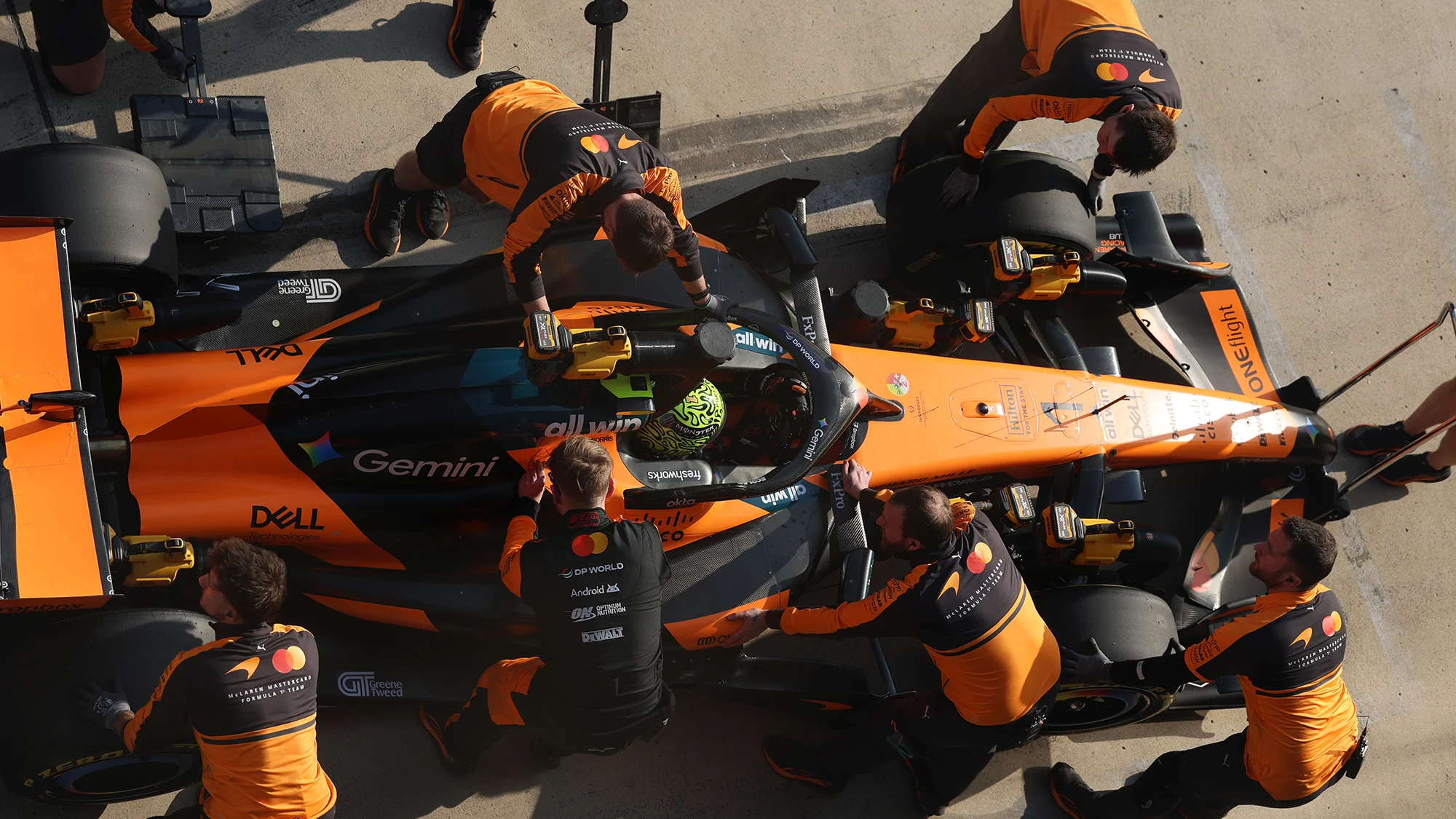
In an ideal world, when the driver is on an in-lap, they’ll attempt to cool the car as much as possible – using higher gears at lower revs or by avoiding heavy braking by lifting and coasting, etc., so that when the car stops outside the garage, it’s cooled sufficiently to be easy to handle.
Additionally, as soon as the car stops, fans will go into the various radiator inlets and the airbox to keep air circulating and prevent overheating. This is done to protect the car – but it’s also beneficial to the crew.
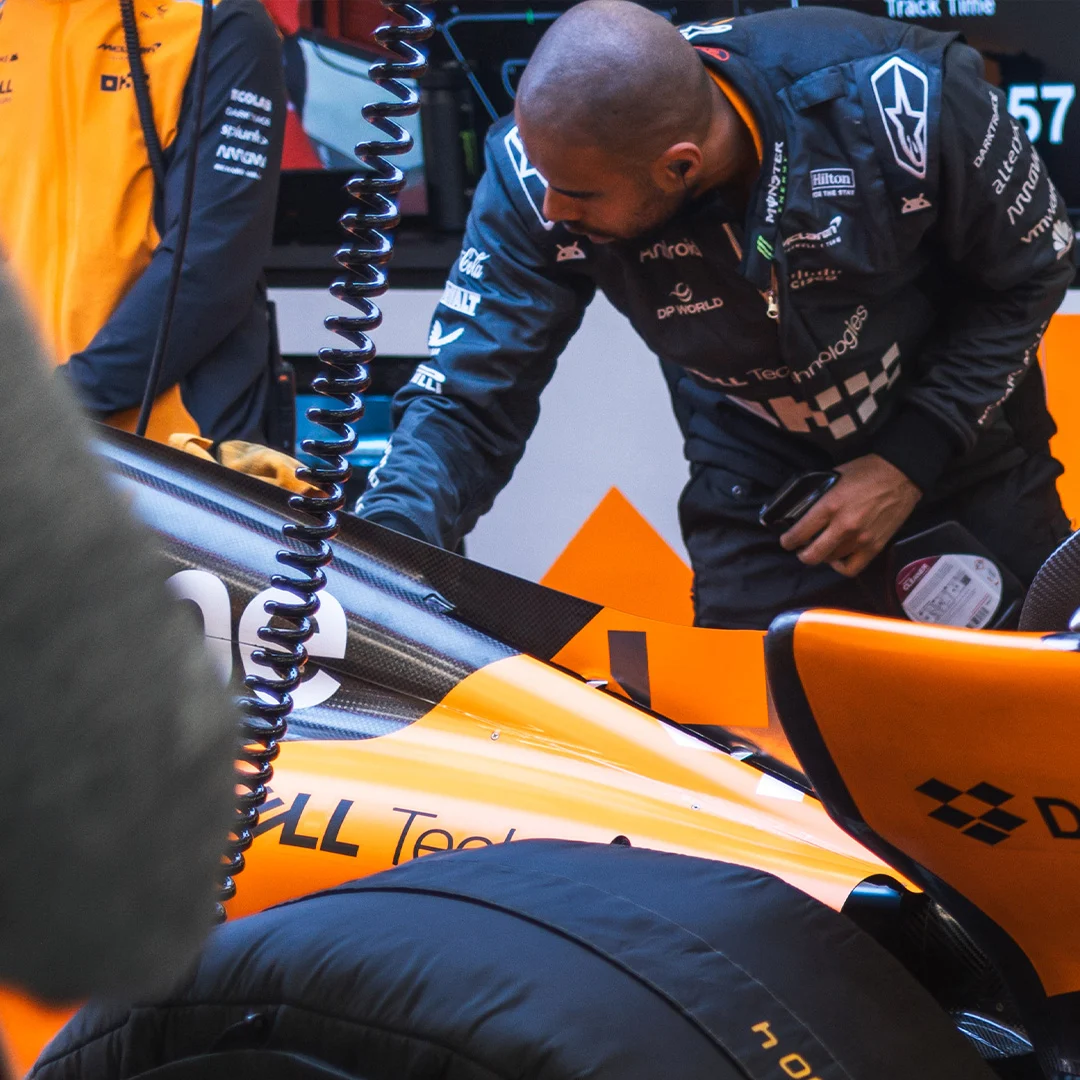
Items like brake discs will reach spot temperatures well above 1,000°C, but those cool pretty rapidly. Components in the engine bay don’t get up to anything like those temperatures but, like a road car, you wouldn’t necessarily want to touch them as soon as the car stops. By the time the crew has the sidepod and engine covers off, however, things are reaching a point where you no longer need oven gloves.
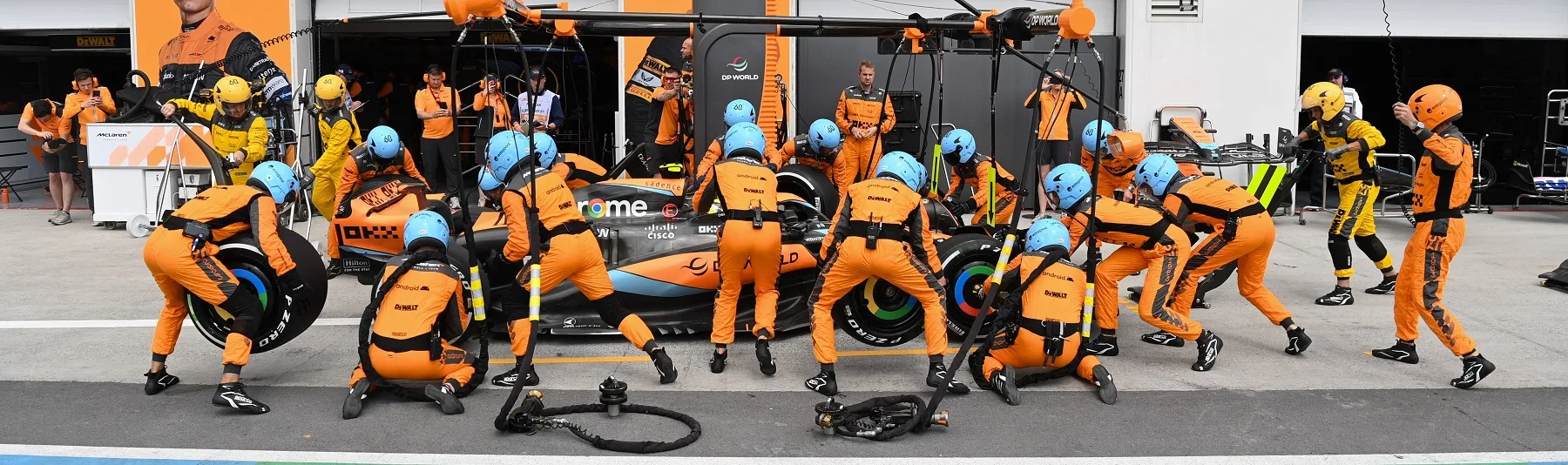
As for things like pit stops. Yes, the car is very hot when it comes in, but the crew are prepared for the blast of heat, and the tyres themselves, while hot, are safe enough to handle in a decent pair of gloves.
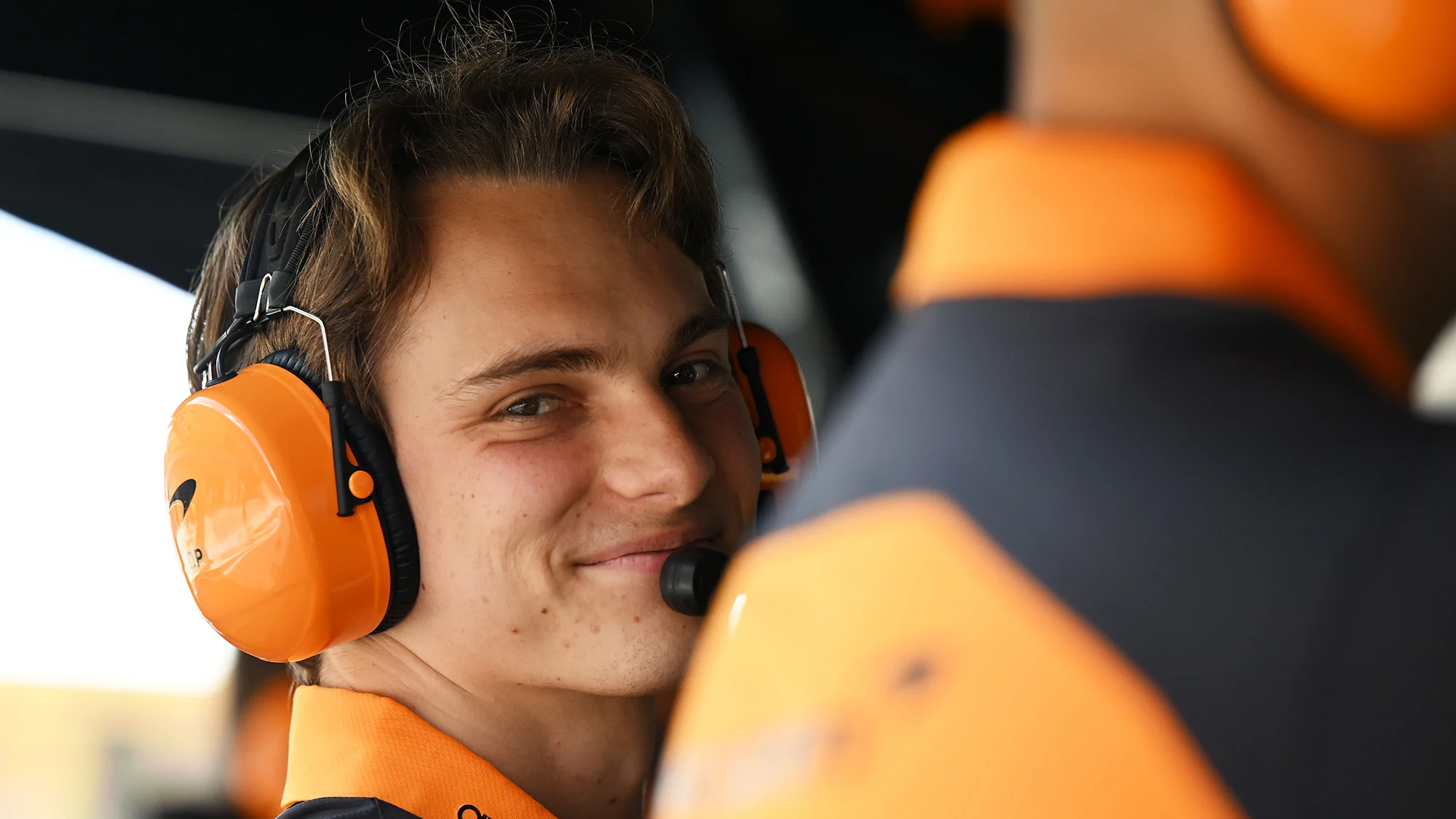
No! There isn’t a technical reason why that couldn’t be done, it’s just not the convention. When a driver is on track, the only voice he hears on the radio is his Race Engineer. All other communication to the driver is filtered through the Race Engineer. This ensures the messages getting through have maximum clarity.
That isn’t to say information isn’t passed between drivers during a session. It’s often the case that the impressions of the track from one driver will be passed across to the other. That information is passed back and forth, usually via Adrian Goodwin, Associate Director, Race Engineering, who listens in to both comms channels, but can also come from Mission Control at the McLaren Factory.
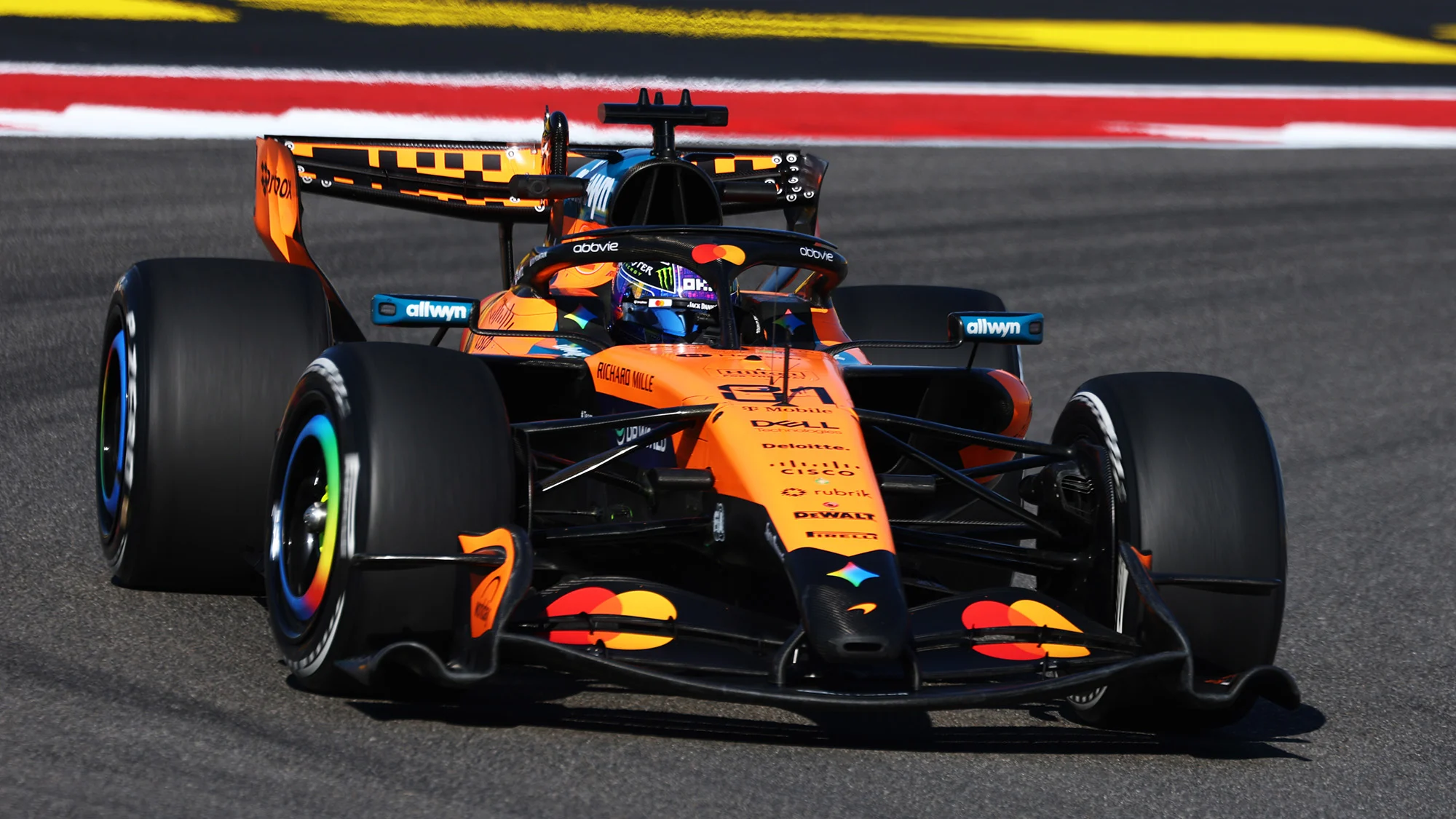
When the car is on track, the Race Engineer is the only voice they’ll hear. This cuts down on confusion. The Race Engineers will, in turn, be receiving information from a variety of sources in the backroom, and channelling the relevant bits for the driver.
The only standard exception is on the Grand Prix or Sprint formation lap, when the Race Engineer – who has been on the grid with the car – is running back to the pit wall. On that lap, the Performance Engineer takes over comms with the driver and maintains it until the Race Engineer is in position and announces they have control.
There might be a word from Andrea or Zak on the pit wall at the Chequered Flag, and we’ve had occasional other people patched into the cockpit – a TV commentator, and, on one memorable occasion, Fernando Alonso at Indianapolis asking substitute Jenson Button to look after his car.
Things are different when the car is in the garage between Practice and Qualifying runs. The Race Engineer and the Performance Engineer split setup responsibilities between them because it’s too much work for one person with a modern car. Broadly, the Race Engineer handles mechanical setup, and the Performance Engineer will take care of electronic setup.
Typically, when the car comes in, the Race Engineer and driver will first discuss mechanical setup. Then, while the crew adjusts setup based on that discussion, the driver will talk to their Performance Engineer about brake balance, brake shape, and differential settings. These two people are usually the only ones who will speak with the driver.
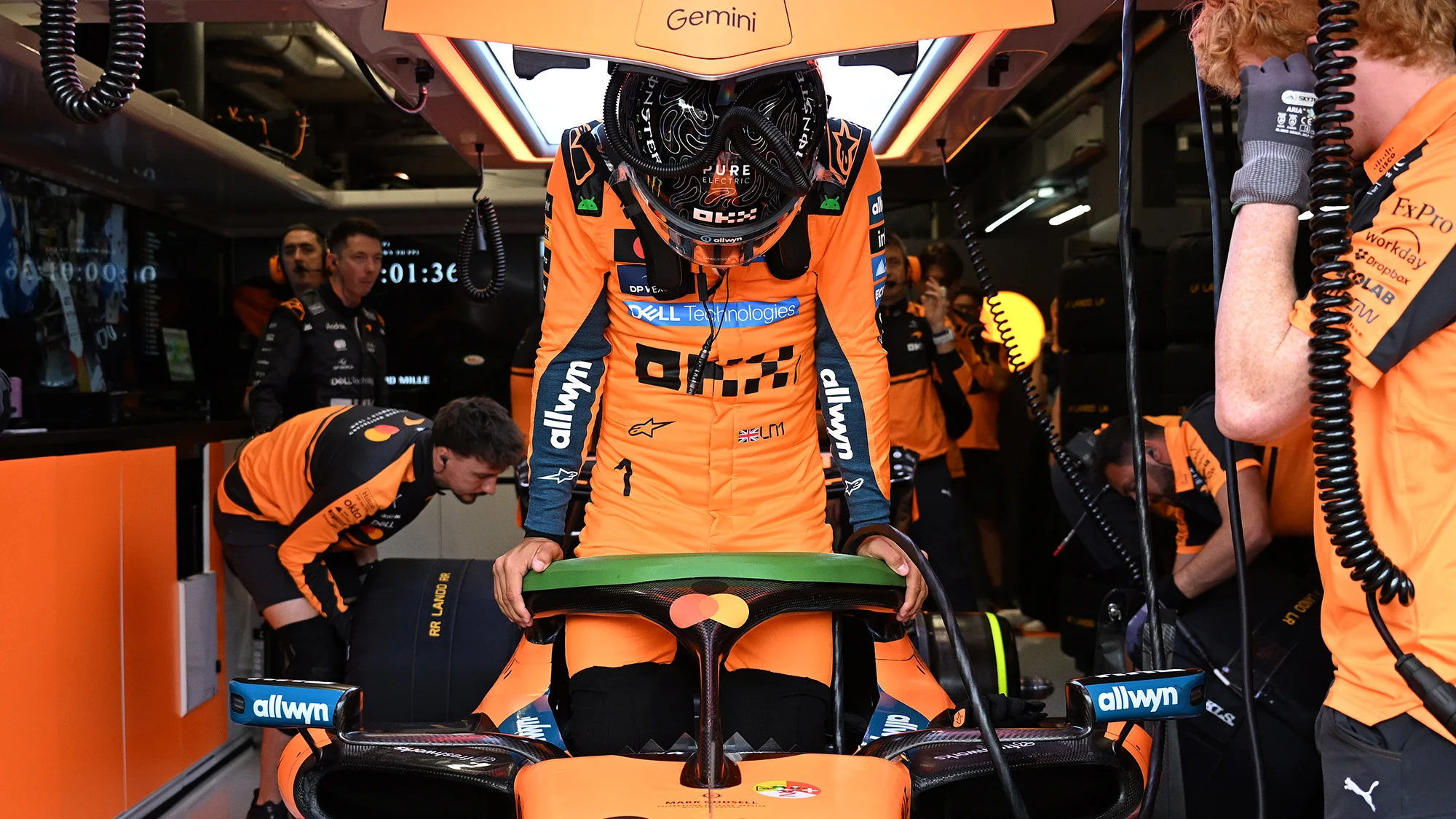
This’s the umbilical that attaches the car to the garage network. It’s doing several things all at once.
First, it offloads data stored onboard. The car transmits a lot of telemetry wirelessly via the Onboard Communication Unit (aka OCU – the T-shaped unit on top of the airbox) to access points around the track, but bandwidth is limited. The car can store much more data than it transmits, and it downloads that when it comes into the garage, while also backfilling any gaps in the transmitted data.
Another thing the umbilical does is enable voice comms between the team and the driver. Obviously, there is also car-to-pits radio, but those are open-access, and any other team is free to listen in on what’s being discussed. If the team and driver want to have a private conversation, it needs to wait until the umbilical is inserted. In the normal course of the race weekend, the car will be pushed back into the garage, the Race Engineer will inform the driver that they’re now plugged in, and the driver will begin his debrief.
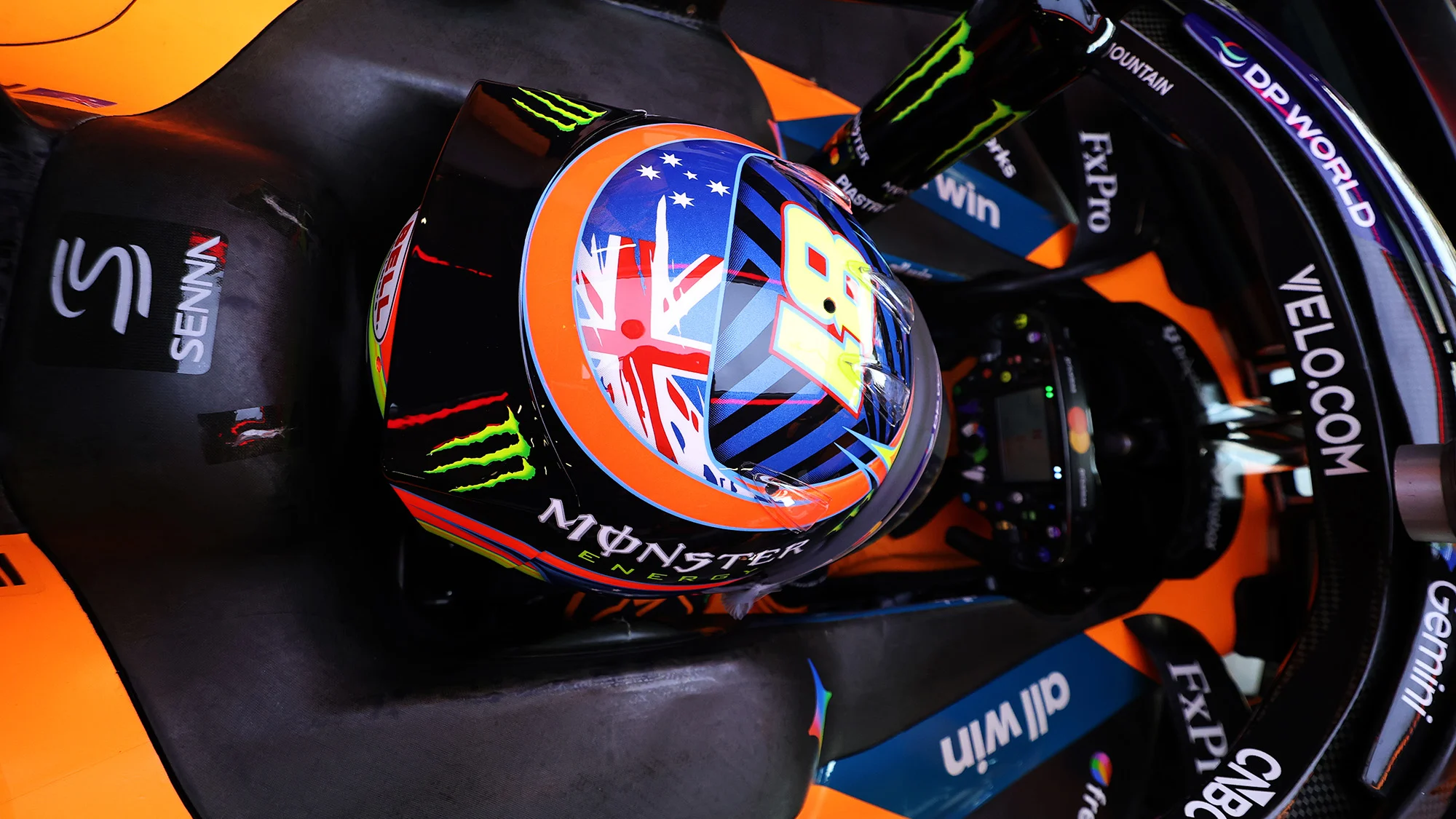
Round wheels started going out of style in the early 1990s.
In 1994, we actually had a split. Martin Brundle opted for a round wheel, while Mika Häkkinen went for a wheel with a slightly flattened top – the style Ayton Senna had favoured the previous year. That flattened-top steering wheel became more pronounced, before disappearing entirely. By 1998, David Coulthard was still using a wheel with the ‘bottom’ segment, but Mika had shifted to the ‘butterfly’ shape, the forerunner of the modern device.
Why did the wheels evolve into this style? Looking at F1 cars from the 1950s, they have huge wheels, because it took a great deal of muscle power and leverage to turn the cars. With power steering, the drivers of today don’t need quite that level of muscle, and so things naturally got smaller.
A big part of squaring the wheel is the advent of paddle shift. Because the gear shifters and clutch paddles sit behind the centre of the wheel, drivers keep their hands in a fixed horizontal position, making the rest of the wheel unnecessary. Cutting away needless parts of the wheel obviously saves weight, but losing the top offers aerodynamic advantages, while losing the bottom gives drivers a little more space in a cramped cockpit.
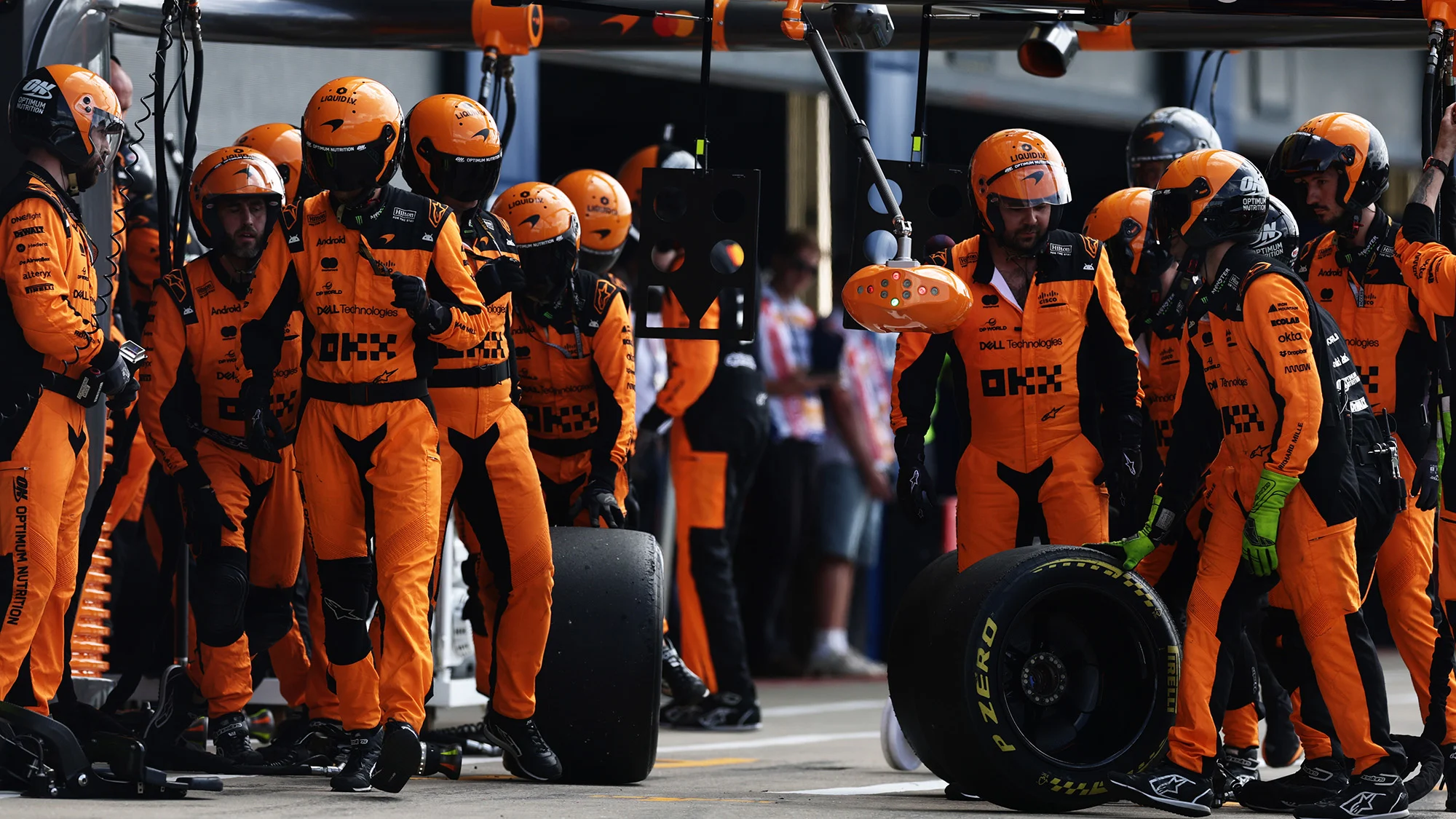
It’s tempting to say they’re packed away in a flight case and sent to the next circuit. However, the pit crew are actually full-time members of the garage – usually mechanics and technicians whose job doesn’t require instant attention while the cars are on track - with another core job that takes up the majority of their time.
During the season, there isn’t much time when they’re not at a race track, so they’ll either be travelling, resting, or working at the circuit. Outside of back-to-backs, they’ll return to the McLaren factory in Woking – again, to perform their core jobs, or for a well-earned rest.
They might do some pit-stop practice at the factory, but that mostly happens at the track and over the winter, while the goal during the season is to keep the crew in good shape, utilising our Optimum Nutrition McLaren Performance Hub.
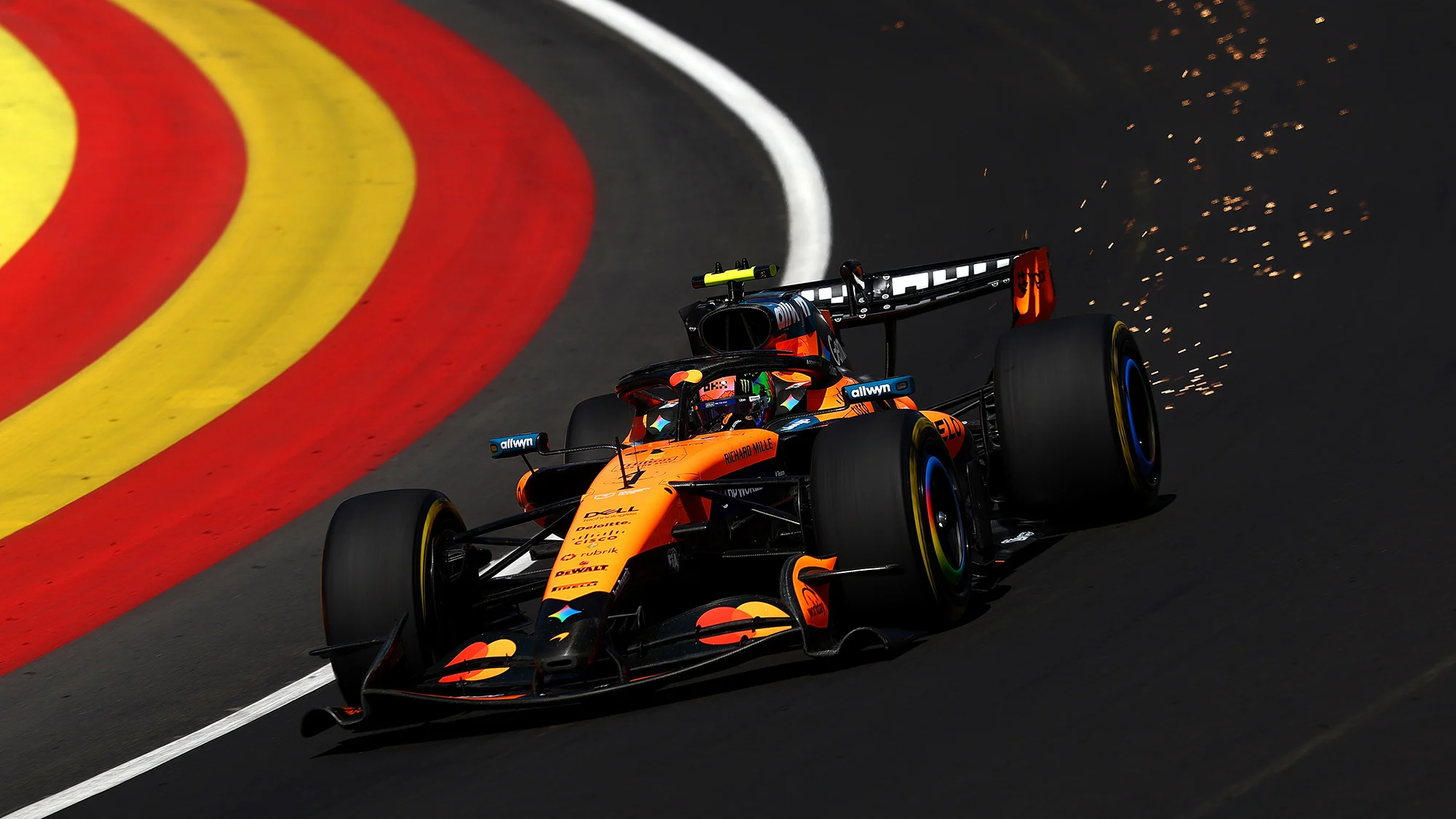
When the car is about to launch – either from the pit exit or a practice grid launch, the Race Engineer will give the driver a launch protocol, explaining exactly how to prepare the car.
The bite point is where the clutch engages and transmits torque to the wheels. Clutch properties vary slightly with temperature and wear, and track grip is another variable to consider. The clutch engineer wants precise information to set it up for the race, ensuring the car can get off the grid without first-phase wheelspin, but also without going the other way and bogging down. The bite-point find collects data on the clutch and allows the team to adjust the bite-point for an optimal launch.
Burnouts spin up the rear wheels to build heat. It requires a special mode to allow the car to do this – because under most circumstances, it isn’t what you want to see. The number of burnouts depends on tyre temperature as the car approaches launch, the optimum temperature the tyre engineers have specified, and how long the car expects to sit stationary before launching. Typically, a car at the front of the grid will do more burnouts than one at the rear.
F1 cars have two hand clutch paddles. The first releases the car to the bite point and the second is then released gradually to provide optimal traction. Depending on conditions, the Race Engineer will advise either a standard drop or, if they want this paddle released more slowly, a conservative drop.
Other things you may hear on the radio are left-hand side, right-hand side, during grid launch practice – because the team usually wants data from the grid slots on both sides, and so splits the drivers. You may also hear the engineer advising a first- or second-gear launch.