


28 January 2026 19:00 (UTC)
Team Principal Andrea Stella, Chief Designer Rob Marshall and Technical Director, Performance Mark Temple dissect the 20-month journey from first drafts to fire up
Read time: 8 minutes
McLaren Mastercard enters the new season in an unusual position. New regulations have reset the competitive order, stripping away the on-track advantage a reigning Champion would normally enjoy. Yet while the field will start the 2026 season afresh, one defining strength remains intact for McLaren: the people behind the car.
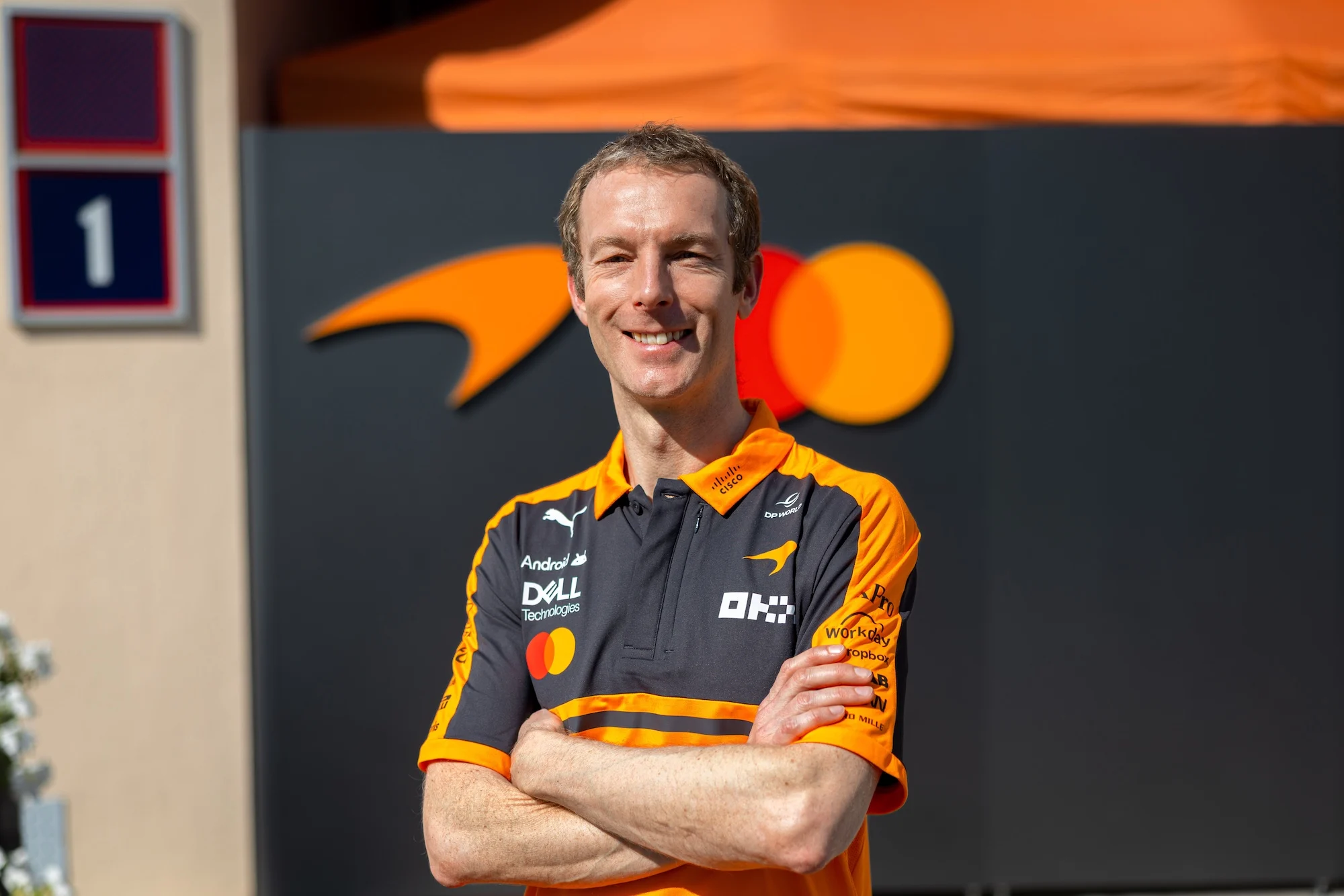
“Any built-in advantages have gone, been wiped clear, but we've still got the same people and tools doing it,” says Chief Designer Rob Marshall, speaking for the first time in 2026, ahead of the MCL40’s on-track debut at this week’s Shakedown in Barcelona.
Alongside developing and designing back-to-back Constructors’ World Championship-winning cars in 2024 and 2025, Team Principal Andrea Stella and McLaren’s Technical Team have spent the past 20 months working through an entirely new set of regulations - unpicking, analysing, ideating and formulating what a car might look like in 2026.
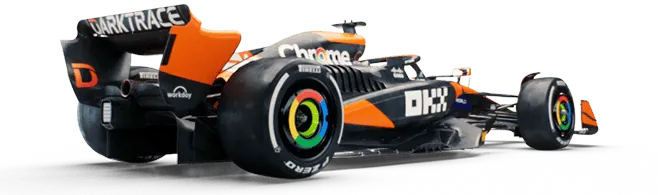
That work began as early as 2024 and picked up pace in 2025, gradually reaching a point where the team could start building this year’s new-look challenger, which was finally fired up at the factory in Woking just over a week ago and has now rolled out of the garage for a Shakedown in Spain.
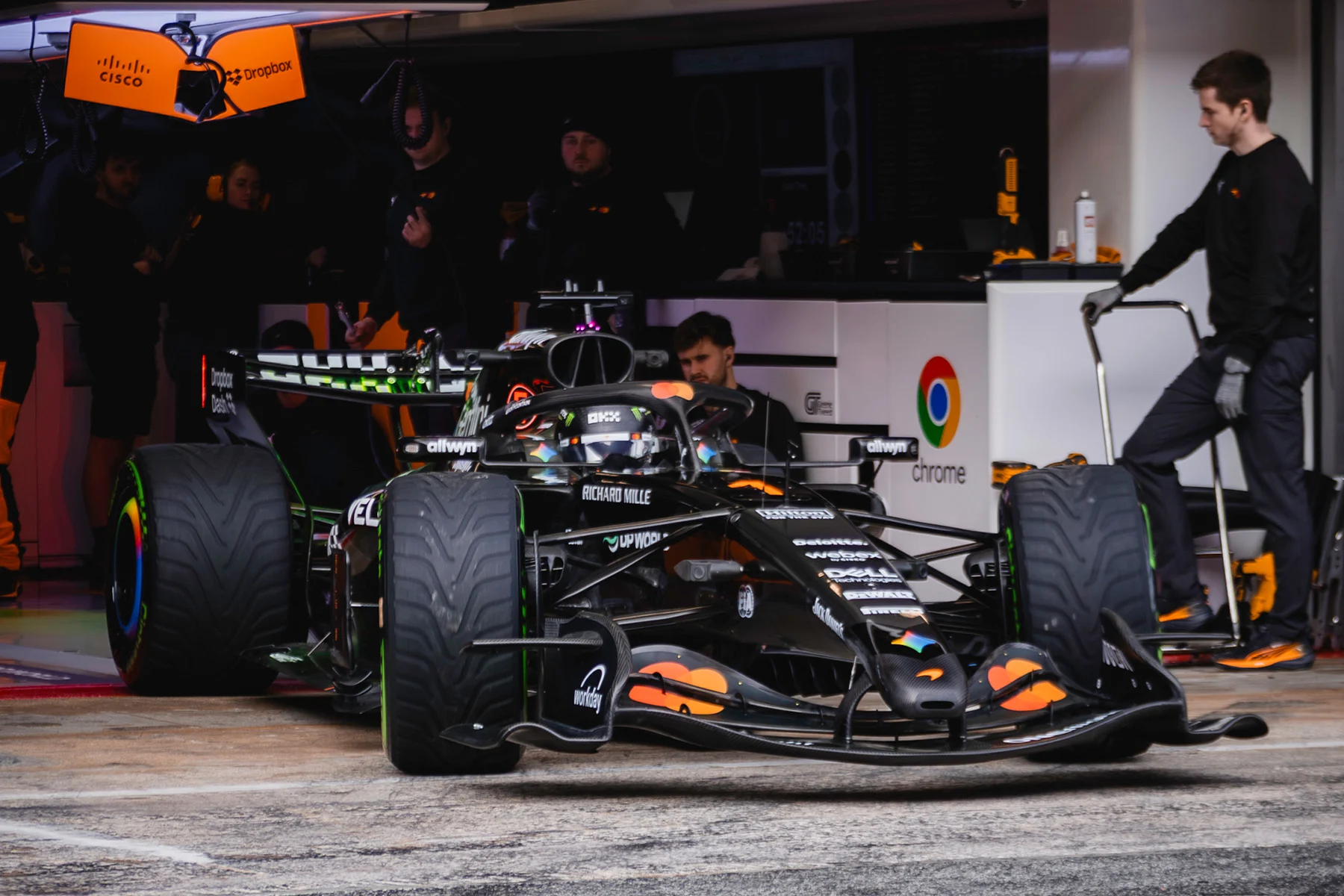
When the team received their first copy of the remodelled rulebook back in Easter 2024, there were an awful lot of changes for them to unpack.
Even at that early stage, it was obvious that cars would be totally different in 2026. The MCL40 would be inspired by our 2024 and 2025 Championship winners, but only in the same way that the MCL39 and the MCL38 were inspired by the MP4/4, the MP4/14, the MP4-23, and every other title-winning McLaren.
“The work that has gone into the design, the realisation and the build of the 2026 cars is, from what I can remember, almost unprecedented,” says Team Principal Andrea Stella. “Not only in terms of the changes themselves - because I think never before has there been such a huge and simultaneous change of chassis, power unit and tyres - but also the sheer volume of redesigning that has gone on over the last 20 months at McLaren. It has probably been the biggest new car project that I have ever been part of.”
The first major change was to the power units, as F1 shifts towards electrification, targeting a 50:50 split between internal combustion and electric power. The 1.6-litre V6 turbo internal combustion engine remains, but electric energy will now be delivered exclusively by the MGU-K, which recovers energy during braking and has been upgraded to deliver around three times the energy it did before. Previously, electrical deployment was shared between the MGU-K and the MGU-H, which harvested energy from exhaust heat, but the latter has now been removed.


Changing the power units alone would ordinarily represent a major step, but there have also been sweeping revisions to the chassis and aerodynamics, to extract the best from the engines and in pursuit of better racing.
Cars will be 100m narrower and 30kg lighter, while the intricate ground-effect floors that defined the previous era have been scaled back. Ground-effect tunnels have been removed entirely, replaced by flatter floors and extended diffusers with larger openings, reducing downforce by 15-30%.
Teams will also have to adapt to new adjustable front and rear wings. These are simpler in design, featuring fewer elements, and offer high - and low-downforce configurations for corners and straights.
“You pick the rules apart, and you realise that actually every single part of the car is impacted,” says Rob. “The duty cycle on a bearing buried inside the gearbox, which most people will never see, has changed, meaning the bearing has to change, the oil feed has to change, and then you start asking whether the lubricants need to change as well. And all of that spirals into a project of its own.
“Suddenly, you realise it’s literally every last nut and bolt. The whole floor operation is completely different. The whole front of the car is completely different. The wings are completely different. There’s very little direct read-across - it really is an entirely new car.”
McLaren’s approach has been ambitious but calculated. The team has taken risks with the car's design, but not with their processes. Internally, there has been a hard reset – 2025’s World Championship success was a remarkable feat, but now everyone is back to zero, and McLaren is just one of many teams that could realistically challenge for the title under the new regulations. Our own rise from the bottom of the grid is proof that anything could happen.
It is impossible to predict how Round 1 in Australia will play out or who will be on the pace, but we have a rough idea of what to expect from the new cars.
“For 2026, we’re somewhere between the pre-2022 cars and the ground-effect cars we’ve had recently - but not exactly in between,” says Technical Director, Performance Mark Temple. “You don’t have the same extreme sensitivity to ride height, which gives a little bit more freedom to tune the car’s attitude and handling without simply making it slower.
“Efficiency is still the most important thing aerodynamically, but now it becomes more about the amount of downforce you have in corner mode versus the drag you have in straight mode. Straight mode reduces the drag of the car significantly, so there’s an extra dimension to how you decide to set the car up.
“At circuits where you spend a lot of time in straight mode, you’ll likely see cars carrying larger rear wings and more total downforce. At other tracks, where you spend more time in corner mode, it will look closer to what we’ve seen in previous years.
“It’s still a Formula 1 car and the primary performance differentiators are still there: the power unit, the aerodynamics and how well you exploit the tyres. Those principles haven’t changed. In terms of whether the aerodynamic packages translate directly from our tools to what we see on track, of course we hope they will, but there are aspects of the new regulations that make the aerodynamics more complicated and harder to predict on track.”
As Rob and the team began to unravel the new regulations, they realised that, actually, there wasn’t as much wiggle room with the design of the next-gen cars as had initially appeared to be the case. As always, there are different routes that teams could go down, and many smaller paths within each route, but there aren’t an endless number of doors through which they could walk through.
“You think there’s a lot of freedom, but when you draw it out, there really isn’t,” says Rob. “The engine length is fixed, the gearbox cluster is fixed, the driveshaft positioning is fixed… You need a certain amount of fuel in the car, which determines the fuel volume. The new energy stores are bigger than last year’s, and that, to some extent, fixes the car’s length. The space allocated for the driver is protected as well. So, when you actually look at it, you’ve probably only got 150 to 300 millimetres of the car length that you can really control.
“Hopefully, everyone else has got the same kind of conclusion. If there's more freedom, we're not aware of it. Some things help, some things don’t, but you’re very tightly boxed in by the regulations.”
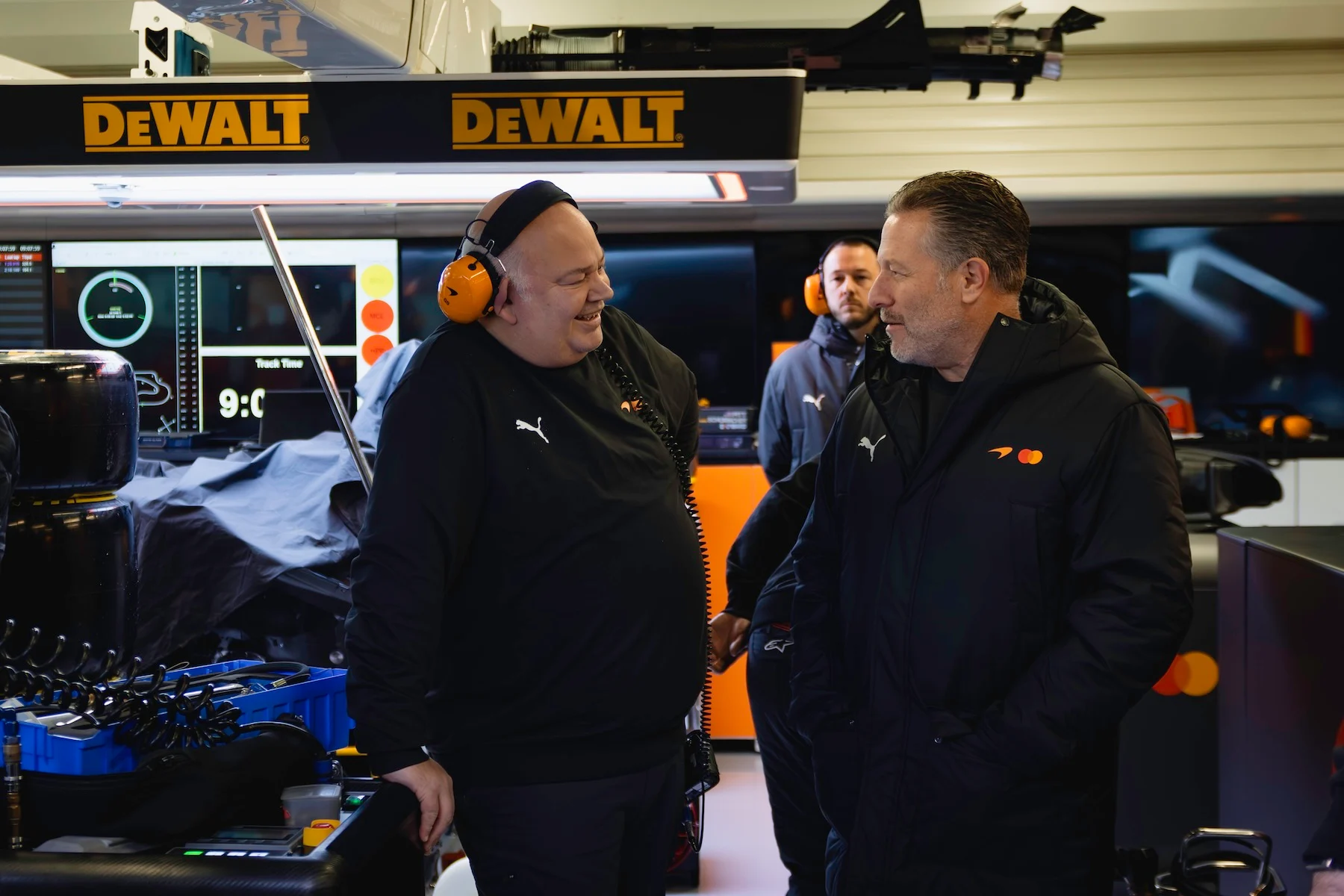
The team hasn’t wanted to box themselves in, having learnt lessons from the last regulations overhaul in 2023, when they had to veer from the direction they had taken with the MCL60 and change course, altering the car's concept.
Rather than scrambling to get out on track at the earliest opportunity, they’ve given themselves as long as possible to work on the car and get it right. The team decided against performing a Shakedown prior to Spain and waited until the third day in Barcelona to head out onto the track.
This allowed the team to finalise assembly and perform the required tests, ensuring that the MCL40 was in the best possible condition to maximise running time across the three permitted running days, while also avoiding the challenges weather conditions at the track on day two.
“Between testing and Barcelona and the first there, there will be updates for pretty much everyone, I guess, but we thought that in the economy of a season, it was important to launch the car with the most competitive package and configuration. That's why we have pushed all the timings to the limit - a very manageable limit, but the limit, and why we plan we didn't feel any urge to start testing on day one.”
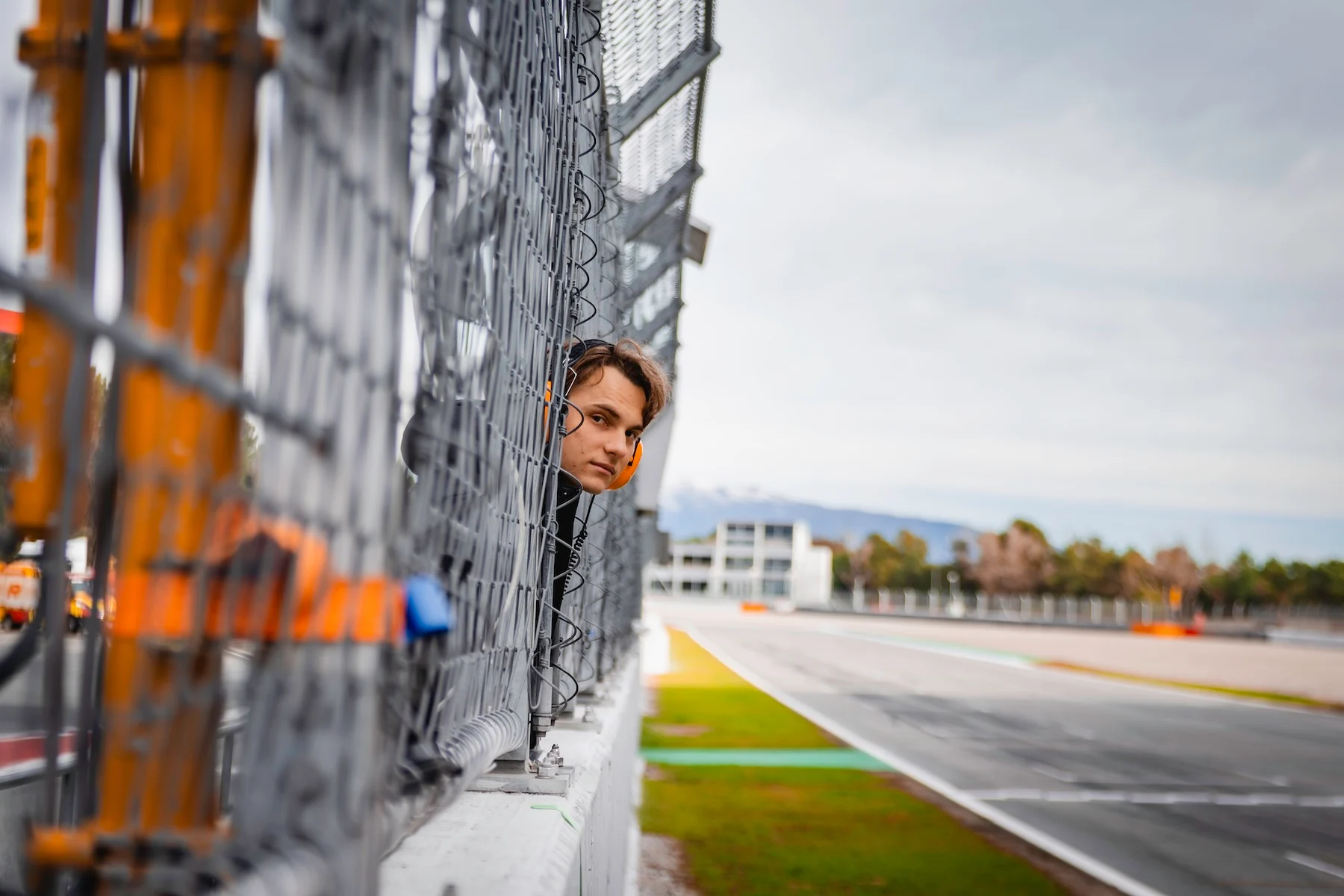
F1’s competitive picture will begin to develop following the tests and in the opening few rounds, when racing begins, and the team are going in with an open mind. Instead of committing to an extensive upgrade plan before a wheel has even been turned in anger, the team will initially hold off on development, giving themselves a chance to mark their homework in a real-world scenario and gain inspiration from others.
“Because we’re still relatively early in the regulation cycle, until we go on track and see where the deficiencies are between what we predict and what we actually observe, it’s hard to have real confidence,” says Mark. “That’s a big part of why everyone is excited to get running: to see where those gaps are, get some certainty around the known unknowns, and then feed that back into our development process going forward.”
Rob adds: “I think what you see is pretty much what we'll bring to the first race. A lot of our efforts will go into understanding this first. We really are going to have to be very focused on getting our heads around this car. It's very complicated. It's all new.
“There’s a lot of stuff we’ll need to dial and tune in, so bringing new things early doors would complicate stuff. We're better off understanding our platform before we get too keen to redesign it, if you see what I mean. We also want to take into account what the opposition is up to and be inspired by what they may or may not have achieved.”
Keep up with the action at this week’s Shakedown in Spain via the official McLaren Racing website, app and social media channels, where we’ll be following Lando and Oscar’s progress and publishing daily test reports.