2 March 2026 15:30 (UTC)
New regulations carry change in their wake… and we have a double dose for 2026
Tabula Rasa: a blank slate. This is the phrase that gets tossed around whenever F1 rewrites the rulebook. New technical regulations reset the competitive order, erasing embedded advantages and disadvantages, compelling each team to start afresh. It is a time of change and opportunity.
2026 gets a double dose: new aero regulations and new engine regs, with new tyres and new fuel thrown in for good measure. No one knows specifically what’s going to happen… but the history of regulation changes provides some pointers to the shape of things to come. Here’s what we might be able to expect based on F1’s previous regulation resets…
The first and most obvious change with a fundamental reset of the rules is that the old order is swept away.
The history of F1 teams in the 21st Century makes this abundantly clear. Ferrari dominated the first decade of the century, winning eight Constructors’ Championships between 1999 and 2008 – but haven’t won since the regulations were changed in 2009 to prohibit private, in-season track testing.
Renault-powered cars won five of the eight titles in the 2006-2013 V8 era, including the final four, but once hybrid engines were introduced, the Renault power units ceded ground to Mercedes, with the works Mercedes team winning eight Constructors’ Championships on the bounce. But then, after that period of hegemony, the ground-effect era shuffled the Brackley-based team backwards.
This pattern stretches back to the start of F1: rule changes usually shift the balance of power. It is, of course, possible for a team to carry success across eras: the Renault team did it across the V10-V8 divide of 2005-2006, and going back a while, we managed to bridge the performance gap between turbo and non-turbo engines in the late 1980s… but a clean sheet of paper gives everyone a fresh start.
This isn’t a phenomenon specific to teams. The fortunes of drivers can rise and fall as well. Every driver has a unique skill set, and a change in regulations – technical or sporting – can make that skill set more or less effective, which inevitably leads to change. It’s part of what makes the search for F1’s GOAT so stimulating – and also why the question can never be adequately answered.
The hallmark of the great is the ability to adapt, but when performance is measured in fractions, and the quality of the field is exceptionally high, changing the platform inevitably changes the competitive position.
In the early decades of F1, it was often physical attributes that held sway. For example, the heavyset drivers able to cope with the heavy front-engine cars of the early 1950s struggled when the lighter, more spritely mid-engine cars appeared.
More recently, it’s been less a question of cars themselves and more about the type of racing they engender. For instance, those capable of giving more precise feedback benefited when practice time was reduced, while drivers with electric one-lap qualifying pace have tended to gain an advantage when overtaking has been made harder.
At the recent, era-ending, 2025 Abu Dhabi Grand Prix, the gap in Q1 of Qualifying between the fastest and slowest teams was 0.591s. Four years earlier, in the first year of the ground-effect regs, that same gap in Q1 at Yas Marina was 1.274s.
The difference is broadly what you might expect: a performance gap that gradually closes over time, as teams converge on design elements, and operating techniques homogenise. It’s not just a Saturday phenomenon: in 2022, the top three teams in the table took 78% of the points on offer. By 2025, that figure had dropped to 66%.
Therefore, the expectation for 2026 is that the tight margins between the teams at the end of 2025 will loosen again.
Most technical directors will admit that the lead-up to Pre-Season Testing during a new regulation cycle can be a nervous time.
Formula 1 is a complex sport with numerous possibilities, and therefore, the probability will always exist, no matter how clever your team is and how many hours you’ve put in, that something has been missed, leaving you starting on the backfoot. The other side of the coin is the slim but fervent hope that the team has the advantage everyone else missed… or discounted.
The classic example of this is the 2009 aerodynamic reset, when the Brawn GP team used ambiguity in the wording of the new regulations to create a larger and more powerful diffuser. Other teams made an official protest at the first race – F1’s lawyers are always busy at the start of a new regulatory era – but the FIA declared the geometry to be legal, and Brawn went on to win six of the first seven Grands Prix, while rivals scrambled to develop their own versions.
Ultimately, Brawn GP’s advantage did not last, as other teams were able to successfully replicate the design but their heavy early season scoring was enough to get them over the line in both championships. There was, however, a better example in the same season of how stealing a technological march on the competition can embed a longer-term benefit.
While Brawn enjoyed a fairytale campaign in 2009, the season was also a launching point for Red Bull Racing. Adrian Newey’s decision to reintroduce pull-rod rear suspension to the RB5 was a game-changer and gave Red Bull a significant technical advantage. Once they had replicated Brawn’s double-diffuser, they had the fastest car in the field for the second half of 2009. Technologies came and went over the next four years, but RBR were able to retain their development edge, based on their excellent 2009 foundation, and went on to dominate the next four seasons before that rules cycle ended with the introduction of hybrid engines.
It’s for this reason that in 2025, with the new regulations looming, most teams opted to slow down their development programmes, instead allocating most of their resources to 2026. This is very often the case. Getting the fundamentals right at the start of a regulations cycle can have a significant and long-lasting impact. Regularly, the team with an advantage at the start of a new era carries that advantage forward for two or three seasons.
The cars that raced in the final season of the ground-effect era were well-matured machines, with development programmes increasingly producing diminishing returns.
The opposite will be true now that we are at the start of a rules cycle. Lap-time gains are traditionally bigger at the start of a cycle, when there is plenty of low-hanging developmental fruit, though it does usually take some time to work out which trees to pick from.
An effective upgrade programme relies on a team’s understanding of its car. At the start of a new regulatory era, that’s still developing - and it’s very difficult to make improvements without fully understanding what it is you’re trying to improve. But once that knowledge base is there, developments tend to occur at a freakishly rapid rate.
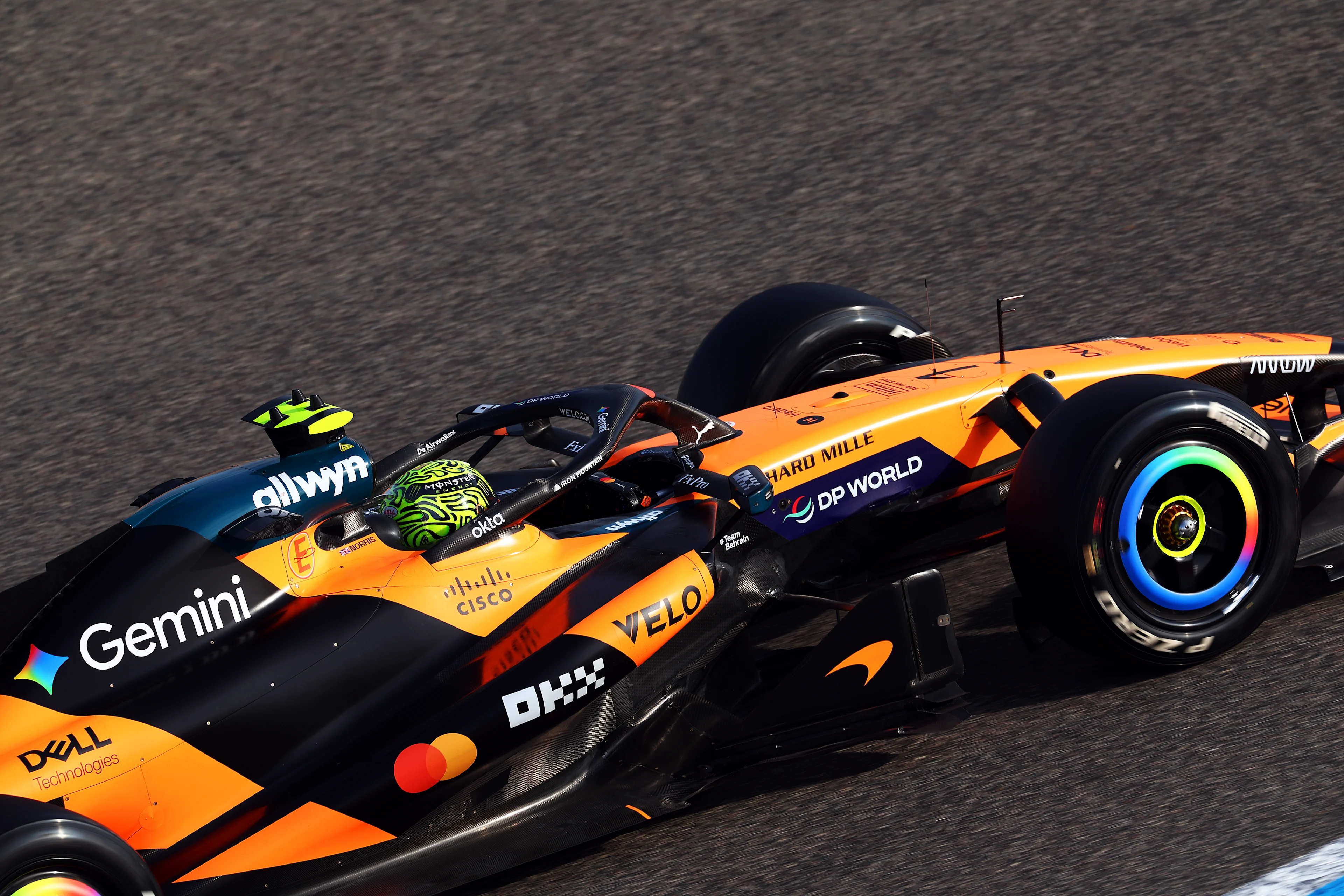
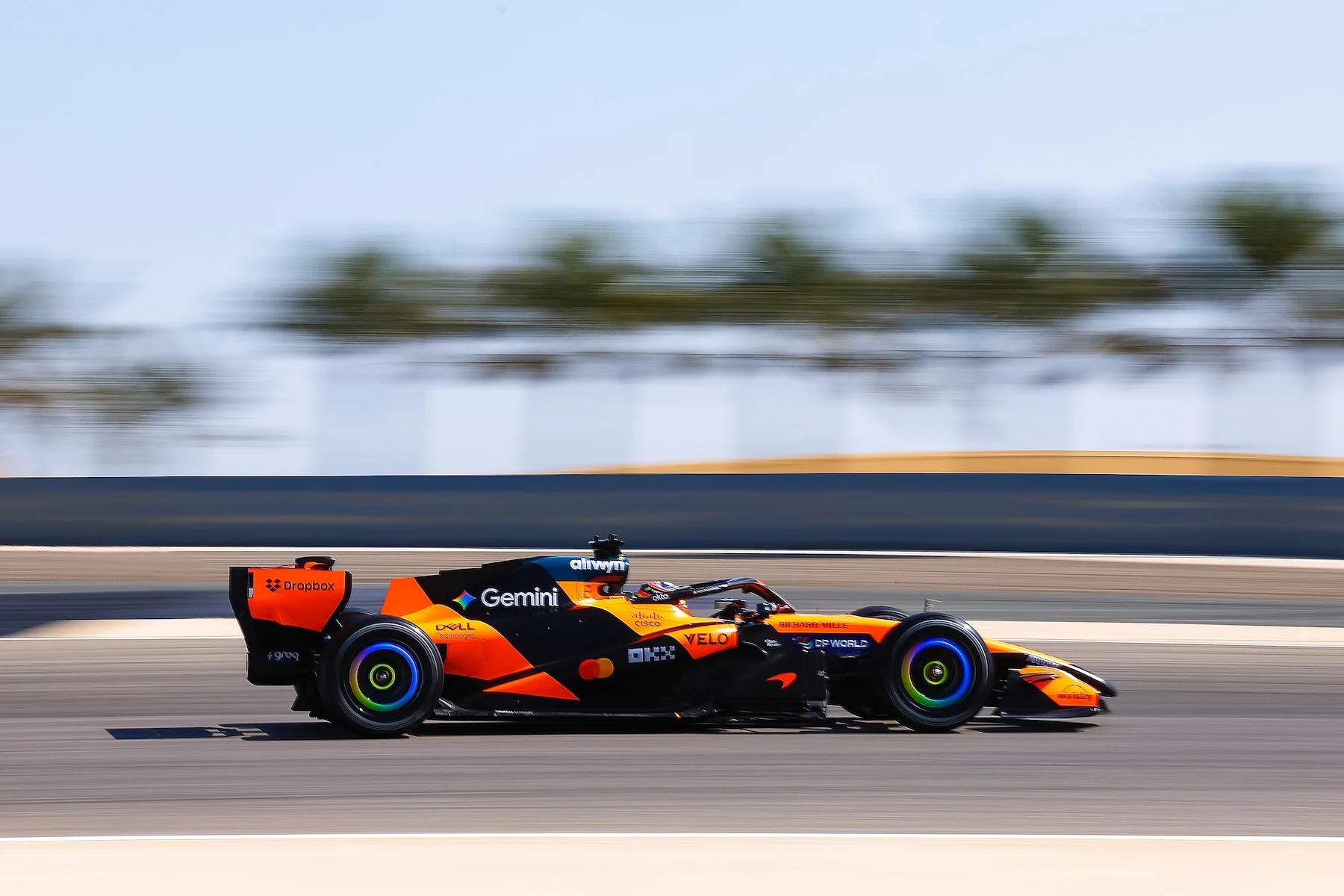
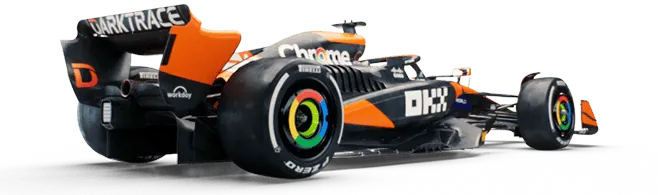
For this reason, we’re on record saying that the MCL40 won’t be receiving the sort of early-season upgrade package that will become common further down the line. This would likely be true with ‘just’ a new aerodynamic philosophy in play, but as a PU customer team, there’s a lot of catch-up to do, vis-à-vis the works teams, getting to know our new power unit, and figuring out how to get the best from it, in terms both of installation and pure performance. Our initial focus, therefore, will be on getting to grips with the new machinery – and studying what has or hasn’t worked for our rivals - in order to make meaningful improvements.
“We really are going to have to be very focused on getting our heads around this car,” says Chief Designer Rob Marshall. “There’s a lot of stuff we’ll need to dial and tune in, so bringing new things early doors would complicate stuff. We're better off understanding our platform before we get too keen to redesign it.”