24 February 2026 18:30 (UTC)
We’re heading into a new era, and there’s a lot we still don’t know… but at least some of it we know we don’t know…
Read time: 5 minutes
There are a vast number of items on the checklist for an F1 car launch, detailing what the team needs to know before it can go racing. Gradually, over the course of a winter programme, the list will shrink, as the team crosses items off.
Before the first race, they’ll know that the reverse gear works, that the turning circle is sufficient to clear the pit wall at every track when leaving the garage, and they’ll know how rapidly the tyres cool when out of the blankets.
…but these are all mechanical things. The nuts and bolts of racing. Beyond this, there’s a huge swathe of learning to do that goes well beyond a checklist. Learning is continuous throughout the season, but critical in the first few months, as the teams discover how best to operate their cars, what their competitive position is, and if they’ve missed a trick with their design.
It’s a steep learning curve in any season, but in a year with both a new engine and a new aerodynamic concept, it’s practically vertical. Here, we’ll look at some of the big unknowns heading into the 2026 Formula 1 season.
The early races of a season – particularly a season with new regulations – tend to produce a few unexpected results and opportunities for backmarkers to score heavily. Some of this comes down to mechanical fragility, but strategic decision-making also plays a part.
Qualifying is a good example. Front-running teams like to sit in the garage at the end of a segment if they think their time is good enough, preserving fresh tyres for later in the hour. Quite what counts as ‘good enough’ is a decision for the strategists, who determine a cut-off time based on the fastest lap they believe the fifth-slowest driver is capable of delivering.
That comes from a mix of understanding the conditions, the likely evolution of the track, and the assumed pace in that car. Later in the season, the latter can be calculated with reasonable confidence based on previous performances and Free Practice times. At the start of the season, the room for error in these estimations has to be much wider – but even with an abundance of caution, someone often gets caught out.
Race strategy can be similar – particularly if Free Practice runs are curtailed by weather, mechanical issues or Red Flags. The (Enstone) Lotus team took a famous victory at the 2013 season opener when Kimi Räikkönen, from seventh on the grid, hung on with a two-stop strategy, while the cars that started ahead of him all assumed the race was a slam-dunk three-stop.
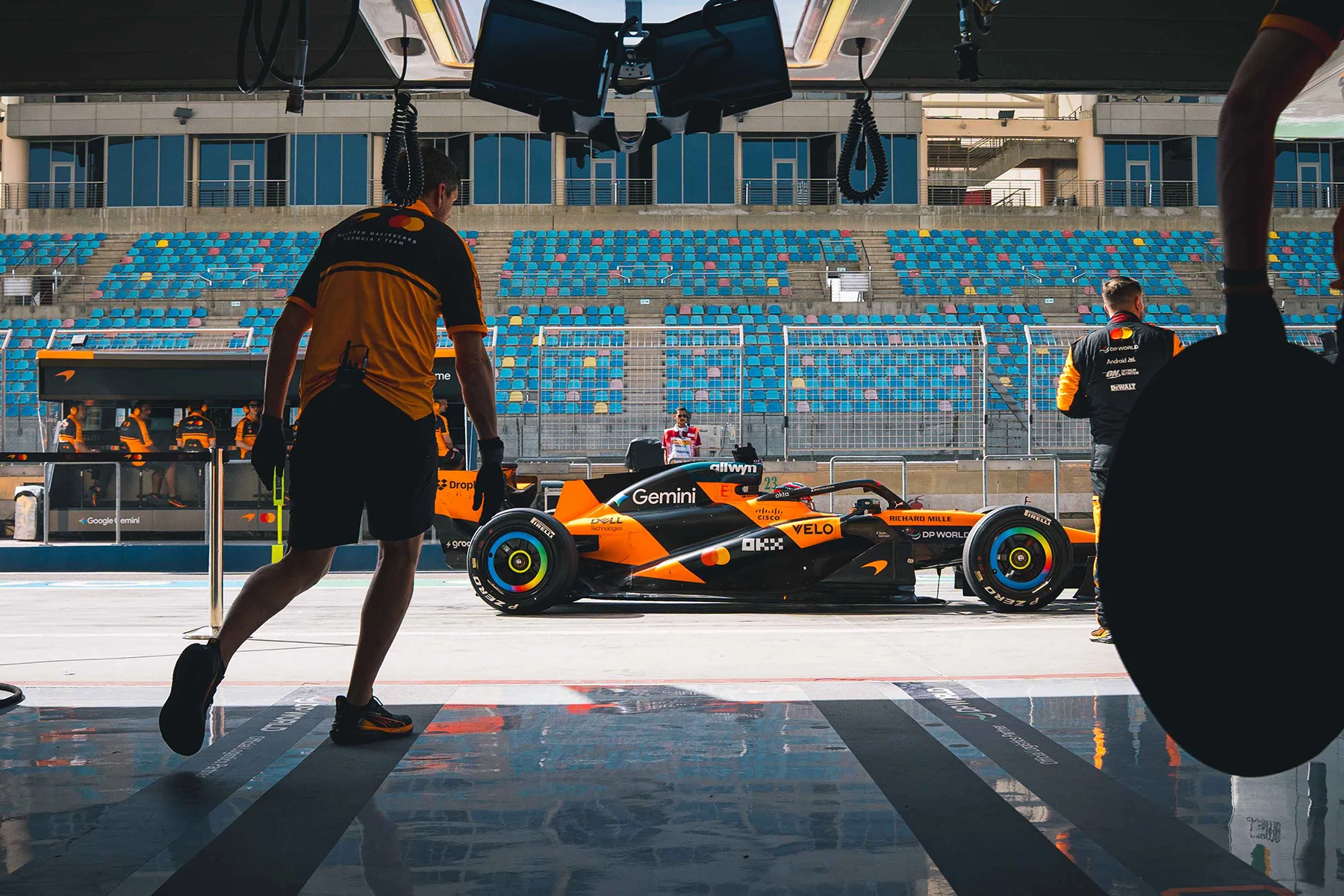
On that subject, Pirelli’s tyre offering will be different this year, and while everyone will try a range of compounds in Barcelona and Bahrain, those offer a very different challenge to what the teams will face across the opening races.
Clever and effective tyre management is critical to winning Grands Prix, but it remains something of a dark art. And is best worked on at the track, rather than in simulation. The compounds used in the previous generation had known quantities: some could be pushed straight out of the wrapper, others needed to be brought up to temperature slowly and allowed to stabilise, lest they suffer an alarming drop-off later in the stint.
This year, Pirelli have made their usual tweaks to the compound range, aiming to even out the gap between the five compounds – but we also have all-new tyre sizes and shoulder profiles, while it is not yet known how the new power units and suspension geometry will alter their working cycle. It’s a blank slate for the tyre whisperers – and the teams that develop an early understanding of how to maximise performance from the new rubber will migrate to the front.
About those new power units. This is a big change. It’s not just that the engines are mechanically different, with all that entails for reliability, output, weight distribution, fuel consumption and driveability. This would pose a sizeable question mark all on its own, but it’s dwarfed in 2026 by the unknowns inherent in the way these units operate.
The 2026 power unit is still a hybrid, but quite different to the one that’s been in use since 2014. The intention is to have a 50:50 split between power supplied by the internal combustion engine (ICE) and power supplied from the electrical system (the old unit was closer to 80:20). This change has been produced by reducing the power supplied from the ICE, and greatly increasing that delivered by the electrical motor. How that energy is recovered and deployed will be a key battleground this year.
Mark Temple, Technical Director, Performance, has been heavily involved in the race engineering effort to get the drivers up to speed (in both the literal and metaphorical senses) with the new driving techniques.
“We’re helping them understand the principles which the 2026 regulations and power units create, around the need to harvest energy more consciously, and then choose where to use it,” Mark has said. “Obviously, a lot of the management is done by the [ECU], but there are also elements within the system that will just be them learning how to manage things for the best performance.”
Drivers will receive information from the car, via the dash, and they’ll get information from their engineers – but a lot of it.
The area where this is likely to be most noticeable is when the cars are attacking and defending. Since the original KERS hybrid engine was introduced in 2009, the cars have always employed a different energy-use profile when fighting for positions, but the much more potent system for 2026 changes the game.
“The most interesting aspect – and also the hardest to simulate - is going to be these overtaking and defending scenarios,” says Mark. “I think it will be a really interesting challenge for the drivers, particularly in the beginning when they will be on quite a steep learning curve.
“Looking at somewhere like Bahrain, for example, which has three long, consecutive straights. They have to decide how much energy to use on each straight, and understand how a competitor will react to what they do. There’s quite a bit of cat-and-mouse. I think it’s exciting and I’m very interested to see how that all goes – because we can’t predict it completely.”
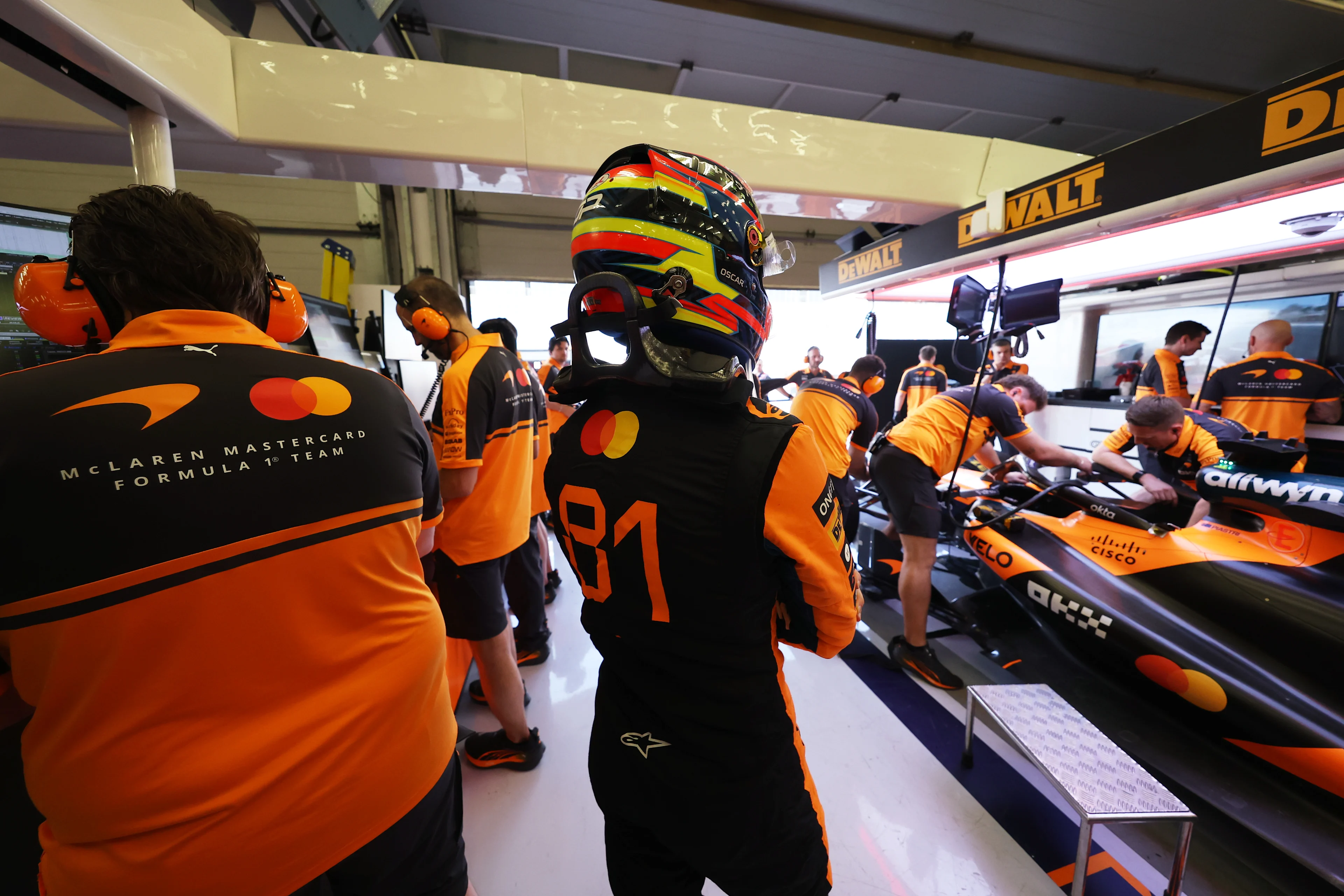
While the drivers will be wrestling with the energy deployment conundrum, the new Active Aero system will largely operate automatically. In Straight Mode, the rear wing flap will open on every straight before closing again for Corner Mode when the driver touches the brakes. It will, however, pose a significant learning challenge for race engineering, recasting the usual trade-off between downforce and drag.
The shift from ground-effect venturi tunnels to a flat-bottomed car will have a huge impact on setup, but having a low-drag car for all the straights and a high-downforce car for all the corners will drastically change each circuit. Having a much more efficient car in both power-limited and grip-limited circumstances raises significant questions.
“Efficiency is still very much the most important thing, aerodynamically, but there's a change because the Straight Mode reduces the drag of the car significantly, and not every circuit will require the same approach,” says Mark.
“Some will have more Straight Mode than others: for example, Spa and Monza are both high-speed circuits, but at Spa, the full-throttle section coming down the hill to the Bus Stop will be in Corner Mode, so drag becomes very important. It won’t be as important at Monza, where all of the straights will be in Straight Mode.
“For sure, on circuits dominated by Straight Mode, you will see cars carrying bigger rear wings than they did in the past and having more downforce available – but at other tracks, it’ll be closer to what we’ve seen in previous years. I think there will be an extra dimension in deciding how to set your car up.”