16 January 2026 10:40 (UTC)
Formula 1 is being rebooted for 2026. New aero, new engines and a larger grid – but what impact is all of this going to have on racing?
Read time: 10.4 minutes
Formula 1 thrives on change. The cars evolve constantly – but for 2026, revolution rather than evolution is the order of things with wholesale changes to both chassis and engine regulations.
After 11 seasons, the original hybrid F1 power unit spec has been retired, while after a brief, four-season foray into ground-effect, the sport will also undergo an aerodynamic reboot. There’s a lot to unpack: fresh philosophies, new jargon, and a lot of numbers. We’ll get into all of that over the next few months, but for the moment, here are the top notes for the all-new 2026 F1 Championship.
After 11 seasons with, in essence, the same power unit architecture, F1 has had a rethink for 2026. The 1.6L V6 turbocharged internal combustion engine (ICE) remains, but the MGU-H (which used the flow of exhaust gas to spin a turbine and reclaim energy) has been removed. The MGU-K (which reclaims energy while braking) will be beefed up to harvest and deploy about three times as much energy as its predecessor, with the goal of the new power unit having a roughly 50:50 split between power supplied by the ICE and from the electric system.
With the MGU-H – viewed as complicated and less road-relevant – removed, the new ’26 power units are being hailed as a simplified hybrid system. The reality is a little more complex: this is – as always with F1 – cutting-edge technology, attempting to do something that’s never been done before.
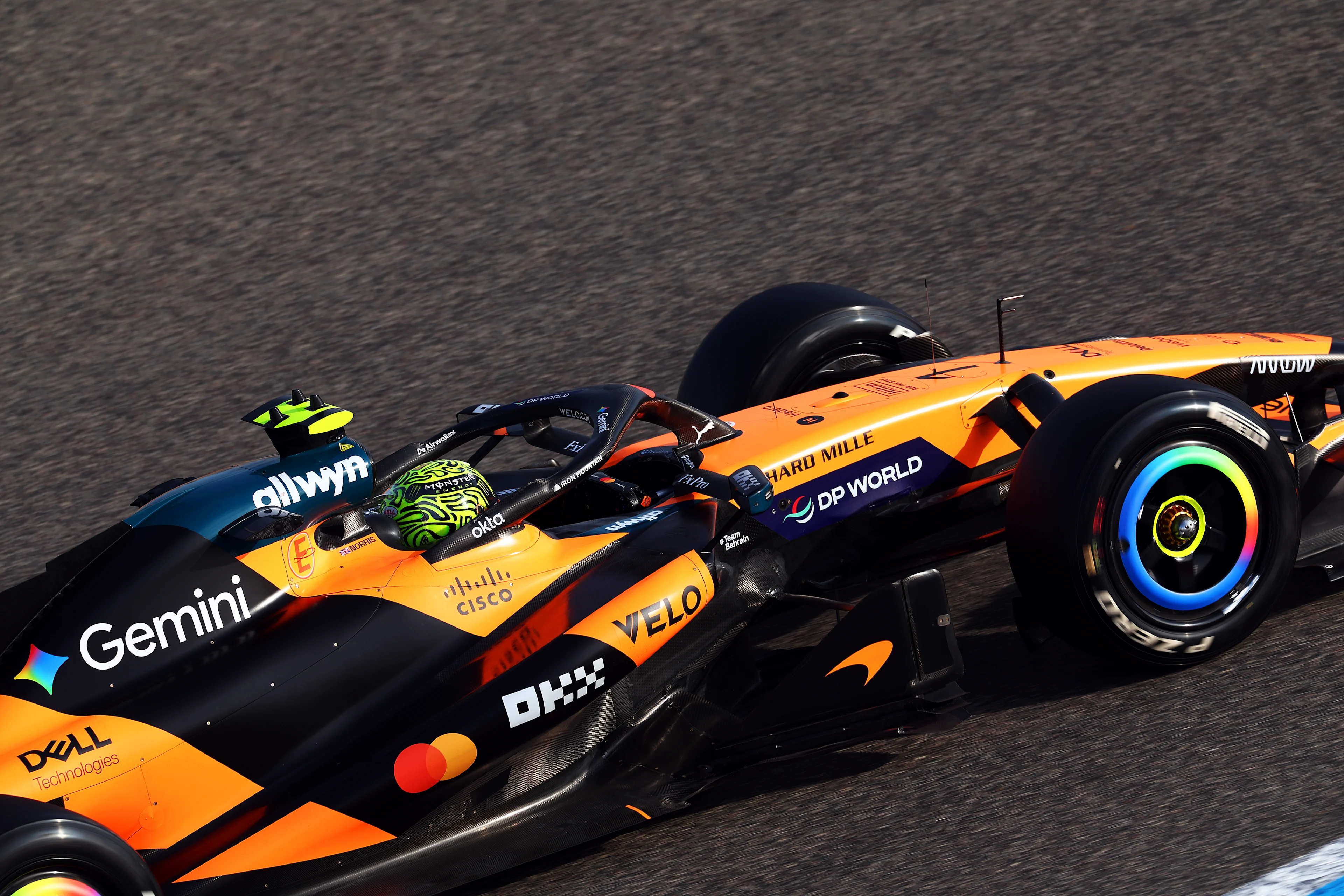
It isn’t the way F1 usually operates – but this aerodynamic reboot is designed to complement the new power unit… while also addressing a few of F1’s long-standing issues. The new power units are expected to produce a little less power than their predecessors, but to keep lap times in a similar range, the cars have reduced drag and a lower minimum weight, aided by narrower floor and tyres, and a shorter wheelbase.
The front wing is of a much simpler design with fewer elements, though the endplates have a little more scope for exotic solutions. The ‘eyebrow’ winglets over the front wheels have also been deleted, with new bargeboards appearing. Less noticeable but fundamental to the design is the removal of the Venturi tunnels under the car. Ground-effect goes back into the box as flat(ter) floors return, with a larger diffuser, and the beam (i.e. lower) wing deleted.
Certainly, it is intended to. As has been the case with the previous two aerodynamic iterations, the regulations have been written with the intention of improving racing and increasing overtaking, by enabling cars to be able to follow each other more closely.
The car’s front wheels punch a big hole in the airflow. Designers like to push that turbulent air out to the side of the car (out-washing), allowing smoother air to infill and make the aerodynamic surfaces more effective… but out-washing creates a bigger turbulent wake that makes it much more difficult for the car behind to close in. 2022’s regs were designed to combat the creation of this wake and were initially very successful before teams began clawing back their outwash-generating aerodynamics. These regs have taken that learning and will make it much harder to generate an outwash. Not that teams won’t try…
Beyond controlling the wake, the new regs are also creating a stronger, safer car and, it is hoped, one that is a little more nimble. Roll hoops have a new test to pass that raises the load from 16g to 20g, while the nose now has a two-stage impact structure. The latter is to deal with the issue of secondary impacts – i.e. those times when the front of the car has a heavy impact, spins and then has another heavy impact.
In terms of making a car that is more nimble, the 2026 regs specify a wheelbase that is 200mm shorter, a floor 100mm narrower and a minimum weight reduced from 798kg to 768kg. Whether or not anyone can get close to that minimum remains to be seen.
DRS no longer exists… but the cars now feature an adjustable rear wing that will open like DRS on all straights to reduce drag, irrespective of the race situation. The front wing will also move, working together with the rear wing to better trim the car. They’ll close again before corners to maximise downforce – in much the same way DRS did.
There’s quite a bit of jargon floating about this year. The active aero modes were originally labelled X mode and Z mode. These will now be called Straight Mode and Corner Mode… you can probably extrapolate from context when those are to be used.
If a car is within one second of the car ahead when it passes a detection point (usually the final corner) Overtake Mode will be activated on the following lap. This will provide a speed boost, but also a lap in which it can recover more energy. This looks like it will be the primary overtaking device in the new formula. In ‘normal’ mode, the electrical energy that can be deployed begins to taper off at 290km/h. With Overtake Mode activated, the maximum 350kW will be available up to 337km/h, then tapering off up to 350km/h.
Other words you may hear flying around are Boost and Recharge. A boost button allows the driver to manually deploy electrical energy, in much the same way they’d done in the current generation of cars, while Recharge is the energy recovery function. It’s similar to what’s gone on before, but with a few more options than during the 2014-2025 era.
Moving to 100 per cent advanced, sustainable, carbon-neutral fuels is part of F1’s roadmap to a net-zero carbon footprint. F1 had been running with a 10 per cent bioethanol fuel, but now converts fully to either an e-fuel or something created from waste biomass. The fuels used in F1 are complex creations tailored to their engines: designing any new fuel for the 2026 regs was going to be challenging - doing it with a sustainable fuel, doubly so. The expectation is that the new blends will be slightly less calorific than their fossil predecessors… but development will be rapid over the next few years. Expect this to be a more competitive arena than it has been recently.
A major shift towards electrification, as F1 targets a 50:50 split between the internal combustion engine (ICE) and electric power.
• The 1.6-litre V6 turbo internal combustion engine (ICE) remains • The MGU-H, which recovered energy from exhaust heat, has been removed • Instead, the MGU-K, which recovers energy while braking, has been improved and will now deploy around three times as much energy • Cars will run on 100% advanced sustainable fuel
The cars have been overhauled to deliver similar lap times and promote closer racing, with the new power units operating at slightly lower peak power.
• Narrower (>100m) and lighter (>30kg) cars with a shorter wheelbase (>200mm) • Smaller floors (>150mm) with the removal of ground-effect tunnels, reducing downforce by 15-30% • Overall drag reduced by up to 40% • Narrow front (>25mm) and rear (>30mm) tyres, while retaining 18-inch rims • Stronger roll hoops, revised impact structures, and new lights for ERS status, improving safety • Adjustable front and rear wings with high and low downforce configurations for corners and straights
New power deployment modes are designed to enhance racing and give drivers greater strategic control.
• Overtake Mode replaces Drag Reduction System (DRS) as F1’s overtaking aid, providing drivers with an additional burst of power when within a second of the car in front • A manual Boost button allows drivers to deploy electrical energy strategically, with a limited amount available • Recharge mode enables drivers to recover energy in multiple ways