

23 December 2025 11:45 (UTC)
Our first World Championship double of the 21st Century, but did it impact how we went racing?

Read time: 14 minutes
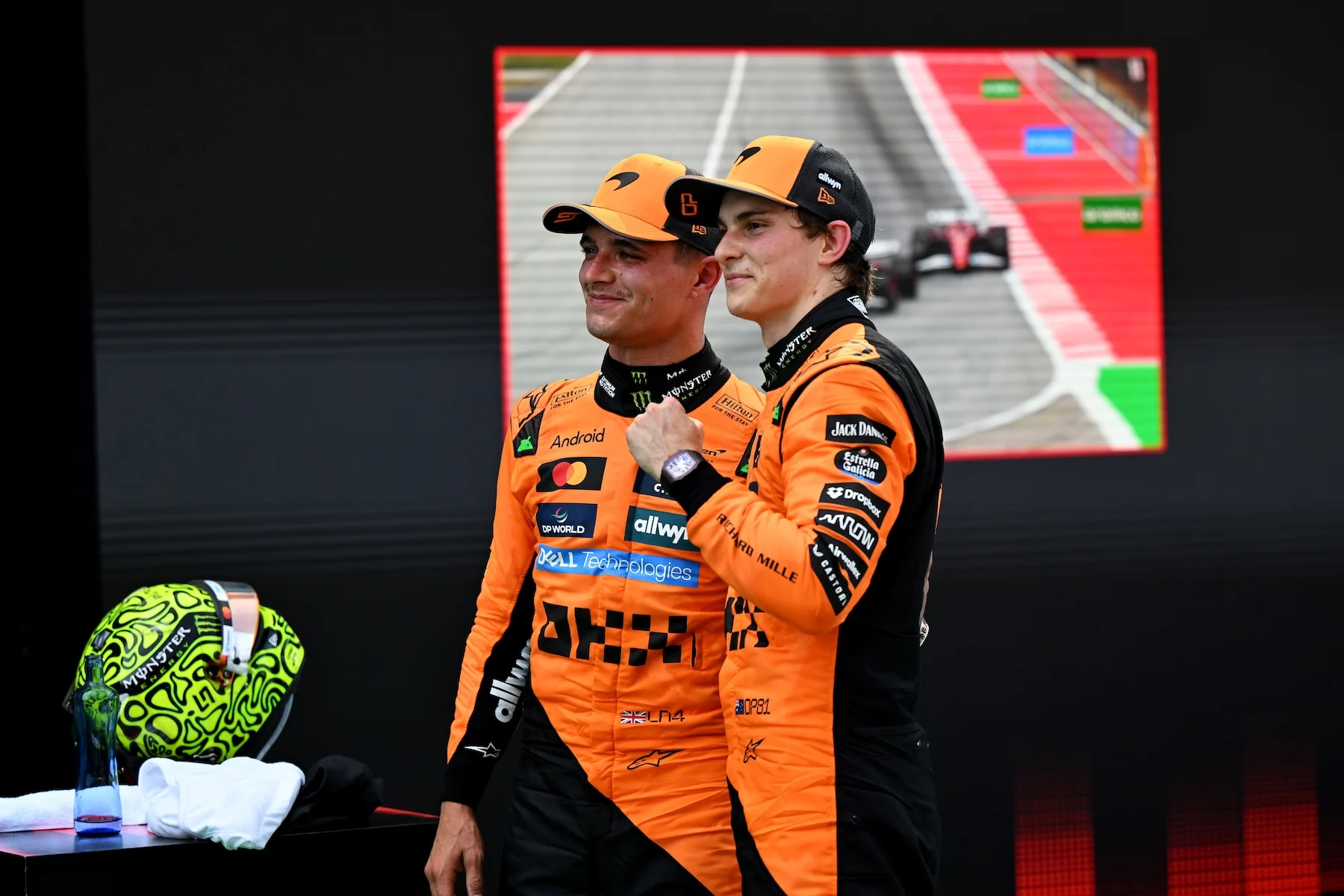
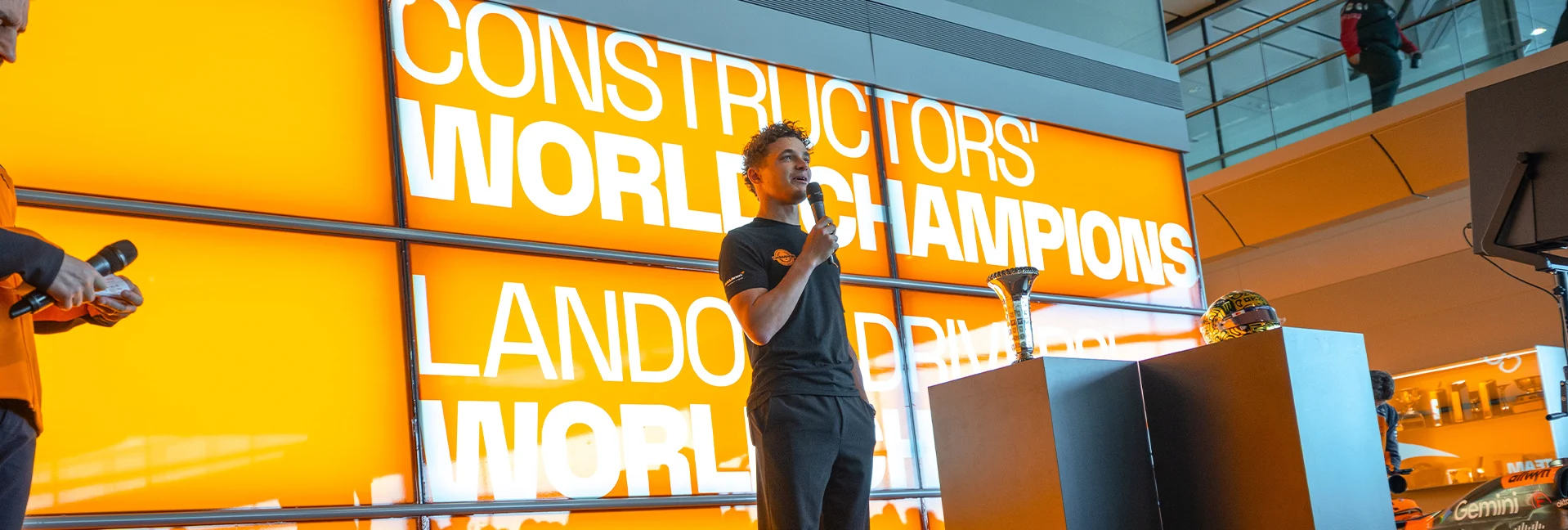
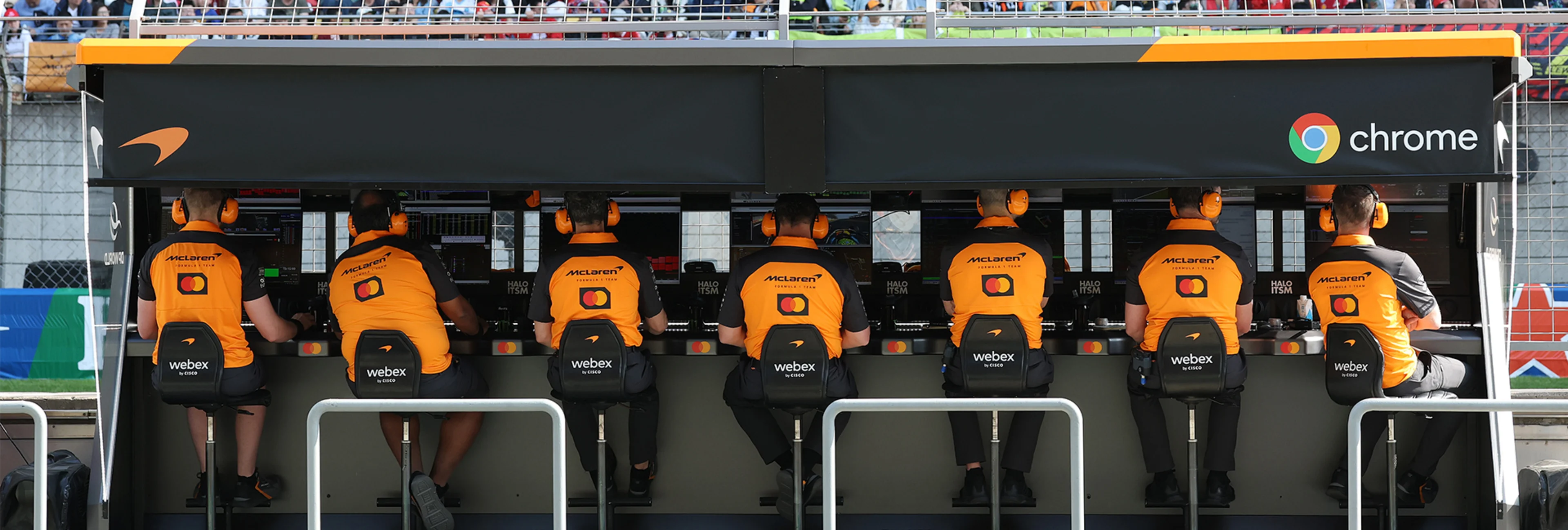
On 12 December, the 2025 Formula 1 season officially concluded with the end-of-season FIA prize-giving ceremony in Uzbekistan, attended by CEO Zak Brown, Team Principal Andrea Stella, and both of our drivers, Lando and Oscar.
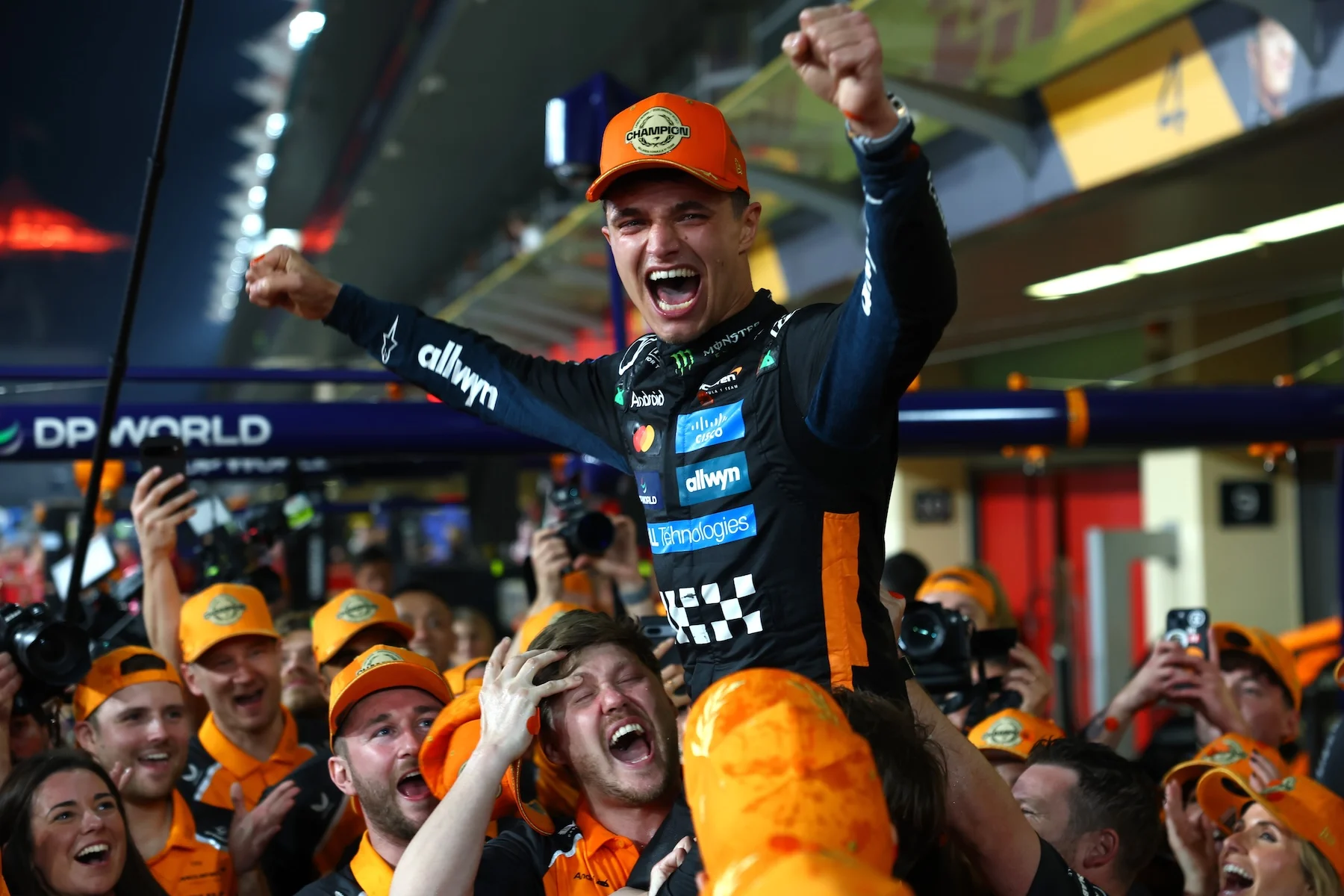
Between them, they returned home with the Constructors’ Championship trophy, the Drivers’ Championship trophy, and the third-place trophy in the Drivers’ Championship, which joined the 14 race-winning trophies, the 34 podium trophies, and the three Sprint race trophies we’ve collected through the season - the visual record of a very successful 2025 campaign.
It's been a season of changing strategies. With the technical regulations for 2025 not particularly changing from 2024, the differences have been quite subtle – but F1 always evolves, and strategy evolves with it, especially as teams look to find an edge at the end of a regulations cycle, when competition is at its tightest. So, how did the season differ from 2024? With the help of FxPro, we’ve looked back on the strategy trends from the 2025 season…
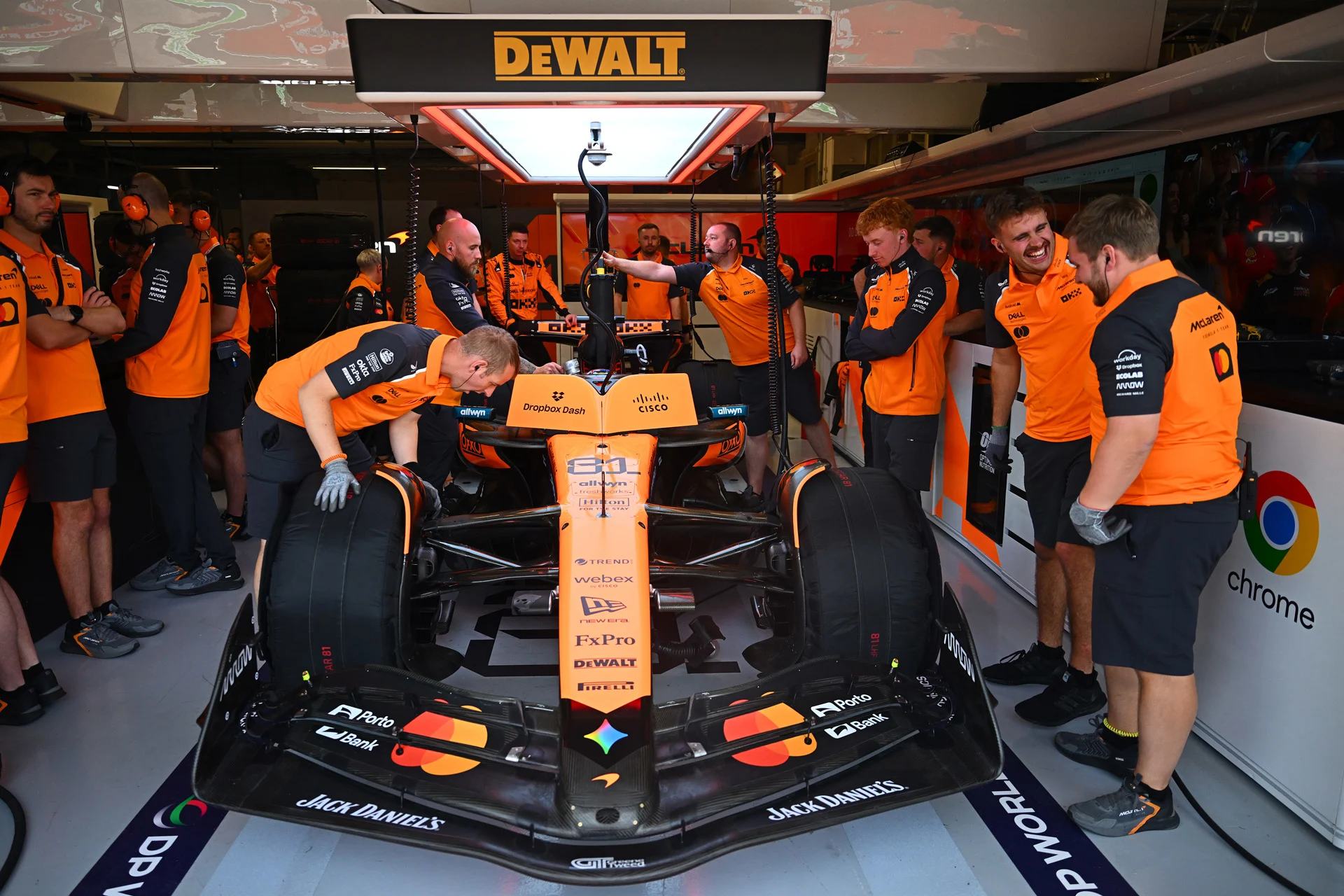
Pirelli tweaked their tyres for 2025. Constructions were toughened up a little to cope with the reality that teams were adding more downforce all the time. The C2 compound was moved away from the C1 and closer to the C3 in terms of performance, while the C4 and C5 were tweaked to be less prone to graining. Taken together, it created a tyre range that was a little more robust. Pirelli also introduced a new C6 as a softer option at the bottom end of the range, designed for street circuits and other venues where the tyres are subject to very low energy levels.
The expectation from more robust tyres would be to see fewer two-stop races, but acting as a balancing factor, Pirelli shifted their allocations around in 2025, with half the races having a different compounds compared to those that were supplied in 2024.
Four of those (Imola, Monaco, Canada, and Azerbaijan) were to accommodate the new C6. Three more introduced a compound bridge, offering an offset Hard compound. São Paulo bucked the trend and genuinely moved a step harder in the tyre range as the C5 had been entirely shunned in 2024, which left four races (Saudi Arabia, Miami, Great Britain, and The Netherlands) from the traditionally harder end of the tyre range, moving a step softer. When picking-out trends, it muddies the waters
Starting off with the dozen races that kept the same tyre allocation into 2025. Australia and Qatar can be discounted, with the former being wet and the latter having a two-stop limit imposed upon it. Of the other 10 races, the winning strategies in China, Japan, Hungary and Las Vegas all dropped from a two-stop to a one-stop, with the rest all staying much as they were (accepting the usual foibles of Safety Cars and VSCs).
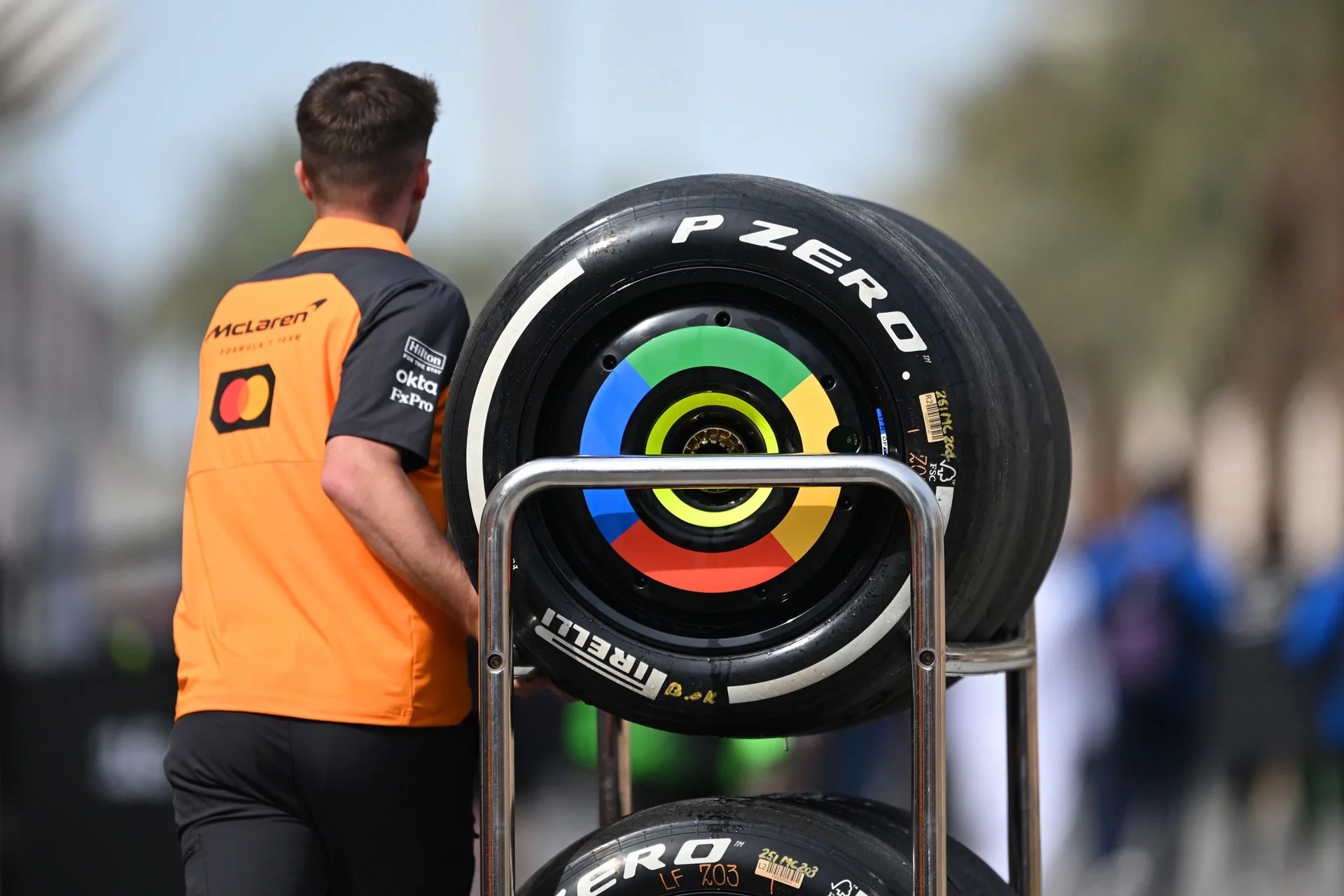
Of the races that moved to a new tyre allocation for 2025, the C6 races were interesting, with the teams actively shunning it. It wasn’t raced in a winning strategy in any of the four races where it saw action. In fact, it did no racing laps at all at Imola or in Baku, the Racing Bulls were the only cars to score points with it in Monaco, doing five and nine laps of the 78, respectively, and Oscar ran it for the final three (non-racing) laps in Canada behind the Safety Car. McLaren didn’t do a single racing lap on a C6 all season.
This portrays the C6 as a purely Qualifying tyre, but it wasn’t universally popular in Qualifying. At Imola, Mercedes and Aston Martin opted for the C5 (Medium) compound in Q3. Across Practice, while the C6 was quicker, it proved very difficult to extract the peak of performance from it, and the C5 looked like a safer, more stable bet. In Monaco, Williams opted for the C5 in Q3, by Canada it was Mercedes, Red Bull and Aston Martin, and finally, in Baku, Williams, Mercedes and Ferrari. We, ultimately, always took a C6 into the final stage of Qualifying at each event – though by Baku, we were hedging our bets, and took all three new sets of Mediums forward into Qualifying.
While it was originally expected that the C6 would be at all of the street tracks, Pirelli opted not to specify it for Singapore or Las Vegas.
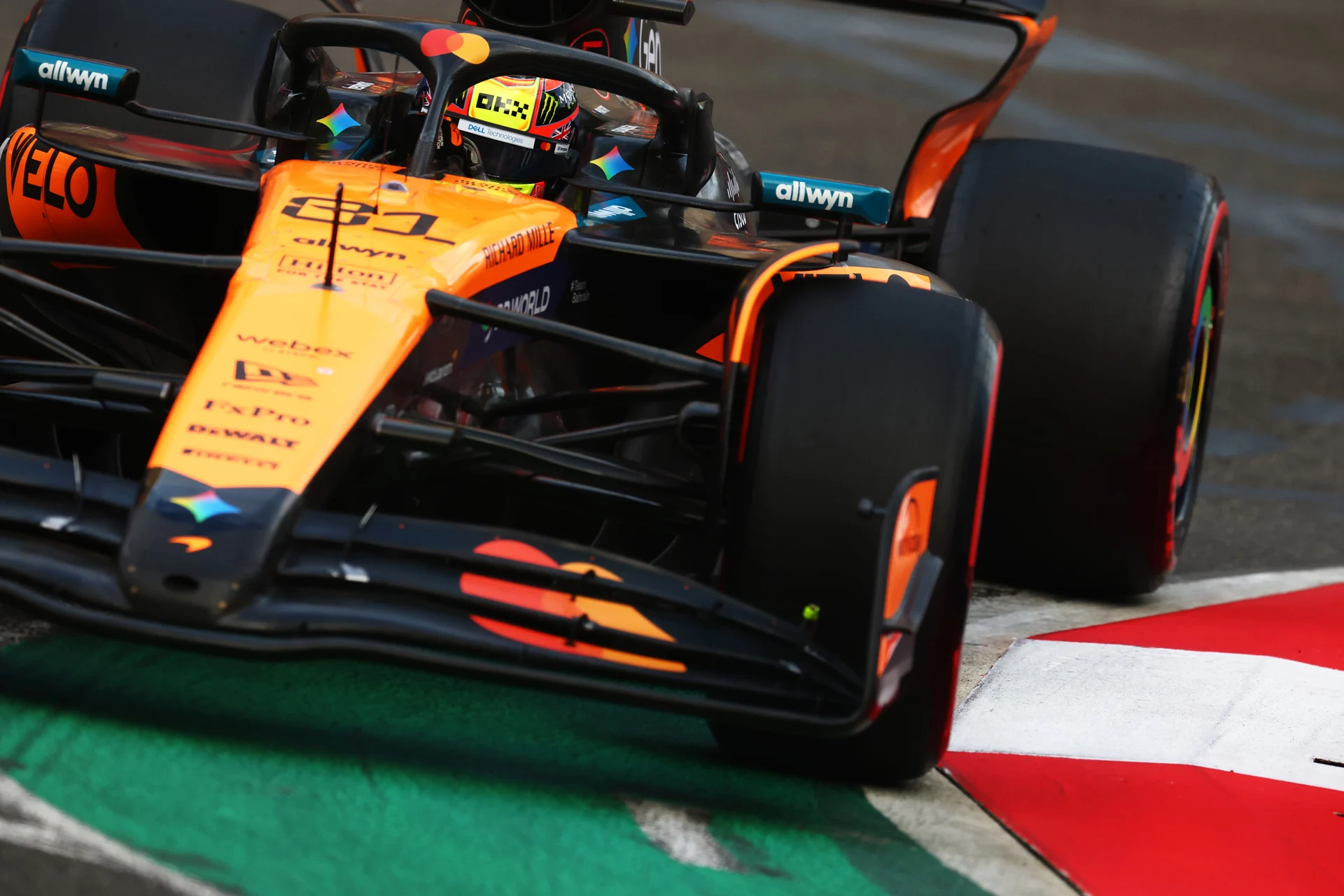
On the subject of Qualifying, the default position for McLaren across the season was to take only four sets of Soft tyres forward into Qualifying, rather than the maximum five. This was in keeping with what we did in 2024.
The only non-Sprint weekends where the team took the maximum five sets of Soft tyres into Qualifying were Spain, Italy, Singapore and Mexico. In Spain and Mexico, the Soft tyre was expected to be a race tyre, and thus there was no sacrifice involved in a 5-1-1 (five Soft, one Medium, one Hard) allocation. Italy and Singapore were both solid one-stop races where the benefit of an insurance Hard or Medium set for the race was of less value than having an extra set of Soft tyres for Qualifying.
Where the team did retain an extra set of harder tyres, the Hard tyre was preferred to the Medium. Both drivers kept both sets of Hard compound rubber in Australia, Saudi Arabia, Imola, Monaco, Canada, Britain, Hungary, The Netherlands, Las Vegas and Abu Dhabi, versus an extra Medium only in Bahrain and Austria – both of which were races where both Medium sets were used. Japan was a rare example of the drivers going in different directions: Lando went 4-1-2, Oscar 4-2-1.
Twelve of the 22 dry races in 2024 were one-stop, versus 12 of 21 in 2025 – but add in the migration to softer compounds at many races, and that Monaco and Qatar were both one-stop races in 2024 and mandatory minimum two-stops in 2025, then it does point towards the tyres being more robust. While graining didn’t go away entirely, it was less impactful in general, as evidenced by races such as Mexico City, where it had been a big issue in 2025. In this respect, Pirelli did a good job of improving tyre behaviour.
The idea behind the races with compound bridges was to create a genuine strategy dilemma. We had C1, C3, C4 at Spa and COTA, and C2, C4, C5 in Mexico. The stated intent was to create a race where the Hard tyre would be very stable, but relatively slow, creating a situation where the one-stop race with the Hard tyre versus a two-stop race without the Hard tyre should create real drama in the final quarter of the Grand Prix. It wasn’t a successful experiment: Spa was wet, and thus all bets were off, while the races in Austin and at the Autódromo Hermanos Rodríguez were both won by one-stop strategies… on the softer tyres. They were, however, the only one-stop races won with a Soft tyre in the mix.
The consensus of opinion is that the longer this set of rules has gone on, the harder it has been to overtake. Some of this comes from the difficulty in following, which likely has slightly increased whilst the regulations have been stable, and some of this is due to the field spread (in terms of pace) being much smaller than when these regulations started, making it more difficult to generate the pace required to achieve an overtake.
The numbers bear that out… to an extent. 2025 had 742 successful overtaking moves, down from 788 in 2024, a drop of six per cent – within the margin of error but trending in the direction we would expect to see.
The change wasn’t sufficient to see a step-change in how we approached the weekend, with the focus usually on race pace, rather than being biased towards Qualifying. One area in which this was notable came towards the end of the season, when the team had its lowest-drag rear wing available. In 2024, that wing appeared in FP1 at Monza on Lando’s car, but did not race, with a slightly higher downforce level preferred in Italy and at Baku and Las Vegas, where it may also have proved useful. This year, with a more mature rear wing but also a desire for greater top speeds to attack and defend, it was the automatic choice to start the weekend at those races.
End-of-straight speed is, of course, not the only factor in attack and defence. Having a good tyre delta is the standard method of choice for overtaking a rival… but with more robust tyres in 2025, the gaps between teams in terms of tyre life were reduced and, correspondingly, the ability to prosper by going long in a first (or penultimate) stint for a shorter, faster final stint, were less evident.
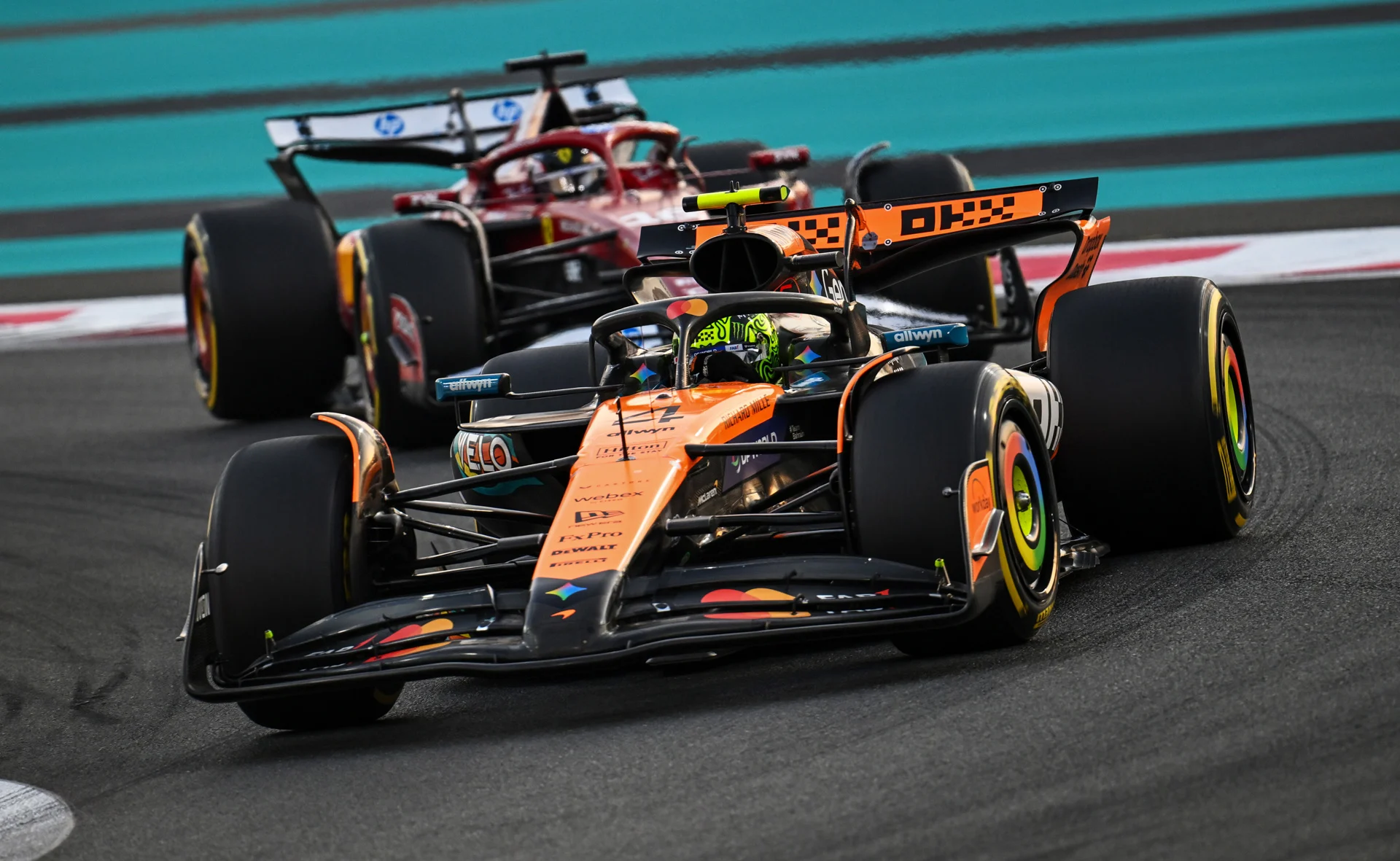
Finally, not so much a strategic trend but a reality for McLaren in 2025 is that we were racing with a different set of criteria. Having two drivers in contention for the Drivers’ World Championship is a strategic problem. Granted, it’s a wonderful problem to have, but a headache nonetheless. It changes how you approach the races. But perhaps not by much.
In 2024, although Lando was in mathematical contention for the Drivers’ Championship until relatively late in the season, the focus was very much on securing the Constructors’ title, and thus strategy was aimed squarely at targeting the maximum number of points available at each race. This year, that didn’t apply. We won the Constructors’ Championship with six races to spare, but the competitive position was such that the team had been able to turn its focus to the Drivers’ title much earlier.
Having two drivers in contention for a title is a welcome but uneasy balancing act in a team sport. Our approach was to let the drivers race, and keep their opportunities equal. There are lots of ways in which that manifests itself, for example, providing equal access to upgrades, an equitable split of test items in Practice, and alternating which driver goes out last in Q3.
It also comes out in race strategy, both as guidelines and limiting factors. Without going into detail, the aim was always to let the drivers race fairly and in a way consistent with our principles.
The rules throughout the majority of the season were relatively low-impact. The usual rules applied to the driver in front having pit-stop priority, while both drivers were allowed to use the strategic option that would get them the best finishing position, where ‘best’ means highest, rather than ‘in front of your team-mate’. In other words, neither Lando nor Oscar was allowed to use a strategy that would cost the team points but ensure a better finish than the other side of the garage.
For example, in Hungary, Lando’s high-risk one-stop strategy beat the two-stop approach, which was the obvious choice ahead of the race and the one Oscar adopted. For Lando, there was no risk: he was running fourth, falling away from the lead, and had nothing to lose. The one-stop gave him the opportunity to challenge Oscar – but it also gave him some free air at the front of the field and the opportunity to get ahead of George Russell and Charles Leclerc. Given the gap back to Fernando Alonso in fifth, Lando was either going to make gains or finish back where he already was. Nothing to lose, everything to gain by trying. Oscar, in contrast, was asked his views on the one-stop strategy and – quite correctly – was unenthusiastic about taking that route too. Running second, he had an excellent chance of getting past Leclerc on the conventional two-stop. Which, he did.
Learn how combines speed, innovation and precision to drive performance in financial markets.