



27 January 2018 15:00 (UTC)
Taking on the tricky challenges of an enduro debut
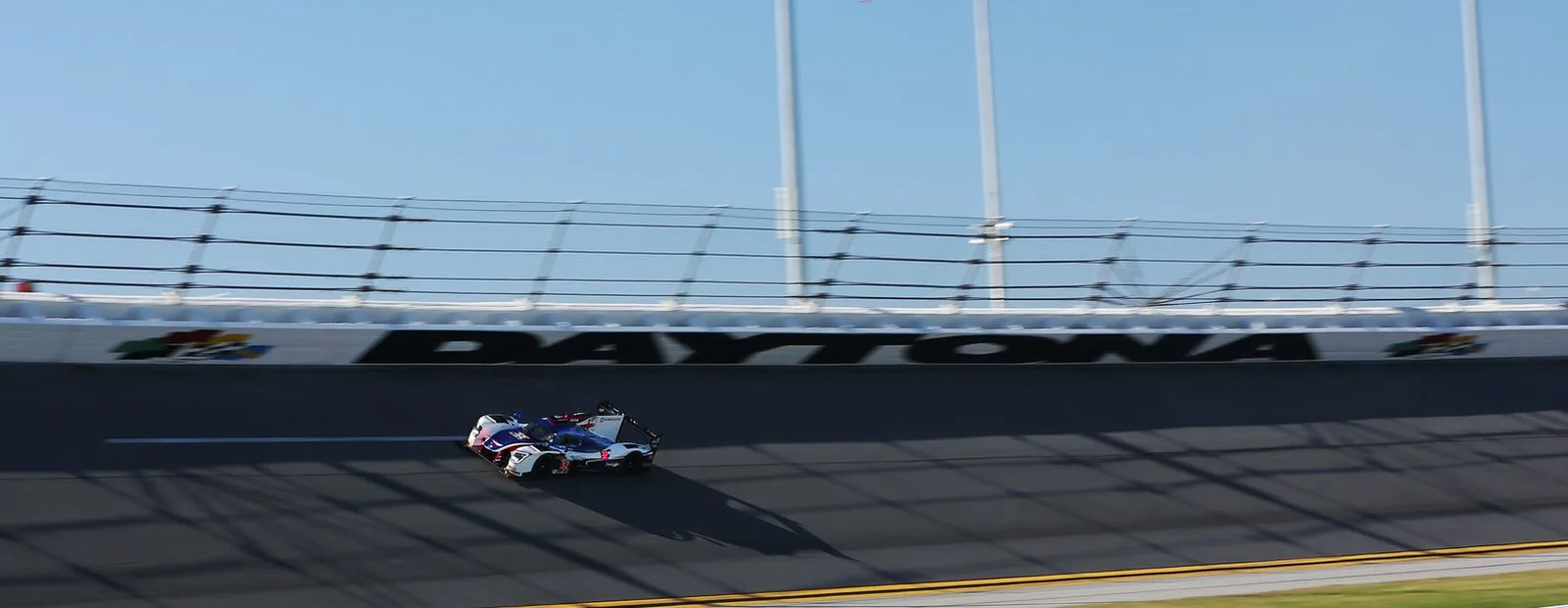
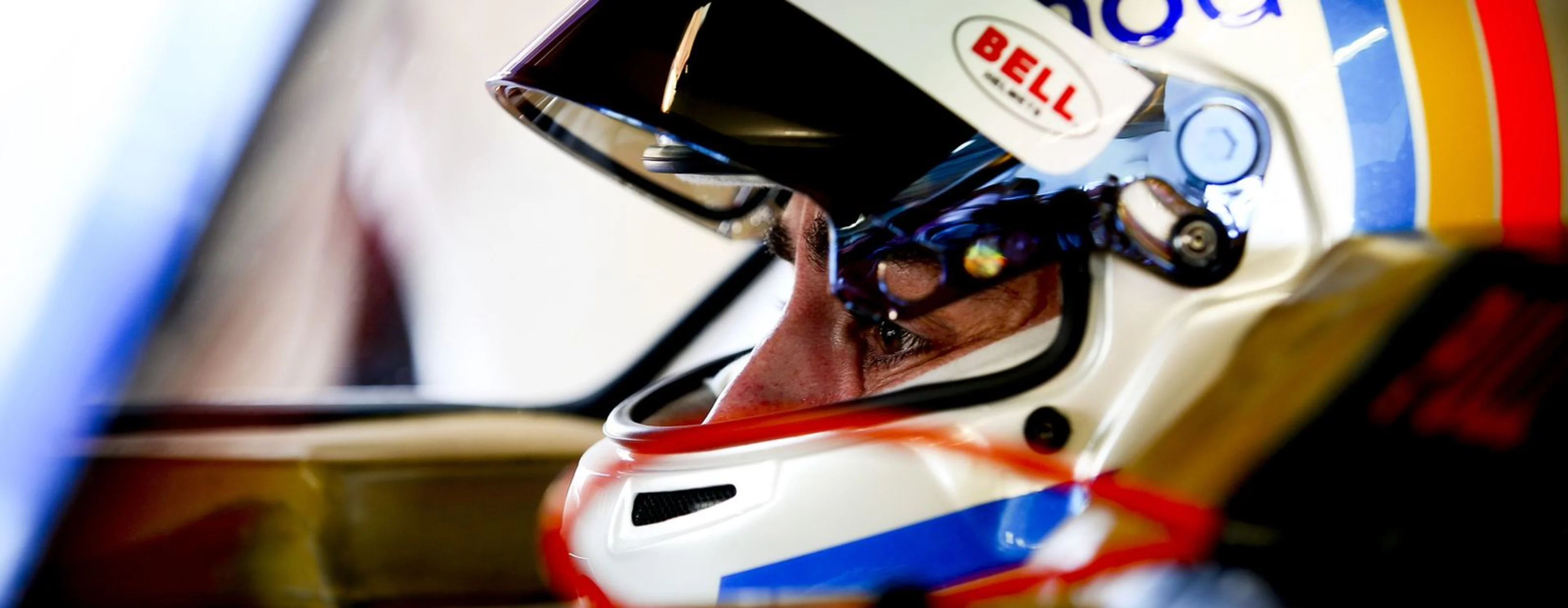
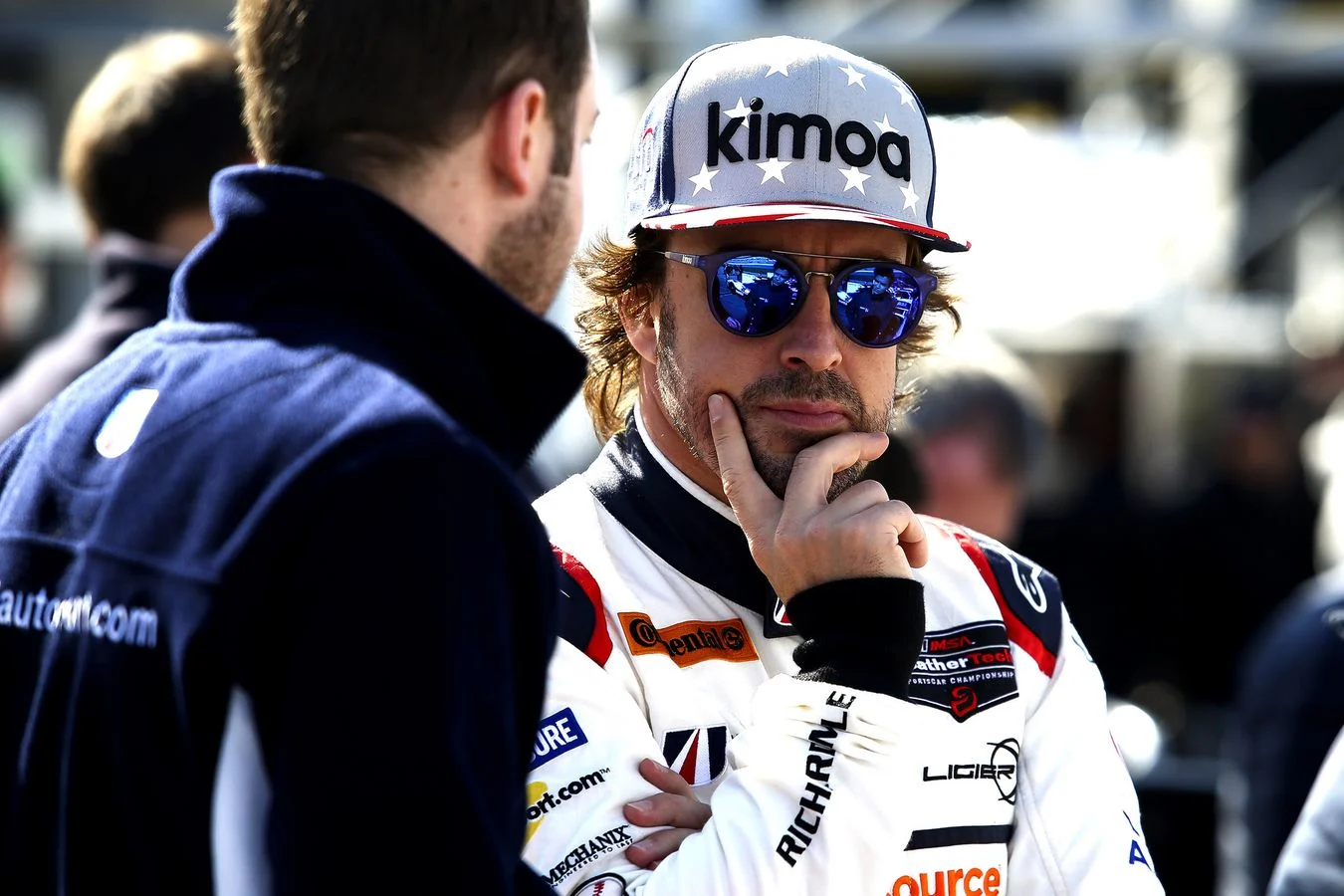
Last year Fernando Alonso demonstrated his desire to experience different forms of racing when he participated in the Indianapolis 500, and this weekend in Florida the McLaren star takes a further step into the unknown when he races in the Daytona 24 Hours.
Fernando has made no secret of his desire to race at Le Mans, having attended the race as a guest a few years ago, and even driven round the track in a 1970 Ferrari 512S, as featured in the iconic Steve McQueen movie. At the end of last year he sampled an LMP1 car for the first time when he tested for Toyota in Bahrain.
Daytona represents another chapter in the story. As his first sportscar and endurance event it will give Fernando a taster of what he might one day find at Le Mans, but on the other hand the race also has a distinct character, and in some ways it differs from the French classic.
The Daytona track is much shorter than Le Mans – 3.56-miles as opposed to 8.46-miles. Most drivers view Daytona as the more physically challenging race, because there’s less time to relax on the straights compared with Le Mans, and you’re busier for longer, and on a more crowded track.
In Fernando’s case he potentially has it harder than many of his rivals this weekend because he is part of a three-driver line-up, while in recent years it has been standard to field four at Daytona – so he will spend more hours behind the wheel.
Given that we are in January rather than June there are many more hours of running in the dark at Daytona compared with Le Mans. Rain is a regular feature at both venues, and at Daytona it often leads to lengthy caution periods. And while Florida is a pleasant place to be at this time of year, it can be pretty cold at night. That at least reduces the physical toll to some degree, compared to the long hours of sunshine in France in June.
Endurance racing presents three major novelties that Fernando hasn’t experienced in his F1 career – he’ll be racing round the clock and potentially getting in and out of the car in the early hours of the morning, he’ll be sharing the car with other drivers, and he’ll be in a constant battle to get safely past slower cars.
The endurance aspect may be new to Fernando, but given his super level of fitness, he will take the eight or so hours he’s likely to spend in the cockpit of his Ligier in his stride. His physical preparation, his diet, and how he rests over the weekend have all been specially tailored for the demands of the 24 hours schedule. Nevertheless it’s still a new challenge – even for the fittest of drivers.
“The biggest learning curve will be that you drive in the night and in the morning against your normal body rhythm,” says former McLaren driver Alex Wurz, who finished fifth at Daytona in 2016. “He’s in a car of three, which in Daytona is pretty hard. The night is very long, so it’s a bit harder in a way to digest mentally than Le Mans, because the night is shorter.
“When you drive against your body clock, you realise that you make the most silly mistakes, and you don’t know why. In the night you use different functions of the brain for reactions and for driving. Sometimes you are completely shocked when you make a mistake – it’s an experience you just have to go through.”
Of course, Fernando has already raced F1 cars at night in Singapore, Bahrain and Abu Dhabi. Daytona has lighting, albeit not to the sports stadium standard of the F1 venues, but there’s less reliance on your own headlights than at Le Mans, and drivers can thus see more.
What he will have to adjust to his how hard to push the car over long stints. These days races like Le Mans and Daytona are run at a more hectic pace than they were a few decades ago, when the machinery was more fragile, but there’s always some focus on conserving the equipment.
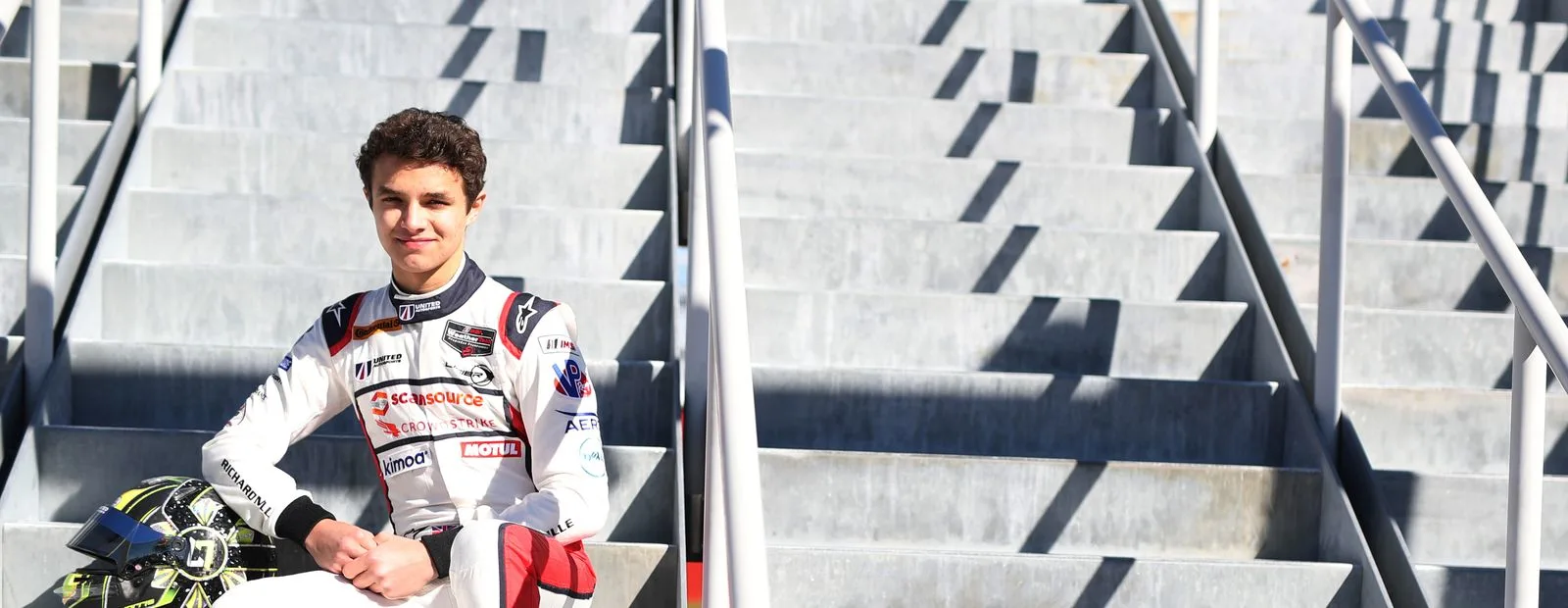
Until now Fernando has always had “his” car, perfectly tuned to how he wants it. At Daytona he’ll be sharing with fellow rookie Lando Norris and sportscar regular Phil Hanson. In F1, your team-mate is in many ways your biggest rival, because he’s the only real barometer for your performance. In sportscar racing there is still a desire to be faster than the other guys, but a driver has to balance that with the necessity to form a well-balanced combination, and work for the overall good of the team.
Testing has already given Fernando a taste of one very obvious aspect of sportscar racing that he’ll face in practice, qualifying and the race – there’s a lot of downtime when your team mates are out on track, and you would like to be! The key is to overcome that natural racer’s instinct and trust that your colleagues are doing as good a job as you would.
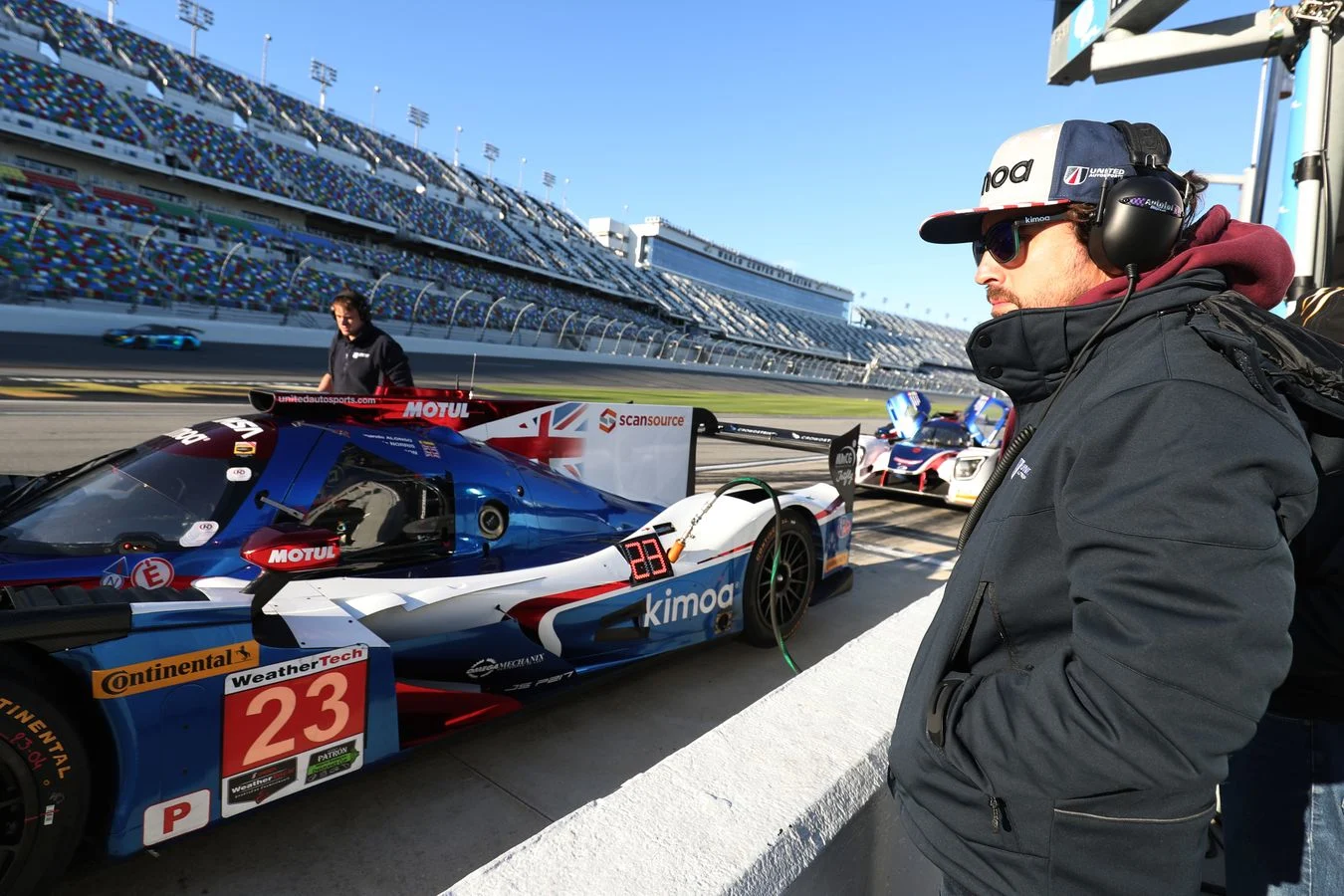
Having three drivers of different shapes and sizes and preferences means that there can be compromises in terms of cockpit layout and comfort, but a top team like United Autosports is well prepared for that challenge. The three drivers also have to work towards a set-up that they are all happy with, and that allows then to run at optimum performance.
The conservation aspect is also important – you have to trust that your fellow drivers can run fast times without taking too much out of the equipment, or taking too many risks over kerbs and so on. No racing driver is happy to get into a car that feels like it’s taken a hammering since he was last in it a few hours earlier.
“I think it will be easy for him because he doesn’t have to prove a point that he’s a quick driver,” says Wurz. “I call it oxygen – you only have a certain amount of oxygen to breath. If one driver consumes it all, because he goes for qualifying runs and uses new tyres and does the set-up purely for him, the others suffer. Then you will be a weak team.
“If the other guy is a tenth faster, it might bother him, but he’s not going to change the brake balance for the other guy, or make a set-up that only suits him. I think he’ll stand above that.”
Traffic also plays a part in that “circle of trust.” Fernando is driving one of 20 prototypes in the field’s fastest class. There are 30 entries spread among the GTLM and GTD classes, and the quicker cars have to negotiate them regularly over the course of the race. Those cars are busy having their own battles.
Over a stint each driver has to make dozens of instant decisions – pass on the left or right, go for it now or wait until after the corner, and so on. One mistake or a misjudgement by the slower car could lead to a long delay with bodywork damage, or even put you out of the race. You have to trust that your team-mates will make all the right calls and get the balance between speed and risk-taking just right.
However, the race has a different rhythm than Le Mans, because of the way caution periods work. At Le Mans there are three safety cars, spread around the track, and thus the field does not get fully bunched up for a restart, so a leader can often maintain his advantage. At Daytona there is one safety car, and each time it emerges, the field regroups – so lost time can always be made up.
“It’s a bit different with the American system,” says Wurz. “Because for about 20 hours you just have to make sure to stay within the lead lap, and even if you’re lapped once you can unlap yourself with the safety cars. So there is no pressure on the individual moves.
“Whereas at Le Mans with three safety cars and not bunching the cars up, if you lose a lap, you’re race is more or less gone or jeopardised, unless someone else has a technical issue. At Daytona if you lose a lap because you’re very cautious or your set-up is not ideal, it doesn’t matter until the last three or four hours.
“That means in traffic you have much less pressure to take a risk to overtake because you are pushing for a lap time. Of course you have to drive fast, but it doesn’t matter if you build up a one lap lead, because the next safety car will take your advantage.”
Wurz sees this area as one of the biggest differences between Daytona and Le Mans: “When you drive a lap and you have the choice to dive into a corner, at Le Mans you have to dive in, because every tenth counts. You’re under such pressure all the time, and then you take risks.
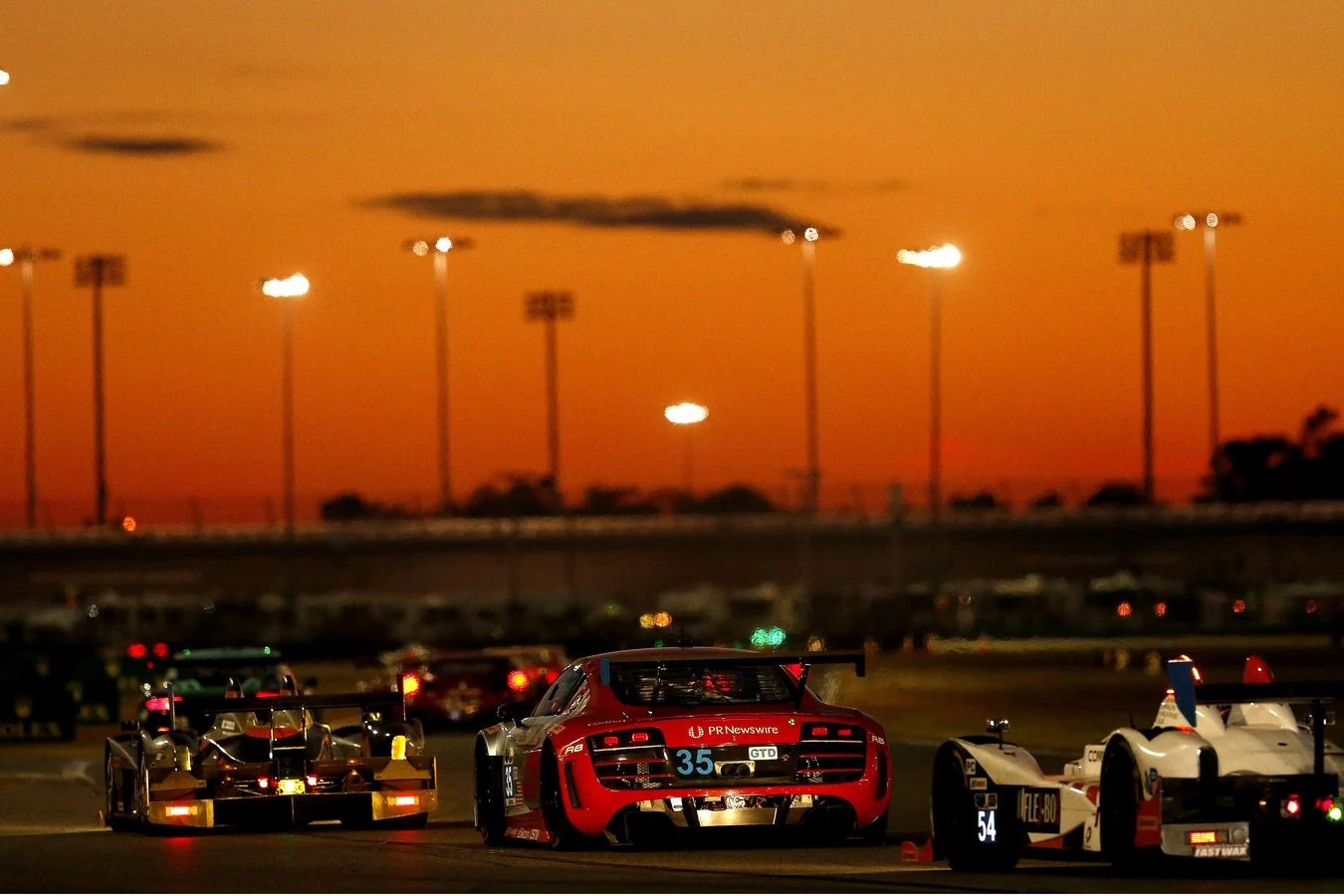
“If you know it doesn’t matter if you lose half a second this lap, or even three seconds, you’re much more relaxed. Then you have better risk management. This is a fundamental difference. The race gets really hot in the last couple of hours – that’s when you know you can’t mess around any more.”
The actual process of passing is a little different too, because at Daytona the prototypes are not significantly faster than the cars they are lapping, especially the GTLM entries.
“You have a bit more traffic, but you don’t have more overtaking moves because the lap time delta of GT cars and LMP2s is not so big. At Le Mans you have a very different speed delta if you are in an LMP1 car. So the speed delta is not a big issue at Daytona.
“It makes it harder to pass, but it becomes more of a classic overtaking manoeuvre. If Driver A and B are in the same space it’s like a normal overtake. The dangerous overtakes are when you are 100km/h faster through a corner than a GT, and you dive in before the apex, and if you get it wrong, you have a big shunt. It’s not so dangerous with traffic management.”
Wurz says that there’s one aspect of Daytona that Fernando will have to adjust to – the first laps out of the pits at the start of each stint.
“At Daytona at night when it’s humid it becomes extremely slippery, and there are no tyre warmers. I found the biggest challenge was to go out on cold tyres. In the first two laps you are slower than the GT cars and you are overtaken, and you can lose the car so quickly. For anyone who is not used to cold tyres, it’s very, very difficult. This where the US boys can show their skills – they can open a gap which takes 20 laps to close down!”
If Daytona is indeed Fernando’s first step to racing at Le Mans, then he may well have got it just right by making his debut in the US race as a taster, rather than doing it the other way around. It will be a great opportunity for him to learn about the endurance racing format.
“I found it easier to race at Daytona,” says Wurz. “Because as I said you don’t have the pressure for a lap-time because every safety car bunches the field up. It’s a very different mindset. You are driving quickly, swiftly, safely for 20 hours, and then the fastest guy in the team has to be in for the last two hours, and ideally with a car that hasn’t been damaged by silly mistakes. Then you’re in the best position to win the race.”