22 December 2025 16:30 (UTC)
KAUST students have been working with McLaren’s racing teams on research projects that can have an impact in the real world

Read time: 9.1 minutes
For over five years, McLaren and King Abdullah University of Science and Technology (KAUST) have been pushing the boundaries of performance through research.
McLaren and KAUST’s student programme provides scholars with the opportunity to gain hands-on experience with an elite motorsport team, working on development projects that enable them to translate their academic research into practical, real-world results.
Established in 2009 and based in Thuwal, Saudi Arabia, KAUST is recognised as one of the world’s leading research universities, with a focus on science and technology. McLaren Racing have been working with KAUST since 2020, and in 2024, expanded the partnership.
“The partnership with McLaren that we have at KAUST is a great opportunity,” says Youssef Al Ashkar, one of the students who took part in the programme. “We get to work hands-on, on projects that directly translate into something we love. But I also think it’s great for McLaren too, as we have really top-tier research facilities at KAUST that can benefit them too.”
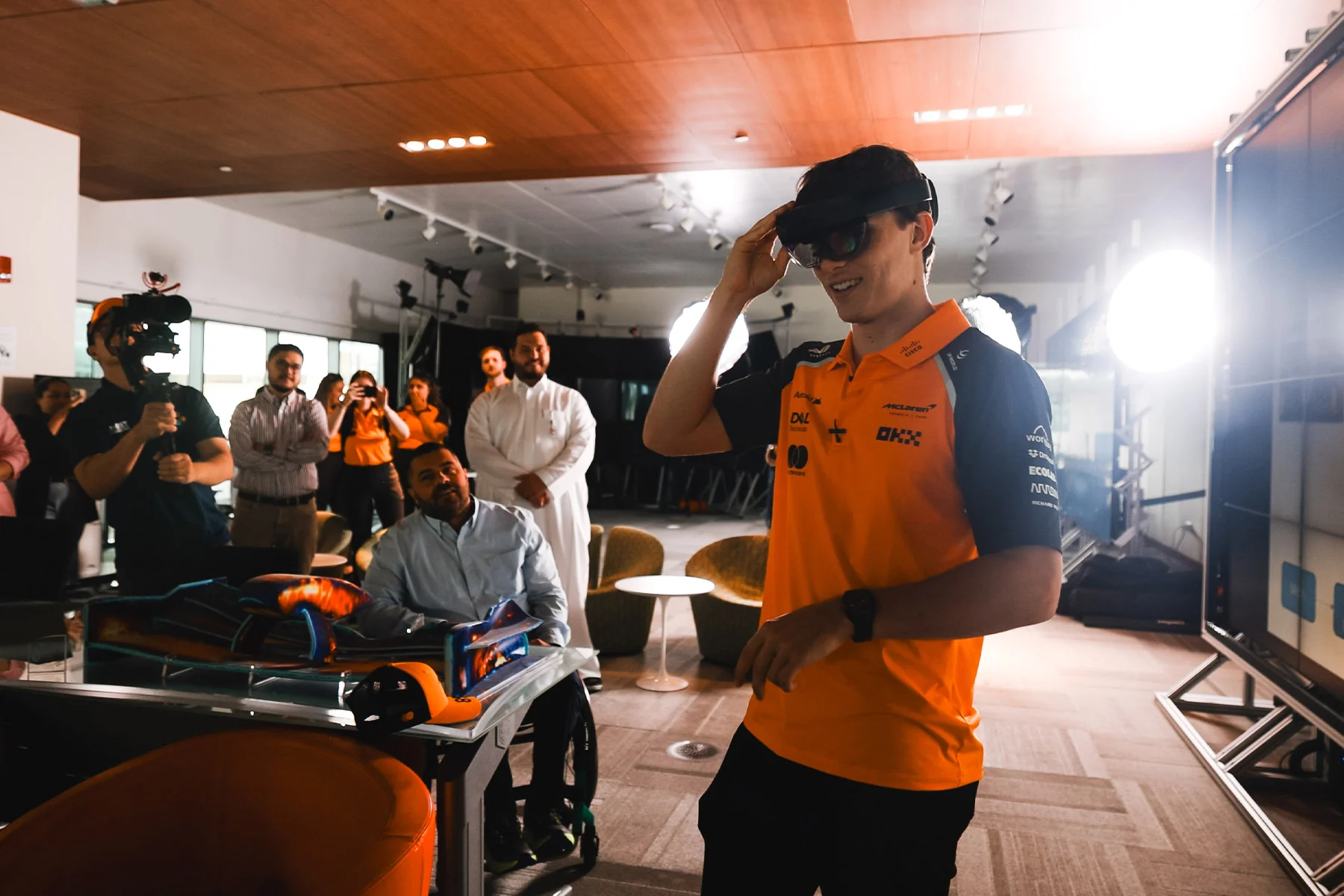
Youssef, a PhD student in chemical engineering, worked on a gearbox fluid project with the Arrow McLaren IndyCar team. His project investigated whether gearbox efficiency could be improved by reducing friction, which slows performance and increases fuel consumption.
“By decreasing friction, you increase efficiency, and you use less fuel. This is more sustainable and can help to achieve higher speeds during operation,” he explains.
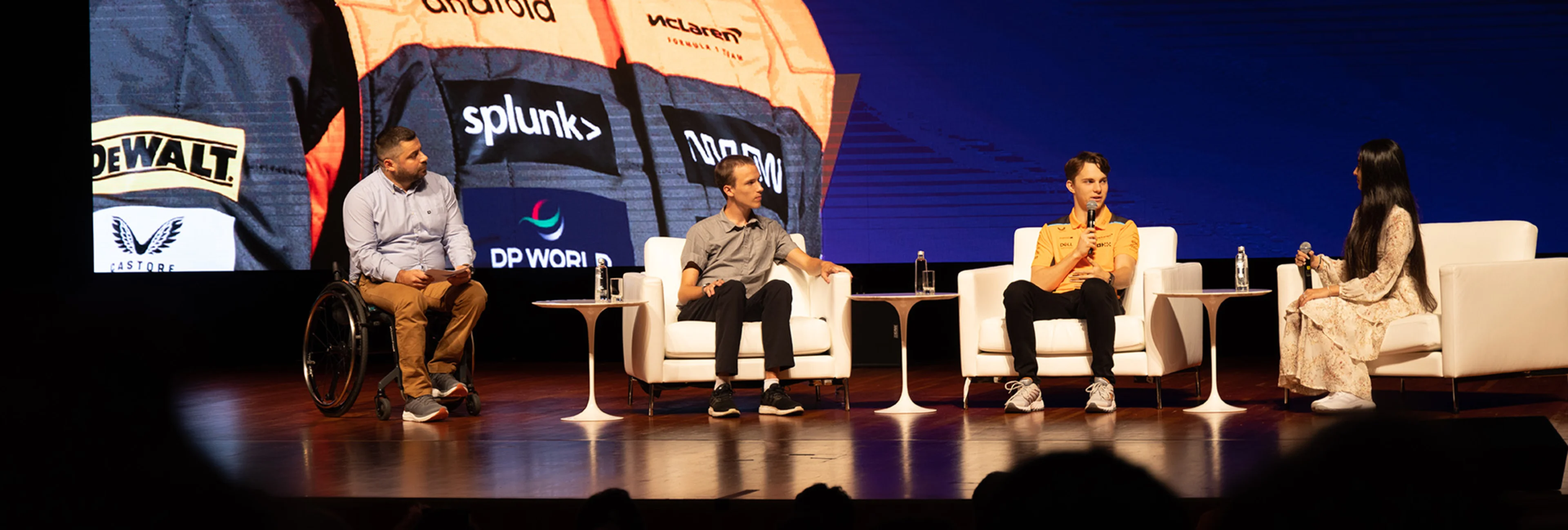
We spoke with him and two other KAUST students: Abdulrahman Taher, a PhD student in mechanical engineering, and Neil Limbaga, a PhD student in electrical and computer engineering, who worked on projects with our Formula 1 and IndyCar teams.
Each scholar was selected by their professors for the programme and worked closely with an assigned team at McLaren on a development project related to their studies, including aerodynamics, advanced lubricants and biosensors.
“It was a once-in-a-lifetime opportunity for me,” Neil says, whose project included a period working with the team on-site at the McLaren Technology Centre in Woking. His research aimed to find a way of delivering the level of high-quality, medical-grade insights you would get in a hospital or a lab to our Formula 1 team through biosensor technology, using data and AI models.
“This challenge was very eye-opening for me and very informative,” he adds. “It is a very interesting partnership because at KAUST, we love to push for innovation and extract many novel ideas, especially in engineering and the sciences. These ideas can produce good results, but they are usually in constrained, controlled laboratory settings. With McLaren, through this partnership, we're able to test our solutions, algorithms, and many of the models we develop in an actual industrial setting.
“For example, with my work, we could achieve good results because we knew how to use the biosensors, but if we let an individual use it, like an athlete or a high-performance team such as McLaren, you can then ask the question, ‘Is the sensor easy to use? Is it still accurate when integrated into everyday life?’ This form of validation is not easy to get within academia. And McLaren can hopefully benefit from the system. It's a win-win situation for both sides.
“I’m proud that we were able to contribute to how human performance can be monitored and interpreted within a Formula 1 team. This research allowed me to understand the pain and gain points of a Formula 1 team, in terms of human performance.”
While some projects are aimed at improving our racing efforts, the research conducted by the students on the programme is translatable beyond motorsport and can have an impact on the wider world. “The goal of my research is to bring high, accurate, medically graded insights to everyday lives,” explains Neil.
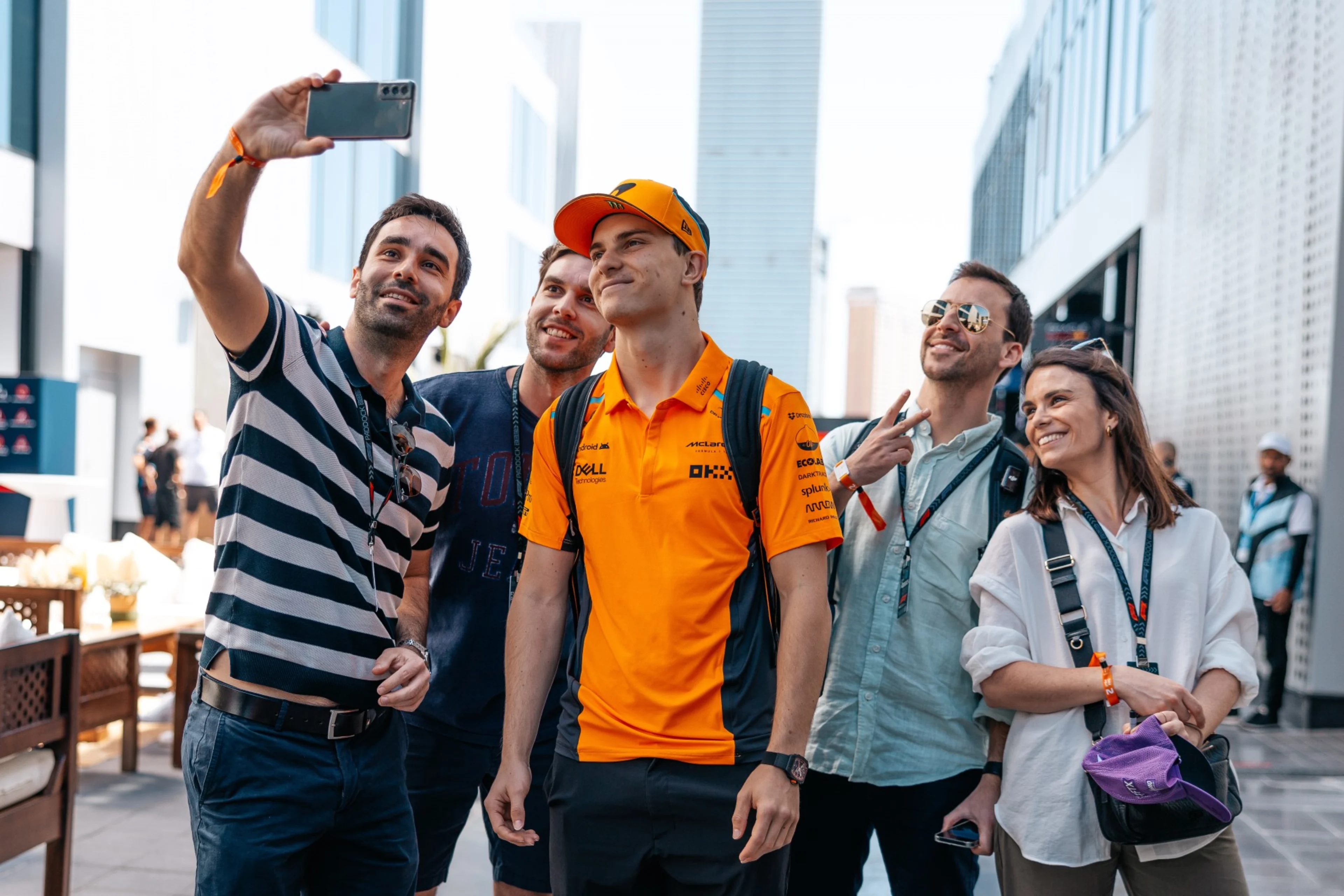
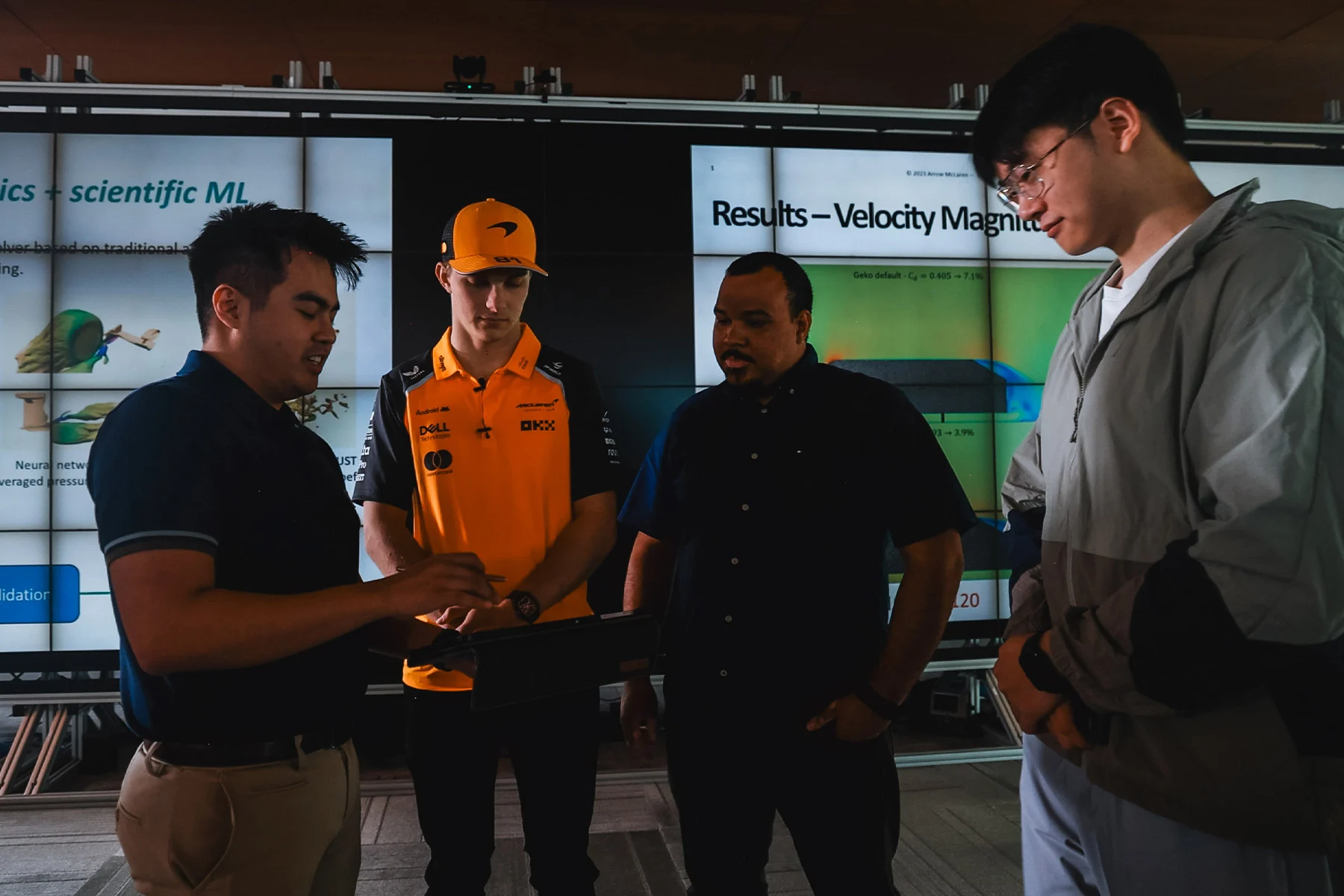
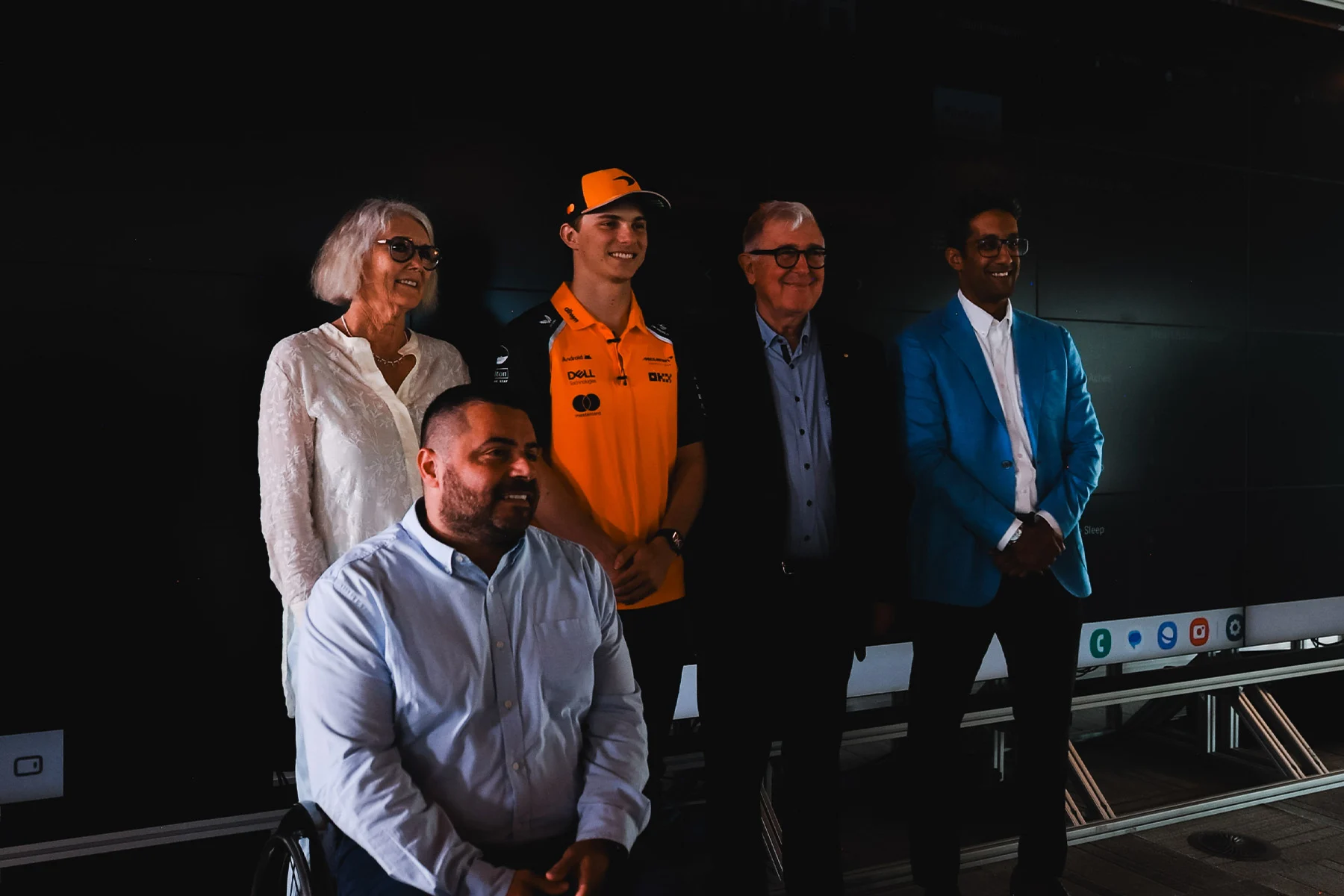
Neil was also among those present when Oscar visited KAUST ahead of the 2025 Saudi Arabian Grand Prix. Whilst at KAUST, Oscar was given a tour of the facilities, tested out equipment and spoke with students, including Neil.
“Never in my life would I have thought that I'd get to talk about the work that we're doing with a Formula 1 driver,” he says. “It was pretty cool to get to interact with a guy like Oscar Piastri.”
Abdulrahman, who also spent a period at the MTC, worked on a project with McLaren’s Aerodynamic Development team to explore how airflow could be predicted more accurately, more quickly, and at lower cost.
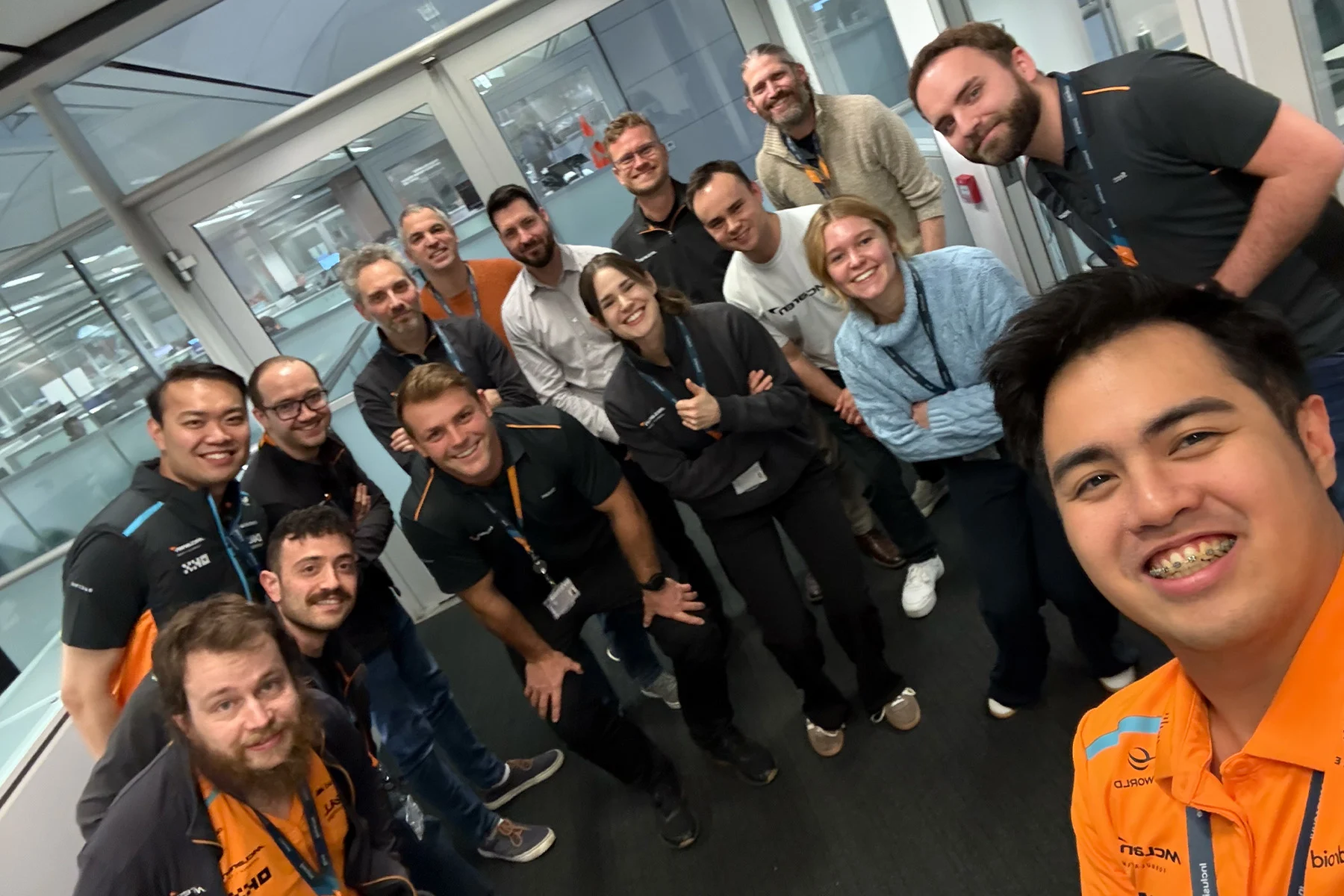
“I felt like I was on a training course about how to do things in a fast-paced environment and remain very happy,” he says. “I'm proud to have worked with so many intelligent and smart people, and to have experienced their work ethic. They were very generous with their knowledge and their time.
“Working with McLaren taught me how to work faster, adapt quickly, and how to focus on solving the problem rather than getting stuck on perfection. I handle stress differently now, I look at problems with a new perspective, and I’m more confident working on large, complex projects.”
While at the MTC, Abdulrahman also had the chance to visit the paddock at Silverstone on the weekend of the British Grand Prix, where he experienced how our trackside team operates under the intense pressure of a race weekend.
“I could speak for hours about that experience, that was a beautiful day there,” he says, grinning. “I had a really lovely conversation with one of the engineers. Oh, and I saw Brad Pitt. I wasn’t close, but to see him doing his thing for the movie and be able to watch it and say I was there at one of the races in the movie, like 20 metres away, is so cool.
“I respected McLaren so much beforehand, but even more so after this internship, they have done things that I will never forget.”
Reflecting on their experience with McLaren, all three students expressed immense enthusiasm for their projects, sharing their pride at getting the opportunity to work with a racing team during such a crucial stage of their learning journeys.
“It’s pretty cool,” Abdulrahman says with a smile. “People were excited about being innovative, and everyone is excited about coming to work. I believe I came back a better researcher by being exposed to McLaren’s mentality… This was a life-changing experience for me… I'm now not scared of partaking in big projects and working on complicated stuff.”
On his experience, Neil says: “This allowed me to gain hands-on experience with a Formula 1 team, working in a fast-paced organisation at McLaren, where speed meets innovation. As someone who likes to see the impact of my work, it was great to get to see how it’s being used in the field directly.”
Youssef, who comes from a family of F1 fans, adds: “My dad and my brother are huge fans of Formula 1, and being able to say I was working with a team like McLaren was something that genuinely made them proud. For me, that made the whole project feel even more meaningful, because it connected my research to something people I care about really love.”